







Traditional Walnut Console
These traditional walnut console tables bring warm grain and architectural grace to a hallway, with Queen Anne revivals and 18th-century originals most common.
Traditional Walnut Console
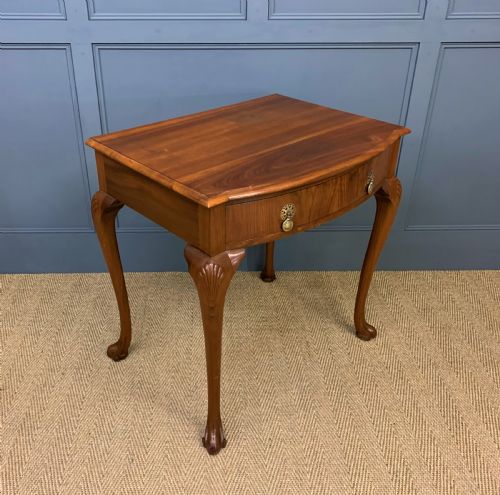
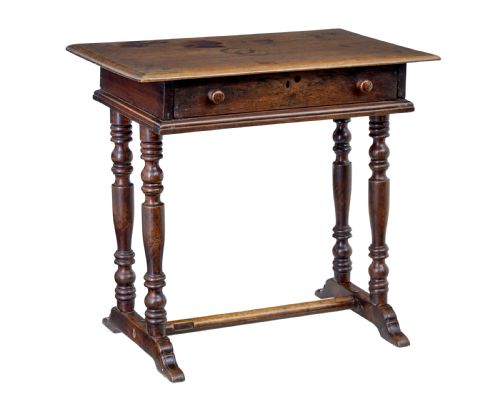
Traditional walnut console tables span side tables, lowboys, card tables, and serving tables produced across the 18th, 19th, and early 20th centuries. Buyers searching this phrase encounter pieces ranging from 18th-century provincial designs to 1920s Queen Anne revivals.
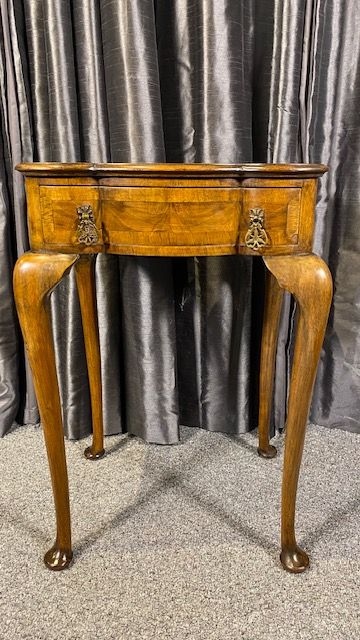
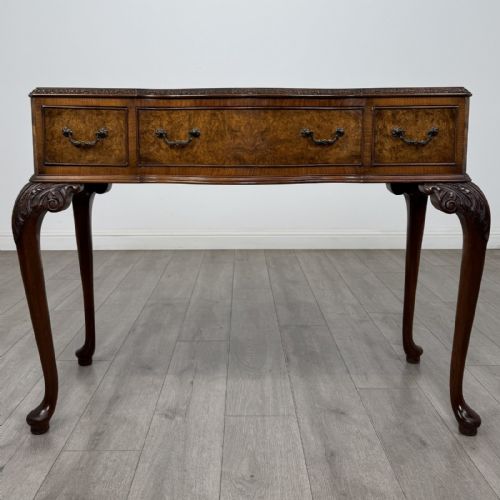
The versions most frequently met on this page include Queen Anne style walnut side tables, burr walnut lowboys, and Edwardian dresser bases. These forms offer substantial timber surfaces supported by traditional legs, often featuring distinct figuring in the grain.
How traditional walnut console tables were made
Construction relies heavily on walnut and burr walnut veneer applied over secondary woods, with select pieces incorporating solid mahogany or marble tops. Workshops utilised brass for handles and hardware where drawers are present.
Cabinetmakers shaped these items into specific forms such as demi-lune, pedestal, and lowboy structures, employing wood joinery suited to each period from the 18th century onward.
Traditional Walnut Console Retail Price Guide 2026
Typical asking prices for traditional walnut console among the pieces listed under this phrase on Sellingantiques today, from the lower quarter to the upper quarter. They describe what is for sale here now, not the wider market.
Some tables double as card tables, ready to host a quiet evening of 1920s parlour games beneath their polished burr walnut tops.
What varies in quality
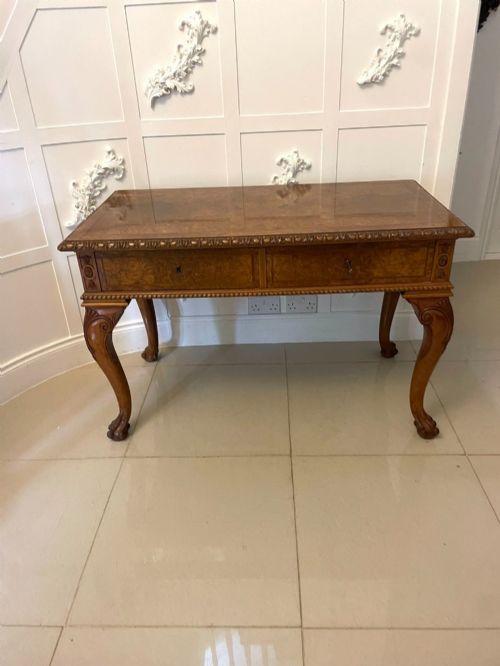
Quality separates pieces through the selection and matching of burr walnut veneer across the top surface, where skilled workshops achieved balanced grain patterns. Plain timber constructions sit at a different level of decorative ambition compared to richly figured burr surfaces.
The execution of period revival details, such as Queen Anne style cabriole legs and proportion, dictates the refinement of the piece. Maker attribution, such as work by Epstein and Co or Whytock and Reid, also distinguishes specific examples.
Epstein and Co·Whytock and Reid
The Traditional Walnut Console Glossary
- Burr Walnut
- A figured wood taken from the burl growth of a walnut tree, prized for its swirling grain patterns. It is frequently used as a veneer on tabletops.
- Lowboy
- A small table with drawers, resembling the lower section of a tallboy, typically used as a side table or dressing table in 18th-century and revival designs.
- Demi-lune
- A half-moon shape used for console and side tables designed to sit flush against a wall. This form became popular in various revival periods.
- Queen Anne Style
- A design movement characterised by cabriole legs, pad feet, and graceful curved lines, heavily reinterpreted during the early 20th century.
- Dresser Base
- A low sideboard or serving table featuring storage drawers beneath the main surface, found in Edwardian and earlier traditions.
Traditional Walnut Console: Frequently Asked Questions
What is a traditional walnut console table used for?
These tables function as surface furniture in hallways, living rooms, and dining spaces. They provide a place to display decorative objects or serve items during gatherings.
Historically, forms like lowboys and serving tables held domestic items or served personal grooming needs. Today they anchor narrow spaces with wooden texture.
How do I identify an 18th century console table?
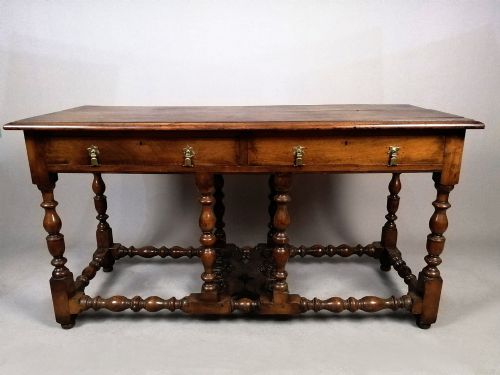
Eighteenth-century pieces typically display provincial construction methods, hand-cut joinery, and solid walnut timbers rather than modern veneers. Examination of the underside and drawer linings reveals period hand-working tool marks.
Revival pieces from the 1920s and 1930s often emulate these characteristics but utilise machinery and contemporary finishing techniques.
Where should I place a console table in my home?
Console tables suit entrance hallways, living room perimeters, and dining rooms because of their shallow depth. Their flat surfaces accommodate lamps, mirrors, and ceramics without obstructing walking paths.
Freestanding and pedestal versions also function well away from walls when floor space permits.
What is the difference between a lowboy and a console table?
A lowboy is a specific form of small table equipped with one or more rows of drawers, originating in the 18th century. Console tables generally refer to wall-supported or freestanding display tables that may lack drawer storage.
Both categories overlap considerably within antique trade descriptions.