

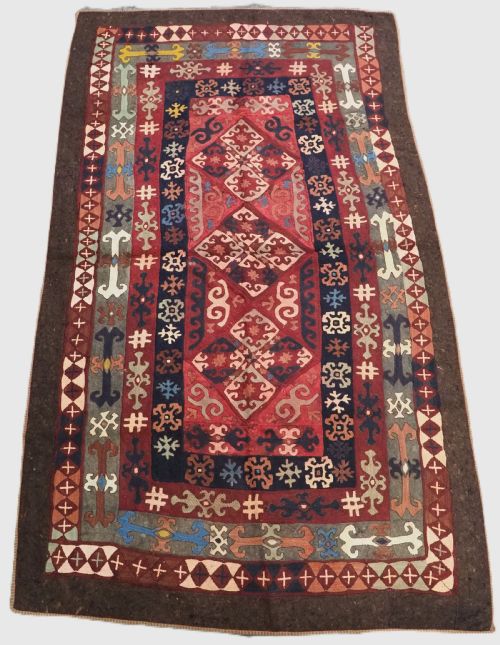


Traditional Uzbek Carpet
A traditional uzbek carpet brings bold geometric motifs and rich natural dyes from Central Asia into your home.
Traditional Uzbek Carpet
A traditional uzbek carpet encompasses striking tribal kilims, yurt rugs woven in multiple strips, and embroidered felt pieces from the late nineteenth and early twentieth centuries. These flatweaves and pile rugs originate from Central Asian workshops and tribal regions such as the Kungrad area, displaying distinct regional designs.
Buyers frequently encounter varieties like the Gajeri, Tartari Safid, and Suzani kilims alongside Lakai tribal rugs. These textiles often feature banded patterns, bold graphic layouts, and repeat designs executed in soft faded reds and other natural tones.
Materials and construction
These textiles rely on wool and cotton foundations, paired frequently with felt and coloured using natural dyes. Artisans constructed many larger formats by joining multiple narrow strips together, such as four, nine, or thirteen individual panels woven separately.
The making involves flatweaving techniques seen in kilims alongside heavy embroidery on felt. This construction method produces sturdy floor coverings and yurt furnishings designed for nomadic and settled domestic life.
Traditional Uzbek Carpet Retail Price Guide 2026
Typical asking prices for traditional uzbek carpet among the pieces listed under this phrase on Sellingantiques today, from the lower quarter to the upper quarter. They describe what is for sale here now, not the wider market.
The listings span the late nineteenth and early twentieth centuries, featuring wool, cotton, felt, and natural dyes.
Distinctions in quality
Quality rests upon the fineness of the weave, the complexity of the strip assembly, and the clarity of the graphic design. Finer kilims demonstrate tighter structural integrity across their multiple joined sections.
The depth and preservation of natural dye colours, alongside the distinctness of regional patterns like banded or repeat motifs, separate standard examples from superior pieces.
The Traditional Uzbek Carpet Glossary
- Kilim
- A flatwoven carpet or rug produced without a pile. These pieces form the majority of the available flatweave inventory.
- Yurt rug
- A floor covering woven specifically for use inside a traditional nomadic tent dwelling. They often appear constructed from several stitched strips.
- Natural dyes
- Colourants derived from plants, minerals, or insects rather than synthetic compounds. These dyes yield the soft, faded tones observed in older regional rugs.
- Strip construction
- A method where narrow looms produce multiple independent panels that are subsequently joined to form a large carpet. This technique accommodates the practical limits of nomadic weaving equipment.
Traditional Uzbek Carpet: Frequently Asked Questions
How were these rugs used originally?
These textiles served as floor coverings, wall hangings, and insulating furnishings inside traditional nomadic tents and permanent dwellings across Central Asia.
They provided practical warmth and decorated living spaces with distinct tribal patterns.
What materials make up these carpets?
Weavers utilised wool and cotton alongside felted animal fibres for these traditional floor and tent coverings.
Natural dyes provided the palette for the geometric and banded designs.
Why are some rugs woven in strips?
Nomadic weavers used portable looms with limited widths, requiring them to create several narrow panels.
Artisans then joined these individual strips together to form larger area rugs and carpets.
How do I care for a kilim rug?
Gentle vacuuming without a beater bar and professional textile cleaning help maintain the flatwoven structure.
Keeping them out of direct sunlight preserves the natural dyes.