


Traditional Umbrella Rack
A traditional umbrella rack organises the hallway with sturdy wood or metal, keeping wet days orderly and welcoming guests.
Traditional Umbrella Rack
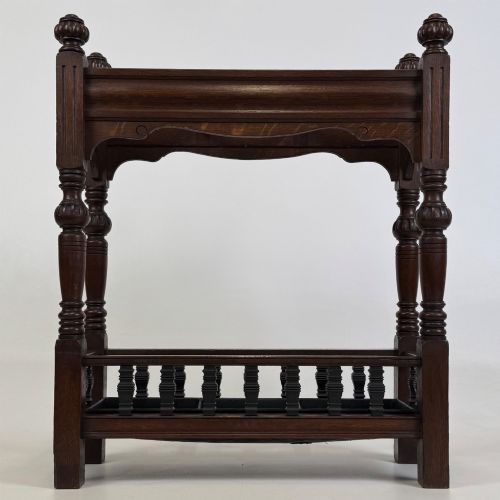
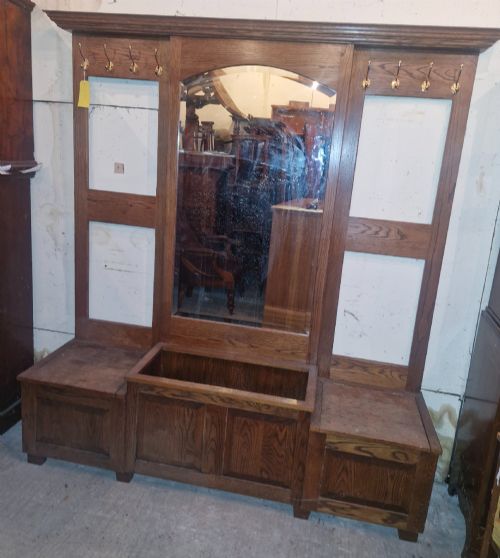
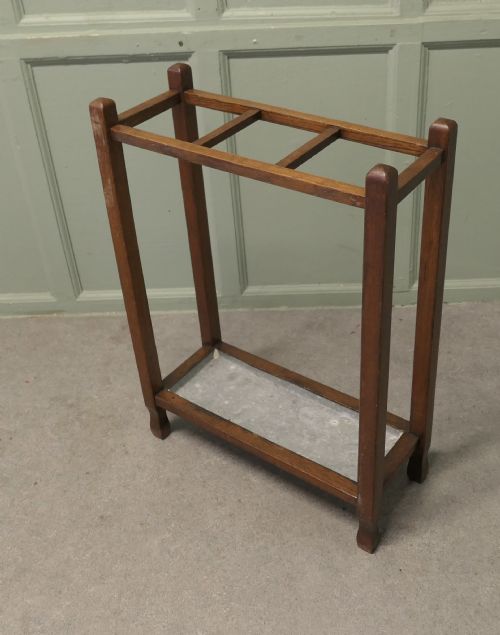
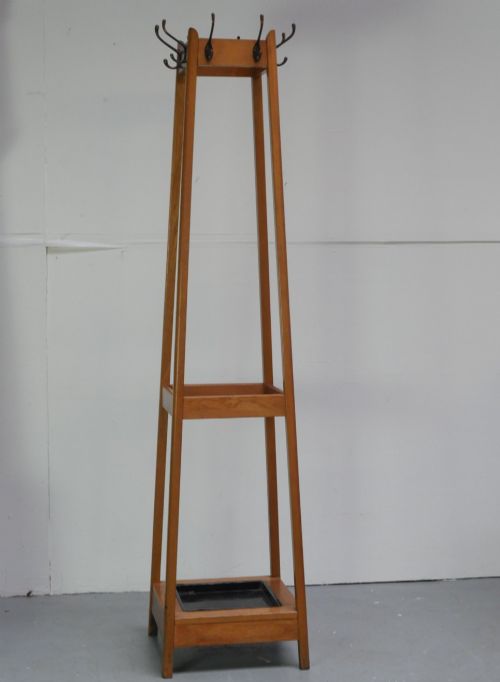
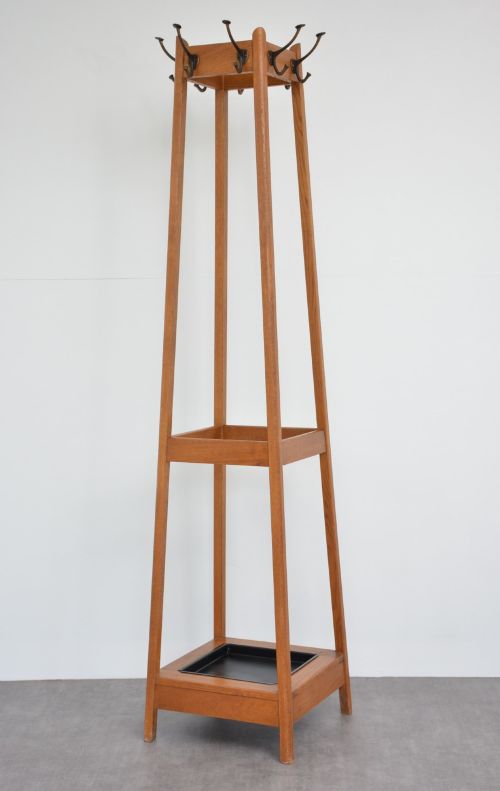
A traditional umbrella rack encompasses dedicated stick stands alongside multi-functional hall furniture that incorporates hat and coat storage. These hallway pieces emerge from the nineteenth and early twentieth centuries, spanning Victorian, Edwardian, and Arts and Crafts design movements.
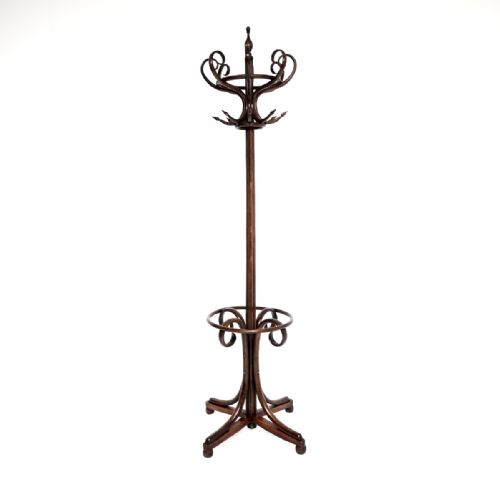
Oak, mahogany, and walnut provide the wooden framework for many pieces, while cast iron, brass, and bentwood shape alternative forms. Buyers frequently encounter oak stick stands and bentwood hat and coat combinations among these listings.
Materials and Construction
Solid timbers like oak, mahogany, and walnut are joined and polished to construct substantial hall furniture and stick stands. Turned woodwork and carved details appear across Victorian and Edwardian examples.
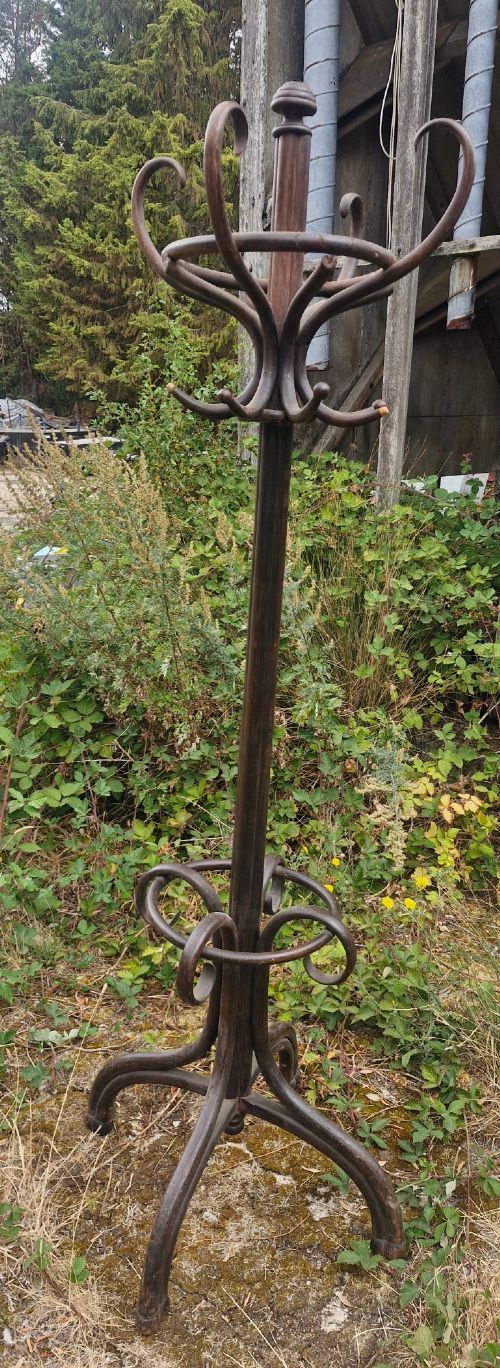
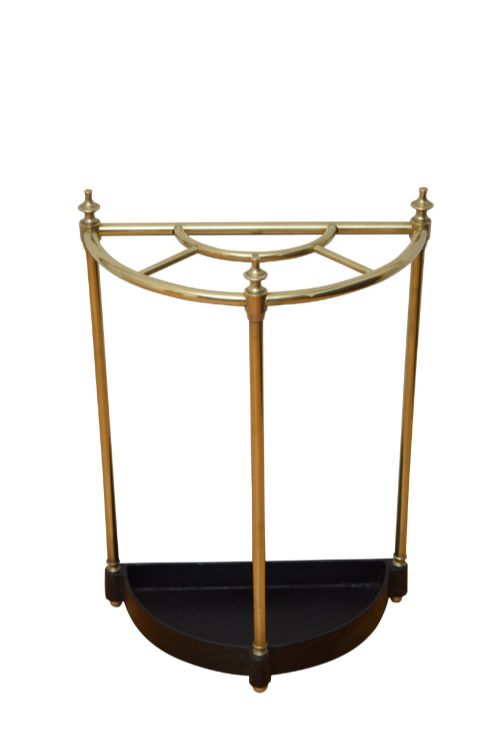
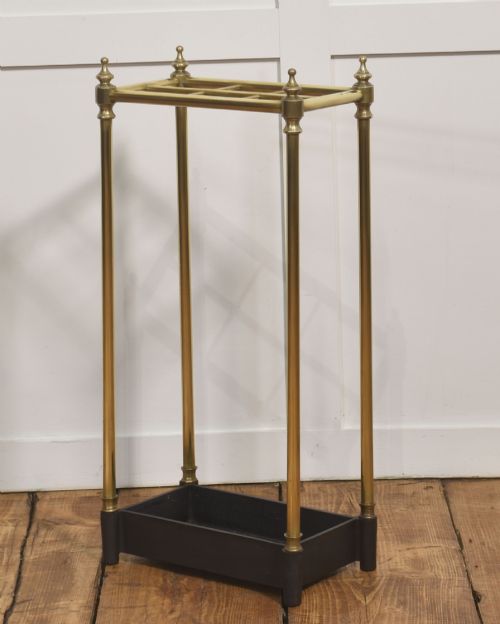
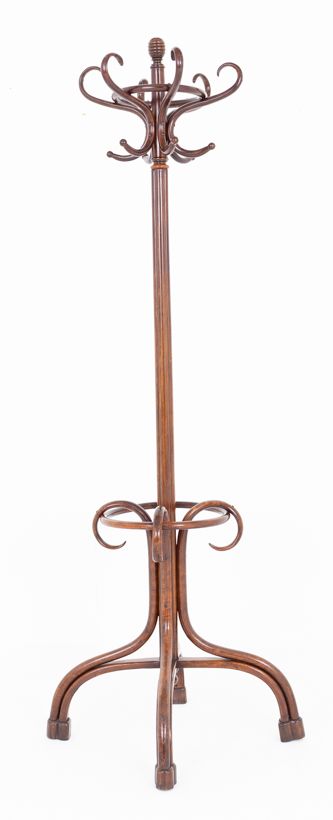
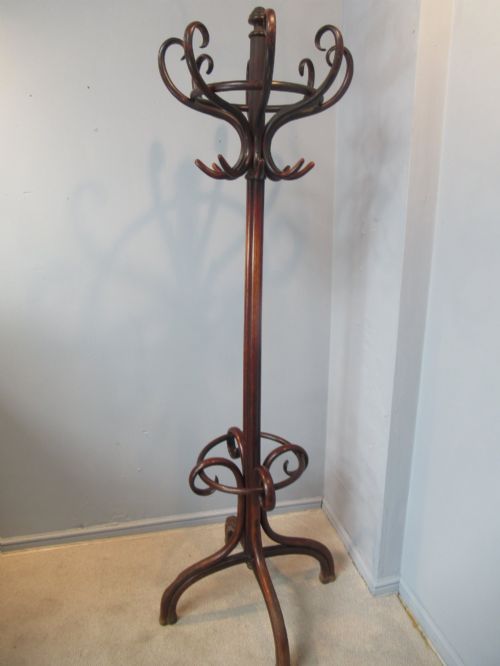
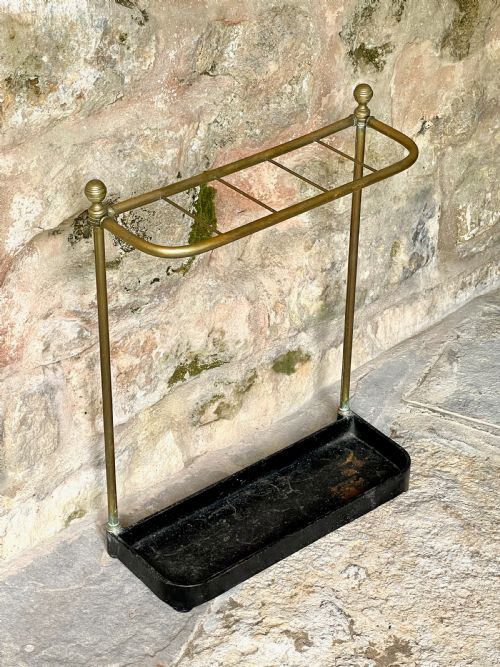
Cast iron and brass form durable metal frames, often paired with drip trays to catch rainwater from wet umbrellas. Bentwood techniques utilise steamed beech to create curving, lightweight uprights and integrated wall-standing designs.
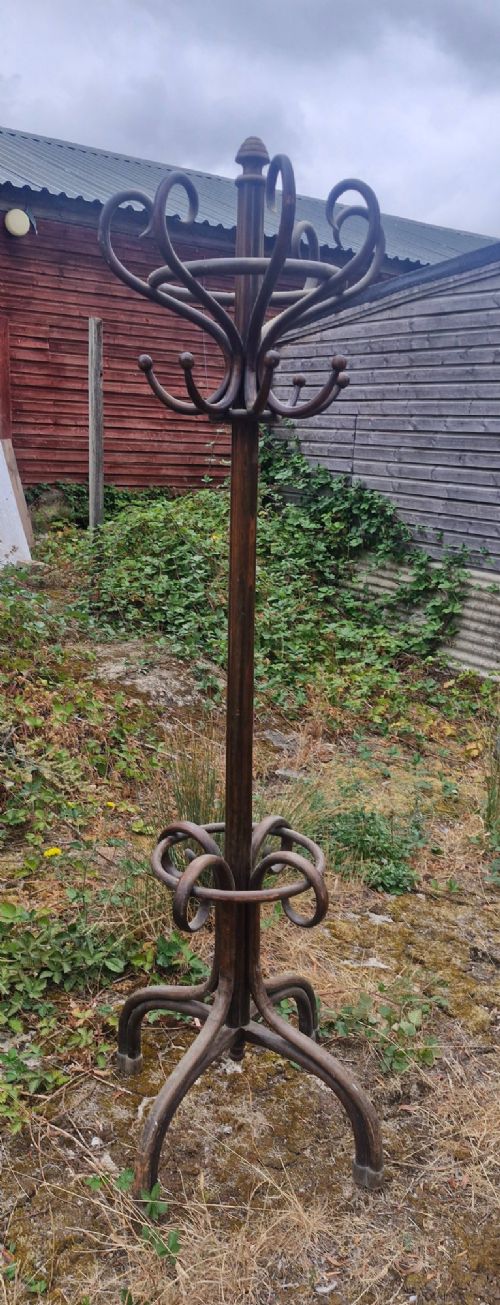
Some tall bentwood stands feature a revolving top section, letting guests spin the coat hooks until they find their hat.
Standards of Manufacture
The choice of primary timber and secondary framing dictates the integrity of each piece, with dense hardwoods outlasting softer pine or utility constructions. Substantial brass components and intact cast iron drip trays demonstrate superior original specification.
Refined joinery and purposeful ornamentation distinguish finer workshops from simpler utility pieces. Well-executed bentwood curves and integrated fittings show deliberate design rather than mass production.
Falkirk Foundry
The Traditional Umbrella Rack Glossary
- Bentwood
- Wood shaped by steaming to create flowing curves, commonly utilised in lightweight hat and coat stands. This technique gained prominence during the nineteenth century.
- Hall stand
- A piece of hallway furniture combining umbrella storage with coat hooks, a mirror, and frequently a small bench or glove box. These items greeted visitors in period homes.
- Stick stand
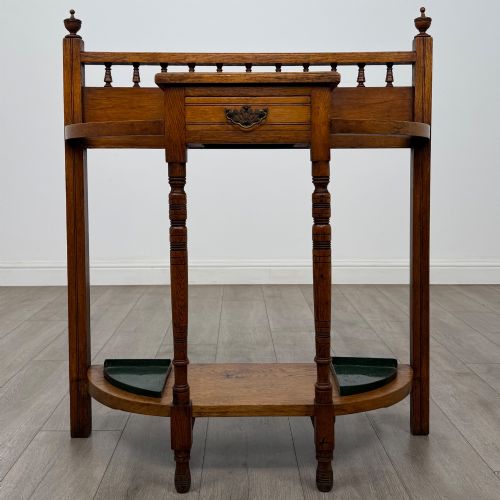
- A compact furnishing designed specifically to hold walking canes and umbrellas upright. They appear in brass, cast iron, and various timbers.
- Demi lune
- A half-moon shape characteristic of certain corner and wall-standing stick stands. This profile allows the piece to fit snugly against a hallway wall.
Traditional Umbrella Rack: Frequently Asked Questions
Where do you place an umbrella rack?
These pieces belong in a hallway or entrance lobby where guests arrive and depart. They sit against a wall or in a corner to manage outdoor garments efficiently.
Positioning the stand near the primary entrance ensures wet items are contained immediately upon entry. This protects interior flooring from water drips.
How do you maintain wooden umbrella stands?
Wood surfaces benefit from occasional application of quality wax to nourish the grain and protect against moisture. Maintaining dry conditions inside the base prevents timber rot.
Metal components such as brass or cast iron require gentle dusting and occasional cleaning. Keeping integrated drip trays dry preserves the surrounding structure.
What is a bentwood hat and coat stand?
A bentwood stand uses steamed beech wood shaped into smooth curves to form upright posts and hanging branches. These pieces offer tall, slender storage for hats, coats, and walking sticks.
Originating in the nineteenth century, this style provides lightweight stability without occupying excessive floor space in a hallway.
How do you distinguish Victorian from Edwardian stands?
Victorian pieces tend to use heavier timbers, cast iron, and ornate ornamentation. They reflect a preference for dark woods and substantial construction.
Edwardian designs often feature lighter golden oak or simpler lines aligned with Arts and Crafts ideals. These later pieces prioritise functional simplicity over heavy Victorian decoration.