


Traditional Timber Standard Lamp
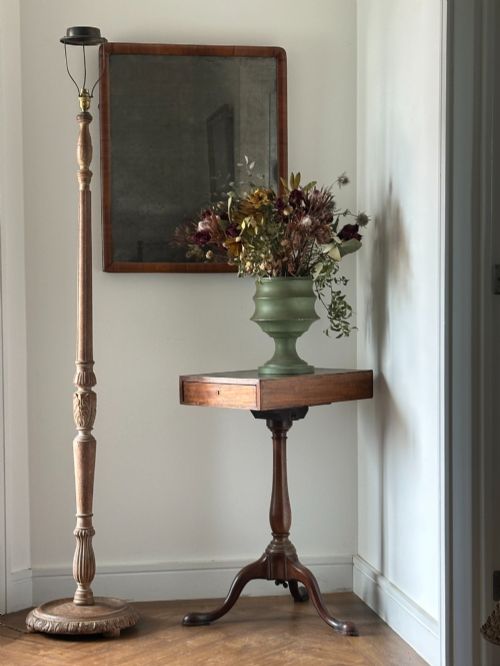
These traditional timber standard lamps bring upright warmth to a room, offering sturdy columns of oak, beech, and mahogany shaped in the early decades of the twentieth century.
Traditional Timber Standard Lamp
A traditional timber standard lamp stands as a tall vertical column designed to hold a shade and illuminate a room from floor level. When you search for traditional timber standard lamps, you encounter vertical lighting pieces spanning from the late Victorian era through to the interwar period.
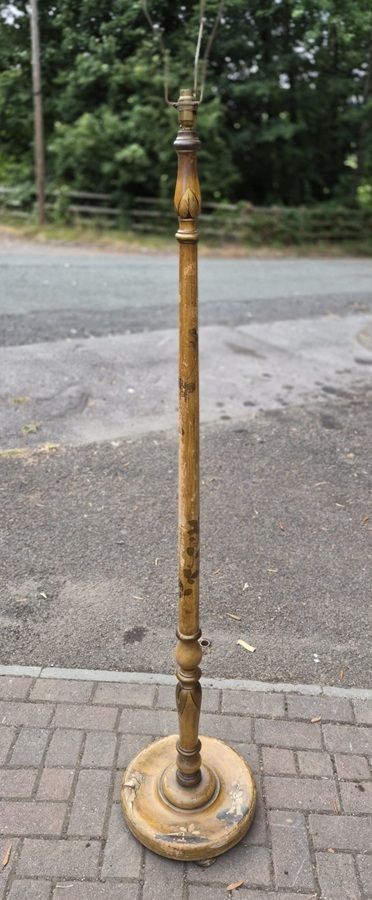
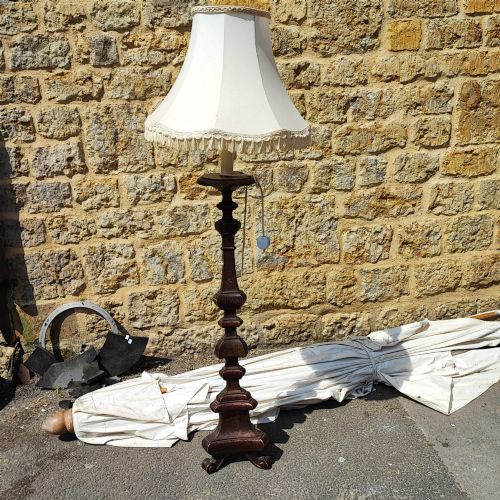
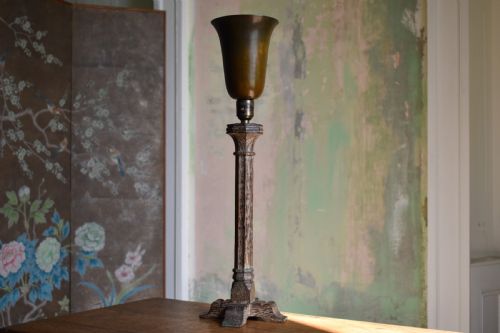
The pieces on this page mostly take the form of floor lamps and standard lamps shaped from oak, beech, mahogany, and padauk wood. Many date from the nineteen-twenties and nineteen-thirties, showing turned shafts, carved details, and occasional painted or lacquered surfaces.
How they were made
Craftsmen shaped these timbers using traditional turning lathes and hand carving techniques to create tall columns and stepped bases. Woods such as oak, beech, and mahogany provided the structural strength required for a tall, stable floor fixture.
Surface finishes included liming, lacquer, and paint, often paired with brass fittings and fabric shades. Oriental styles introduced padauk wood and chinoiserie decoration applied directly to the timber surface.
One unexpected resident among the lamps is an amusing sculpture of a night watchman with Ukraine interest.
What varies in quality
Quality rests in the crispness of the timber carving, the stability of the turned column, and the choice of wood used in the construction. Dense hardwoods like mahogany and padauk, or finely executed limed oak, separate standard utility pieces from more ambitious cabinet work.
The sophistication of the surface finish further defines the tier of the piece. Hand-applied lacquer, detailed Chinoiserie decoration, or stepped architectural bases indicate a higher level of workshop attention than plain turned utility timber.
Whytock and Reid
The Traditional Timber Standard Lamp Glossary
- Standard lamp
- A tall floor-standing lamp designed to illuminate a room from an elevated shade position. These fixtures were often placed beside armchairs or in corners.
- Limed oak
- Timber treated with a specialised finish that leaves a white pigment in the open grain. This technique lightened the appearance of dark oak furniture and lamps.
- Chinoiserie
- European decorative style reflecting Chinese artistic motifs and lacquer techniques. It appears on lamp columns through painted scenes and oriental figures.
- Turned wood
- Material shaped on a lathe while rotating against cutting tools. This method produced the symmetrical columns and circular bases seen on standard lamps.
- Padauk
- A dense tropical hardwood prized for its deep colour and durability. It provides a heavy, stable foundation for tall oriental extending lamps.
Traditional Timber Standard Lamp: Frequently Asked Questions
How do I date a timber standard lamp?
Dating relies on stylistic clues, timber choice, and construction methods. Pieces from the Victorian era often show heavier proportions, whilst nineteen-twenties and thirties examples lean towards stepped bases and limed finishes.
Examine the turning style and surface treatment to align the piece with Edwardian or interwar design periods. Hardware and electrical fittings, if original, also offer clues to the decade of manufacture.
Where should I place a standard lamp?
These tall lamps suit corners, reading areas, and spaces beside low seating where downward light is useful. Their vertical presence adds height and warmth to a room without occupying valuable floor space.
Ensure the cord reaches a wall socket safely without creating a trip hazard across walkways. Pairing the timber column with an appropriate fabric shade completes the setup.
What woods were commonly used?
Workshops utilised durable hardwoods like oak, beech, mahogany, and padauk. Oak and mahogany provided traditional strength for British designs, while exotic woods appeared in oriental styles.
Surfaces were frequently polished, painted, or limed to highlight the natural grain. The weight of these timbers ensured the tall lamps remained stable on floor surfaces.
Are these lamps wired for modern use?
Most antique lamps require professional inspection and rewiring to meet current safety standards. Updating the internal wiring ensures the piece operates safely in a modern home.
Consult a qualified electrician to check the lamp holder, cord, and plug before regular use. Preserving the original switch or exterior fitting maintains the historic character.