



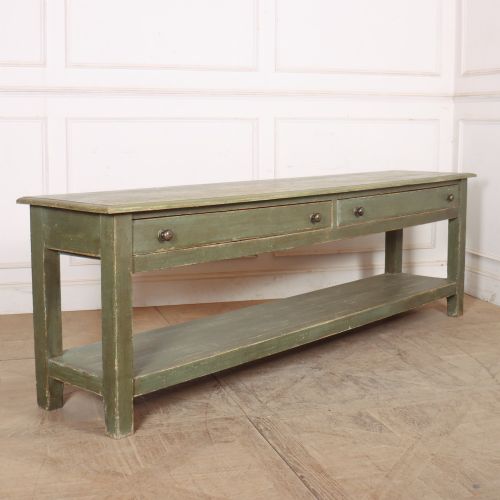


Traditional Timber Console Tables
Traditional timber console tables anchor a room with their long lines and solid presence, offering surface space built from enduring woods.
Traditional Timber Console Tables
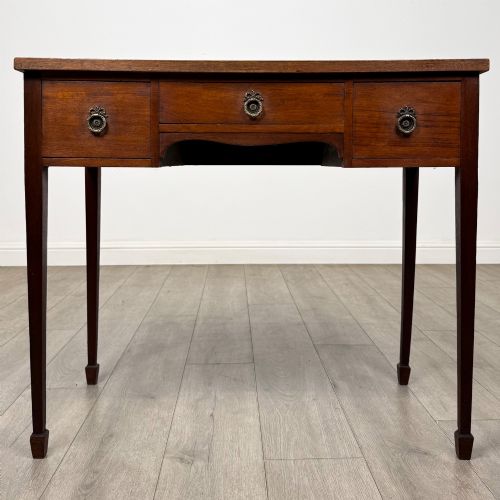
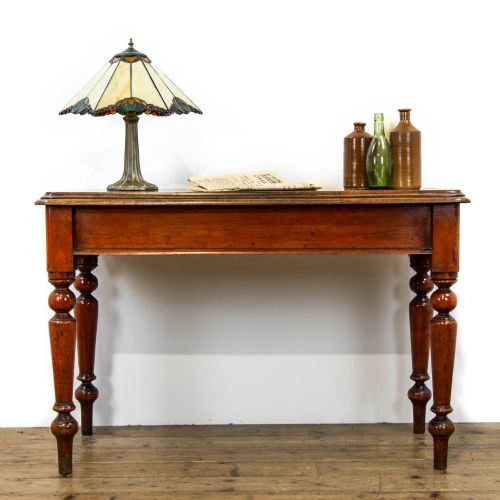
Traditional timber console tables encompass a wide range of long, narrow forms designed to stand against walls or in hallways, including console tables, side tables, serving tables, and dresser bases. When searching for traditional timber console tables, buyers encounter pieces originating from the eighteenth, nineteenth, and early twentieth centuries, spanning periods from Georgian through Victorian to Edwardian.
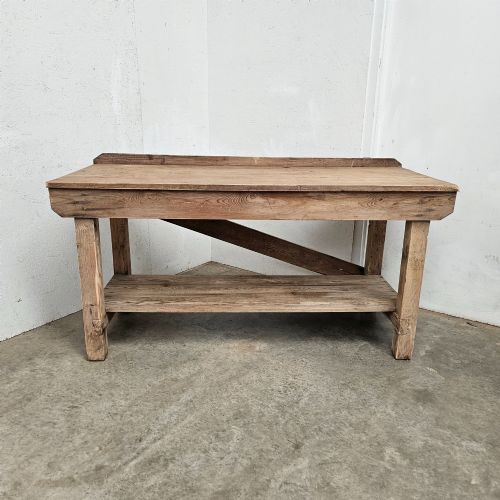
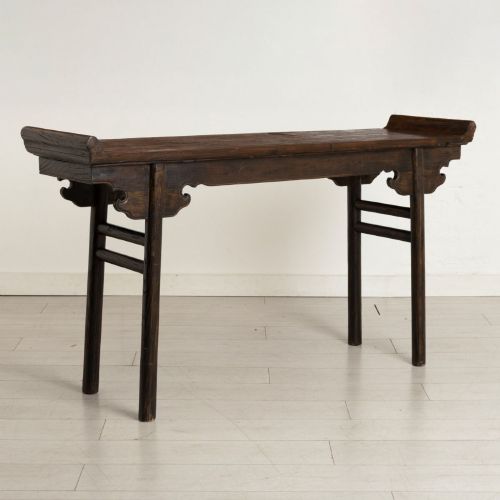
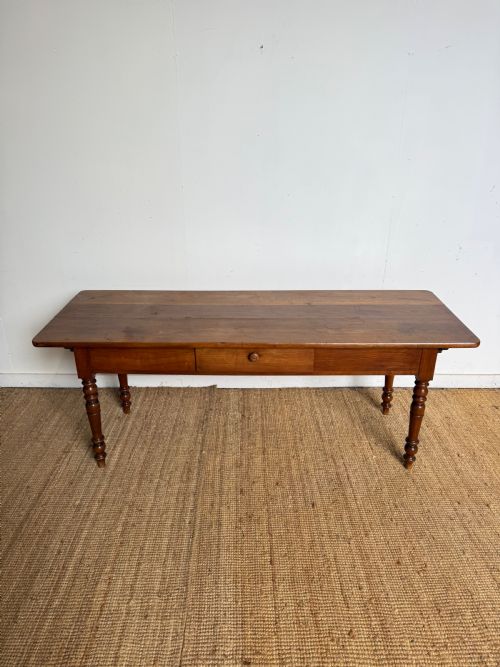
The selection ranges from British country house pine and oak prep tables to formal Georgian mahogany designs, alongside French fruitwood and beech workbenches and Chinese elm altar tables. The most commonly met examples on this page are nineteenth-century mahogany pieces and painted pine country items, reflecting domestic utility and formal reception rooms alike.
Materials and Construction Methods
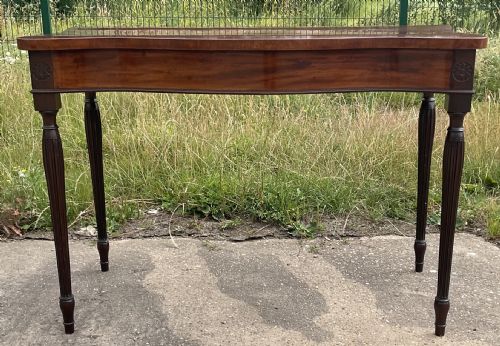
Makers utilised a variety of solid timbers depending on the regional tradition and intended function, working extensively in mahogany, pine, elm, oak, fruitwood, beech, and cherrywood. Formal pieces often employed mahogany with serpentine or breakfront forms, while utilitarian furniture like workbenches, potting tables, and dresser bases relied on robust pine, oak, and elm.
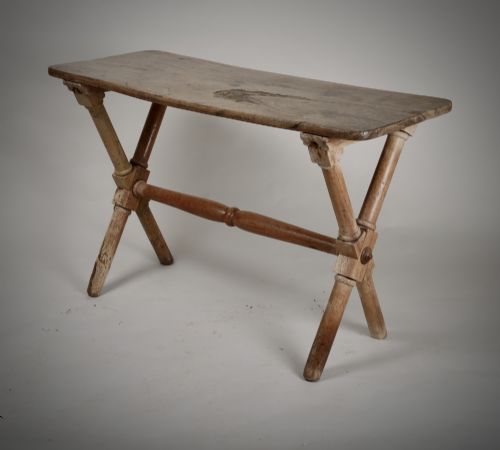
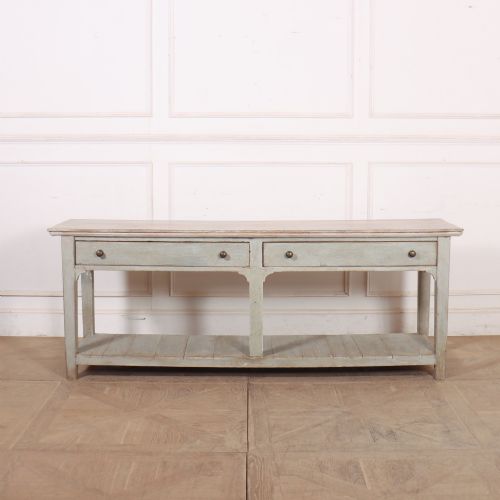
Construction techniques visible across the inventory include plank-top trestle assembly, hand-painted finishes over wood, and functional additions such as brass hardware, potboards, and working vices on artisan workbenches. Surfaces range from unadorned timber showing natural grain to hand-painted country house treatments.
Distinctions in Quality and Make
Quality in these tables rests on the selection of timber and the integrity of the joinery, distinguishing utilitarian workshop items from refined period reception furniture. Heavier, dense hardwoods like mahogany and eighteenth-century walnut demonstrate precise cabinetmaking, whereas regional vernacular items derive their character from honest wear and straightforward construction.
The refinement of the silhouette separates formal styles, such as Georgian revival and serpentine front console tables, from rustic farmhouse and French provincial workbenches. Proportion, original painted surfaces, and intact structural elements like potboards or trestle bases determine the standing of each piece within its specific typology.
The Traditional Timber Console Tables Glossary
- Console table
- A table designed to be fixed or placed against a wall, frequently featuring a narrow profile suited to hallways and reception rooms.
- Dresser base
- A lower storage and preparation unit, often fitted with drawers and an open lower shelf known as a potboard.
- Altar table
- A traditional Chinese table form with elongated proportions, frequently constructed from elm or hardwood with distinctive upturned ends.
- Lowboy
- A small eighteenth-century dressing or side table featuring one or more rows of drawers beneath the surface.
- Potboard
- An open lower shelf fitted between the legs of a dresser base or serving table, traditionally used for storing pots and domestic vessels.
Traditional Timber Console Tables: Frequently Asked Questions
What is a console table used for?
These tables provide a narrow surface for display, lamps, and decorative objects in narrow spaces like hallways and corridors.
They function as serving surfaces in dining areas or as writing desks depending on their historical configuration.
How do I date an antique timber table?
Dating relies on identifying the prevailing timber species, construction methods, and stylistic cues associated with periods like the Georgian era or the nineteenth century.
Secondary woods, tool marks, and hardware types offer further physical evidence for determining age.
Where should I place a console table?
They fit naturally against living room walls, entryways, and behind sofas due to their shallow depth.
Kitchens and dining rooms also accommodate larger dresser bases and serving tables from the inventory.
What woods were used in these tables?
Cabinetmakers utilised dense tropical hardwoods like mahogany alongside European timbers including oak, pine, elm, beech, fruitwood, and walnut.
Chinese pieces frequently employ elm and regional hardwoods with plank tops.