
Traditional Timber Chair
A traditional timber chair brings sturdy craftsmanship and enduring wooden character into a room.
Traditional Timber Chair
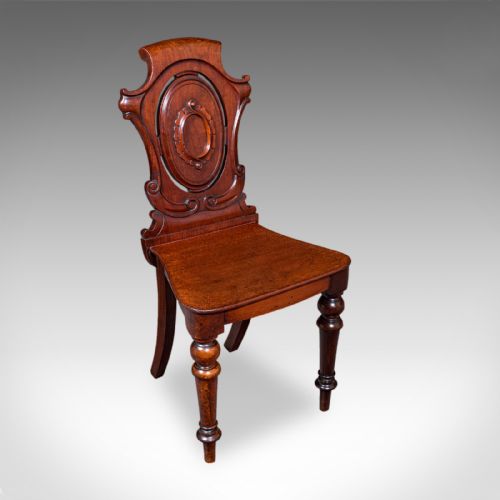
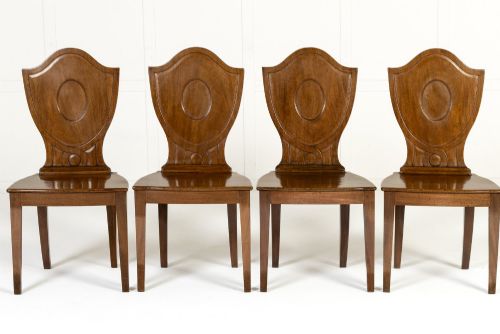
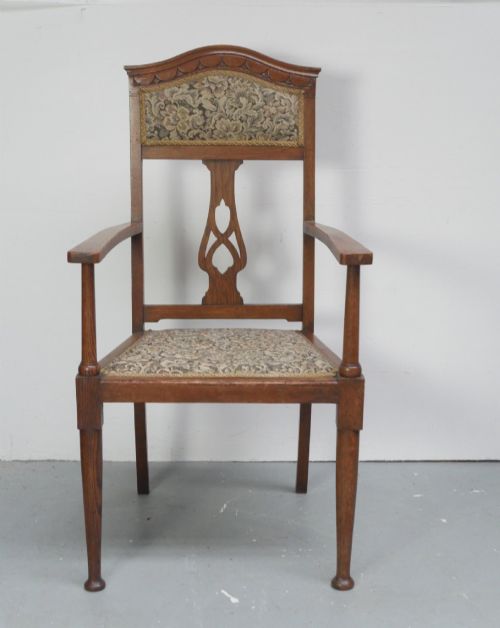
A traditional timber chair is a seat fashioned from solid woods such as elm, oak, mahogany, ash, and beech. These pieces span centuries, encompassing periods from the eighteenth century through the Victorian era and into the early twentieth century.
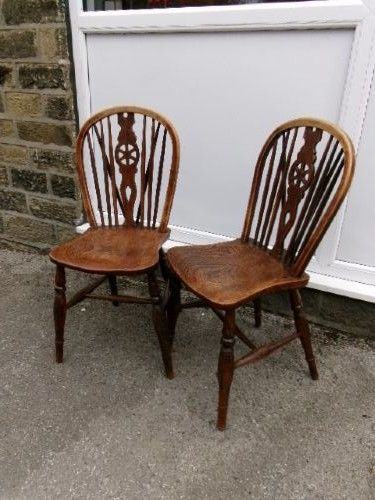
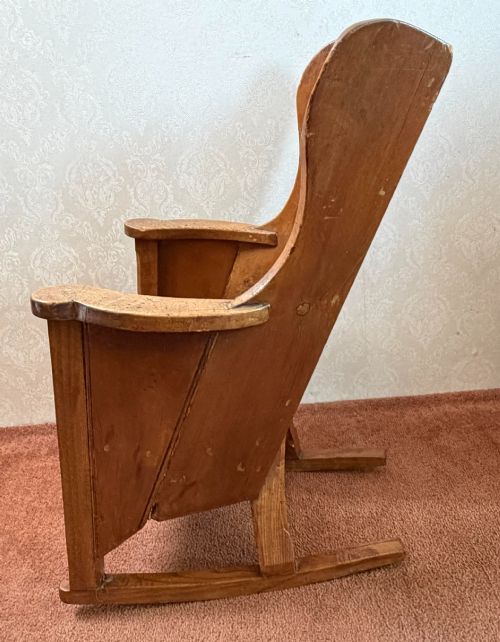
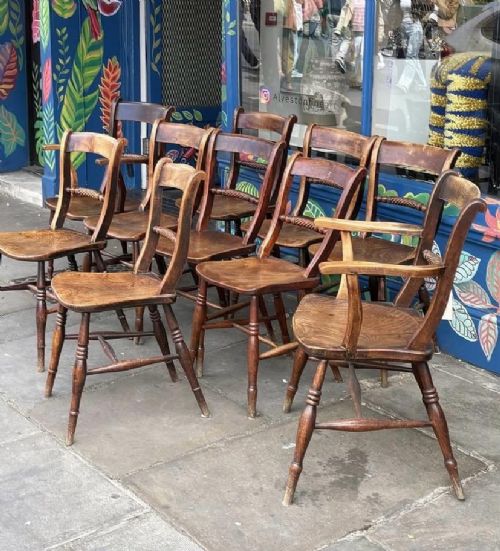
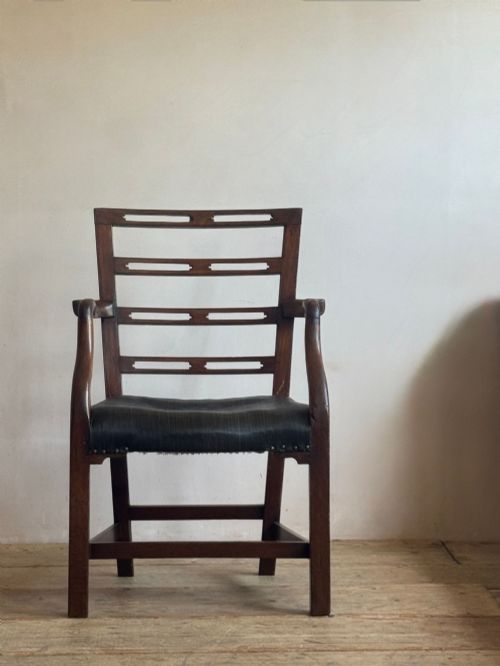
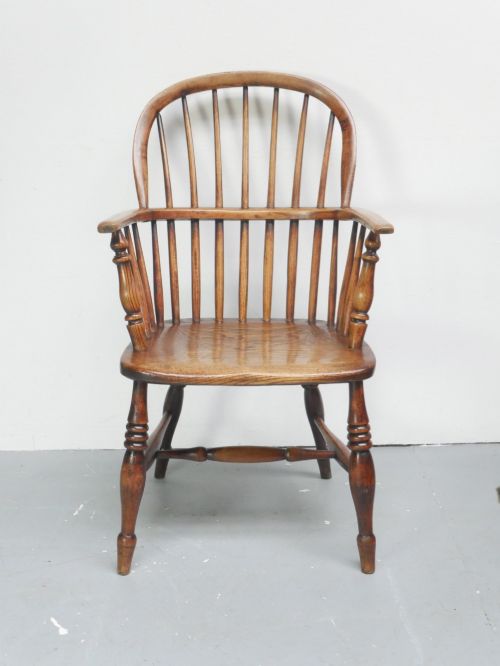
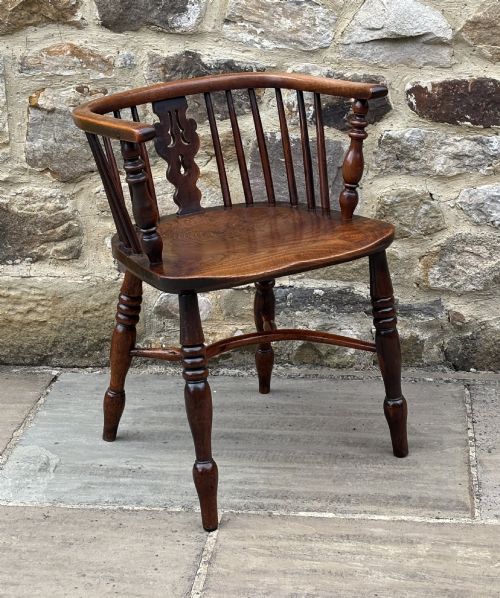
The selection ranges from country kitchen seating and windsor designs to formal dining chairs, hall chairs, and rocking chairs. Elm-seated wheelback and hoop-back windsor chairs appear frequently alongside ladder-back armchairs and panelled settles.
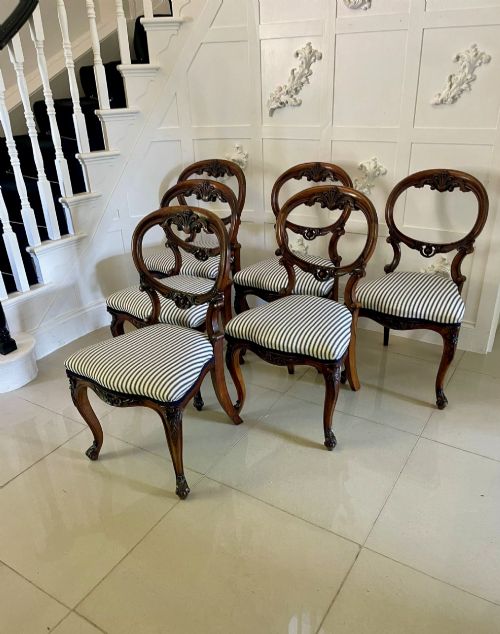
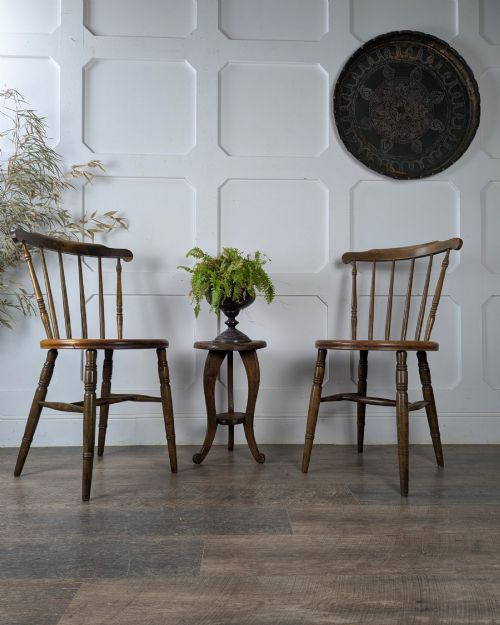
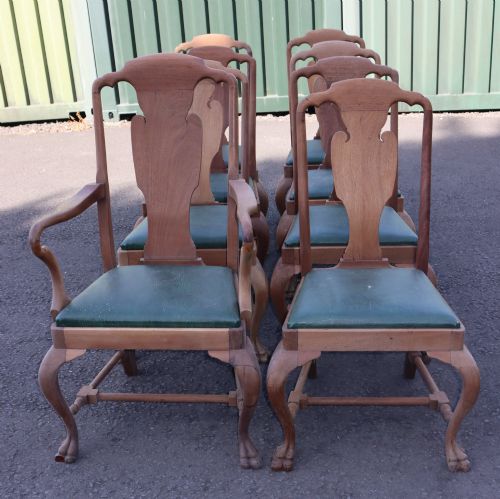
Makers utilised vernacular styles alongside formal regional variations, producing seating suited to cottages, grand halls, and dining rooms alike. Pieces include single items, pairs, and matched sets intended for everyday use.
How they were made
Makers selected native timbers for specific structural roles, pairing flexible ash for bent components with sturdy elm or beech for seats and legs. Mahogany appeared in formal urban workshops for carved dining and hall chairs.
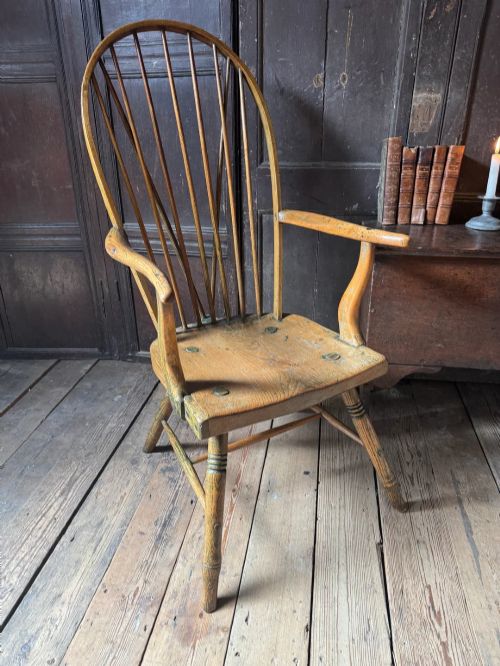
Traditional construction relied on mortise and tenon joinery, turned spindles, and steam-bent components fixed without modern adhesives. Windsor designs employed shaped plank seats drilled to receive turned legs and bowed backrests.
Surface finishes generally consisted of natural wax, oil, or traditional polish applied directly to the timber. Some vernacular examples received layers of painted decoration or simple rustic treatments.
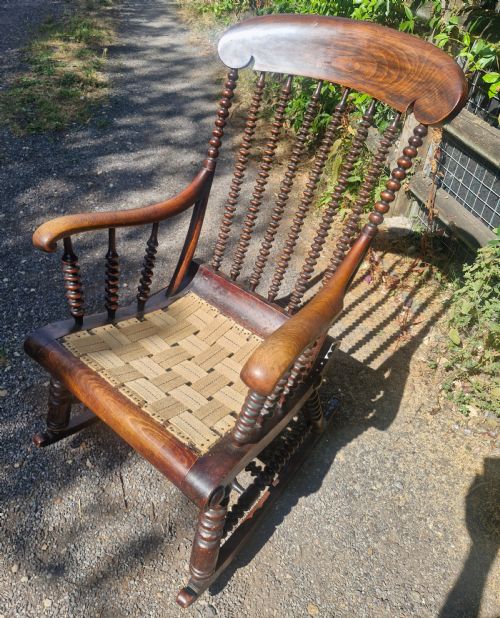
Several diminutive child-sized rocking chairs and high chairs survive, built precisely like adult seating for tiny Victorians.
What varies in quality
The choice of timber and the integrity of the original construction dictate the standard of a piece. Well-selected grain matching and robust joinery separate utilitarian seating from finer workshops.
Proportion and comfort distinguish superior examples, particularly in windsor and ladder-back forms where the rake of the back and the shaping of the armrests affect posture. Retaining original surfaces without heavy restoration preserves historical character.
The Traditional Timber Chair Glossary
- Windsor chair
- A wooden chair constructed with a solid shaped seat into which the legs and back spindles are directly tenoned. These traditional seats often feature curved backbows and central splats.
- Wheelback
- A Windsor chair variation featuring a pierced splat carved in the shape of a spoked cart wheel. This decorative motif gained popularity in nineteenth-century country kitchens.
- Settle
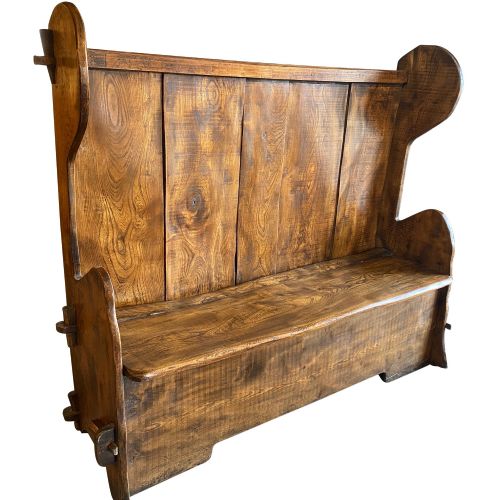
- A wooden bench featuring a high solid back designed to block drafts, frequently incorporating a box base with lift-up storage beneath the seat. They served near hearths in traditional dwellings.
- Ladder-back
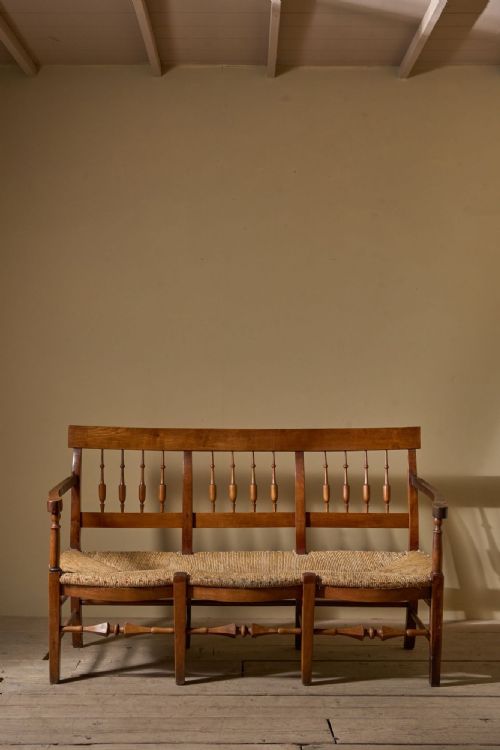
- A chair style characterised by horizontal wooden slats or rails set between the upright rear posts. These lightweight seats often incorporated rush or timber panel bases.
Traditional Timber Chair: Frequently Asked Questions
How do I date a wooden chair?
Dating relies on observing construction methods, tool marks, and timber choices visible across different periods. Eighteenth-century examples often display hand-sawn components and vernacular joinery, whereas Victorian pieces may show machine-turned elements.
Matching the overall style to documented regional forms helps narrow the decade of production. Examining wear patterns on the seat and footings also provides clues to age.
Are windsor chairs comfortable?
Windsor chairs are ergonomically shaped with saddled wooden seats carved to fit the body. The rake of the backrest and curved steam-bent arms provide natural support for sitting.
Adding a loose squab cushion can increase comfort for prolonged dining or reading. The solid wood construction adapts to the sitter while remaining firm.
How should I clean a timber chair?
Clean wooden surfaces using a soft, dry cloth to remove dust and surface grit. Avoid harsh chemical cleaners or excessive water that can damage historic polishes.
Applying a traditional beeswax polish occasionally helps nourish dry timber and maintains a soft sheen. Buff the wax gently after application to protect the grain.
What is the difference between a side chair and an armchair?
Side chairs are built without armrests, making them compact enough to tuck neatly beneath dining tables or line a hallway wall. Their smaller footprint suits versatile placement around a room.
Armchairs incorporate structural arm supports that offer a more enclosed seating position. These larger frames typically serve as standalone pieces or head seats at a dining table.