
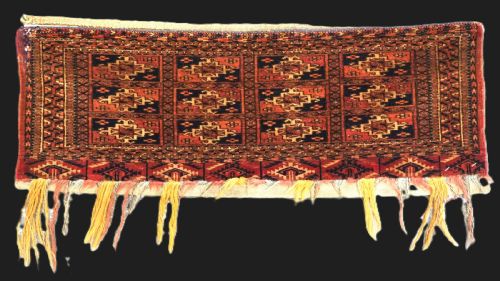


Traditional Tekke Carpet
A traditional tekke carpet brings the geometric mastery of Central Asian weaving into a room through deep red fields and precise tribal medallions.
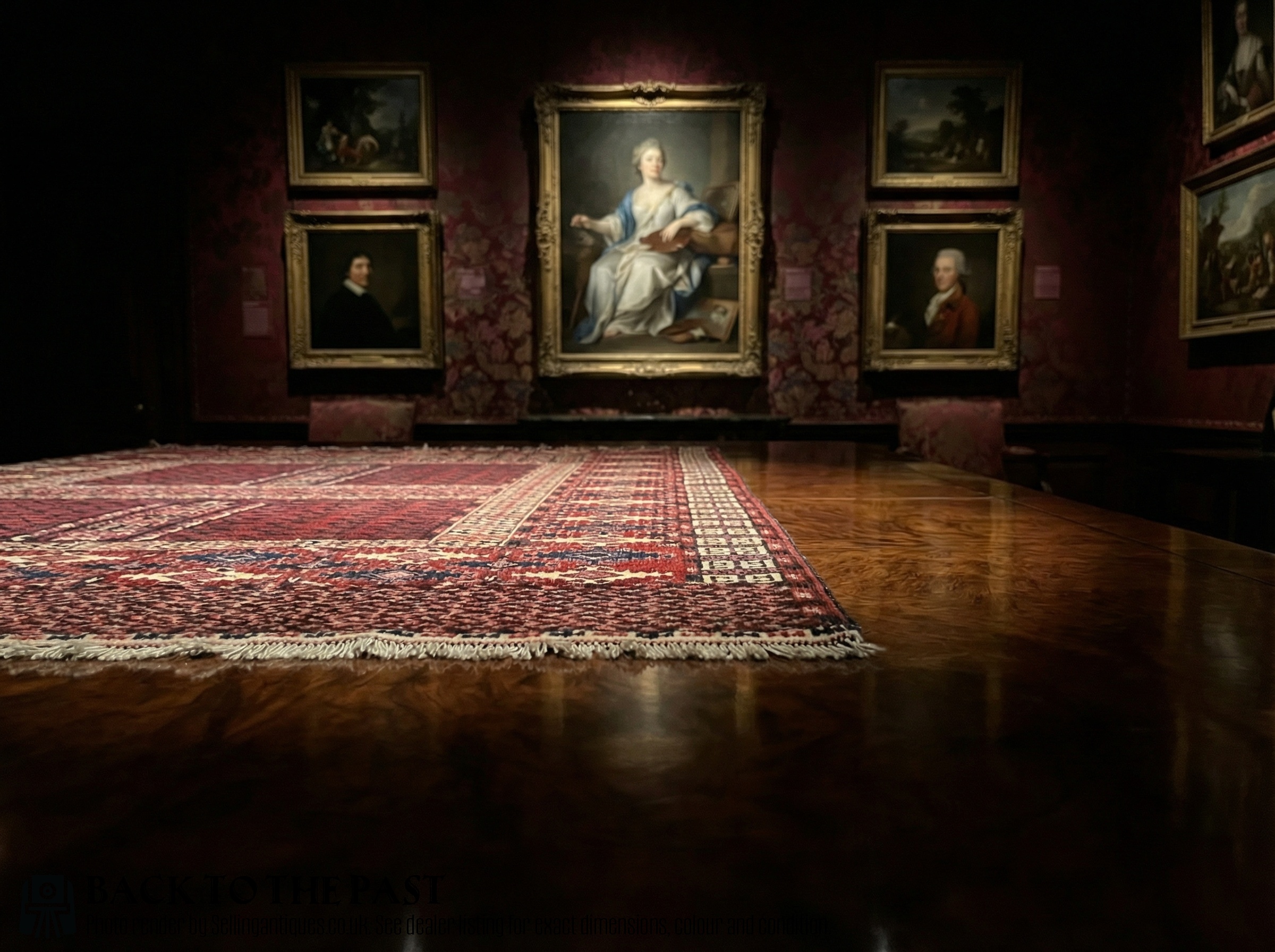
Traditional Tekke Carpet
When searching for a traditional tekke carpet, a buyer encounters dense pile rugs, large main carpets, and smaller format dowry pieces originating from Central Asian nomadic and tribal traditions. These textiles span periods from the mid-nineteenth century up to the early twentieth century, showing distinct cultural designs passed down through generations.
The most frequent examples found in these listings include format variations such as torba or chuval bag faces, ensi prayer rugs, and square or runner dimensions. Each form serves specific domestic or ceremonial functions within the tribal household, displaying disciplined layouts of repeating primary motifs.
The aesthetic is dominated by controlled geometry, where structured borders frame fields filled with characteristic octagonal formations. These pieces connect modern interiors directly to the utilitarian art of nineteenth-century Turkmen weavers.
Distinctions in quality
Quality reveals itself through the fineness of the weave and the precision of the geometric motifs across the field. Highly disciplined execution of primary design elements separates standard production from exceptional examples.
The depth, clarity, and richness of the natural dyes influence visual success, alongside the overall preservation of the pile. Pieces retaining intact backs or scarce design variations command greater interest.
Listings feature wool, silk, cotton, and natural dyes applied across nineteenth and early twentieth-century formats.
The Traditional Tekke Carpet Glossary
- Gul
- The primary octagonal medallion motif repeated across Turkmen carpets. This design acts as the central visual anchor for the field layout.
- Torba
- A small utilitarian tribal bag used for storage inside a yurt. These often survive as flat-faced fragments or complete pieces with original plain weave backs.
- Chuval
- A large tent bag used by Turkmen tribes for household storage. They feature multiple large guls similar to main carpet designs.
- Ensi
- A tribal rug functioning primarily as a tent door hanging. They display a characteristic cross-panel design dividing the field.
- Cochineal
- A natural insect-based dye producing vibrant pinkish-red or crimson highlights. Its presence adds distinct brilliance to wool piles.
Traditional Tekke Carpet: Frequently Asked Questions
How do I style a tribal carpet at home?
A traditional tekke carpet anchors modern or classic interiors through its deep red and burgundy colour palette. Placing one in a study or hallway lets the geometric patterns stand out against neutral floors.
Because many examples were built for heavy domestic use, they handle normal foot traffic well while adding textural history to a room.
What is the difference between a main carpet and a dowry rug?
Main carpets are large floor coverings designed for primary living spaces within a dwelling, featuring extensive grids of repeating guls. Dowry rugs are typically smaller, finer pieces woven specifically for wedding ceremonies.
Dowry examples often incorporate scarce design variations or silk highlights intended to display the weaver's technical skill.
How can I identify a torba or chuval face?
Torbas and chuvals are tribal bag faces originally part of larger storage containers used inside nomadic tents. A torba is smaller in format, while a chuval is larger and displays multiple primary guls.
Many surviving examples preserve portions of their plain weave backs or complete structural formats from the nineteenth century.