





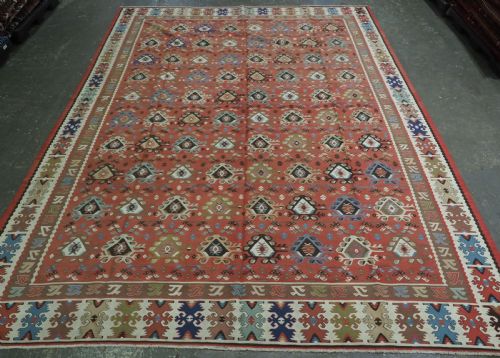
Traditional Tapestry Woven Carpet
A traditional tapestry woven carpet brings flatweave geometry and floral motifs into a room, offering durability and flat-lying texture.
Traditional Tapestry Woven Carpet
A traditional tapestry woven carpet encompasses flatweave rugs, kilims, needlepoints, and wall tapestries originating from diverse regions including Eastern Europe, Anatolia, Persia, and France. Buyers searching for a traditional tapestry woven carpet will frequently encounter Bessarabian, Pirot, and Aubusson examples spanning the nineteenth and early twentieth centuries.
The selection ranges from French floral room-sized pieces to tribal flatweaves from the Caucasus and Central Asia, such as Uzbek, Qashqai, and Baluch pieces. These textiles function as floor coverings or wall hangings, providing distinct regional patterns from banded designs to flowering trees.
Materials and construction
Makers utilised wool, cotton, and silk as the primary fibres, often combining wool and cotton to achieve structural stability in flatweave constructions. Weaving methods vary from slit-tapestry techniques seen in kilims to needlepoint stitching on canvas.
Many Eastern European and Central Asian carpets were constructed in narrow strips and subsequently joined together, as evidenced in Uzbek and Pirot examples. Natural dyes created the soft reds, blues, and neutral tones characteristic of older textiles.
Traditional Tapestry Woven Carpet Retail Price Guide 2026
Typical asking prices for traditional tapestry woven carpet among the pieces listed under this phrase on Sellingantiques today, from the lower quarter to the upper quarter. They describe what is for sale here now, not the wider market.
Some nineteenth-century nomadic saddle bags survived by being repurposed as floor coverings after their original camel-riding days ended.
Assessing quality and character
Quality rests in the crispness of the design execution, the complexity of the weave, and the harmony of the palette. Finer examples display precise geometric or floral repetition and careful handling of multi-strip assembly.
The integrity of the fibres and the retention of soft, balanced colour distinguish superior survivals from heavily worn specimens. Condition varies from crisp wall-hanging tapestries to room-sized floor carpets that bear the patina of age.
The Traditional Tapestry Woven Carpet Glossary
- Kilim
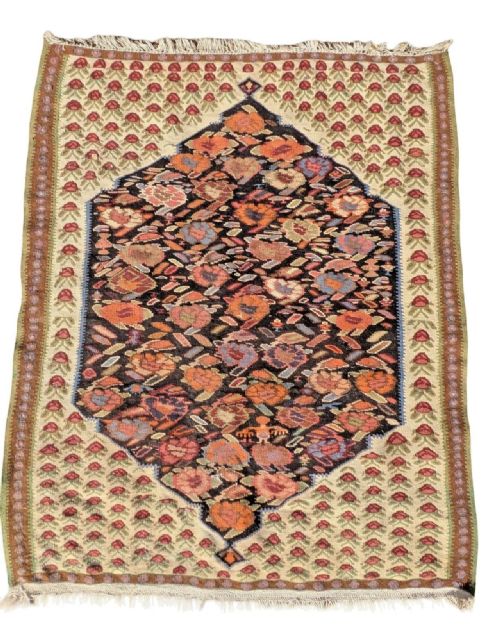
- A flatweave carpet or rug produced without a pile by tightly interweaving warp and weft strands. This construction creates a lightweight textile suitable for both floors and walls.
- Aubusson
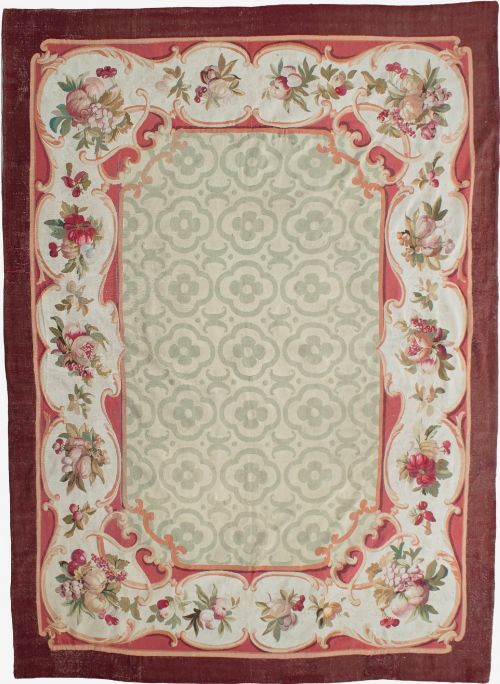
- A French style of tapestry woven carpet typically featuring classical floral, architectural, or chateau motifs. These pieces derive their name from the historic French manufacturing town.
- Bessarabian
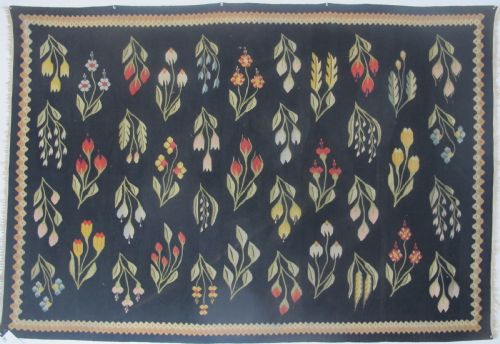
- A style of tapestry-woven rug originating from Eastern Europe, known for dark grounds paired with naturalistic floral sprays. They often employ heavy wool yarns.
- Pirot
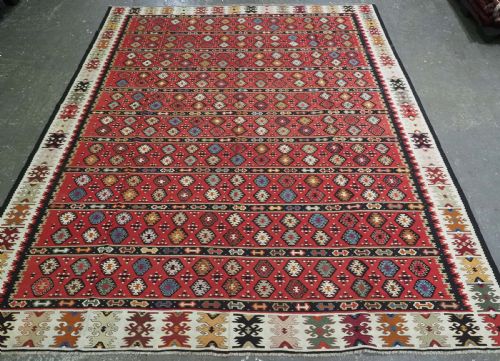
- A type of Balkan flatweave kilim characterised by sharp geometric motifs and balanced borders. They are traditionally woven in distinct regional workshops.
- Chuval
- A large tribal bag face produced by Turkmen groups, featuring gul medallions arranged in rows. These items were originally utilised for nomad storage before entering the collector market.
Traditional Tapestry Woven Carpet: Frequently Asked Questions
How do I clean a flatweave carpet?
Gentle surface vacuuming without a beater bar removes loose dirt from flatweave wool and cotton textiles. Professional specialist cleaning is recommended for antique pieces to protect delicate natural dyes.
Water saturation and aggressive scrubbing should be avoided entirely to prevent dye running and fibre distortion. Proper maintenance preserves the structural integrity of the weave over decades of domestic use.
Can I hang a tapestry rug on the wall?
Many lighter flatweaves and dedicated wall tapestries are well-suited for vertical display using appropriate non-damaging mounting techniques. Distributing the weight evenly along the top edge prevents distortion of the warp threads.
Direct, strong sunlight should be avoided to protect soft dyed wool and silk from fading. Rotating wall-hung pieces periodically ensures even exposure to ambient light.
What is the difference between a kilim and an Aubusson?
Kilims are flatweave tribal textiles featuring geometric patterns, produced largely across Anatolia, the Caucasus, and Eastern Europe. Aubusson carpets are French tapestry weaves displaying refined floral and chateau designs.
While both lack a traditional raised pile, their cultural origins, colour palettes, and decorative vocabularies differ completely. This distinction helps buyers identify regional and stylistic provenances quickly.
How do I date an older flatweave rug?
Dating relies on stylistic analysis, material composition, and structural characteristics such as dye types and strip construction. Nineteenth-century examples often display softer, vegetable-dyed palettes and hand-spun wool fibres.
Comparing border motifs, structural joins, and known regional designs helps narrow the period of manufacture. Consultation with historical textile records provides further confirmation of age.