



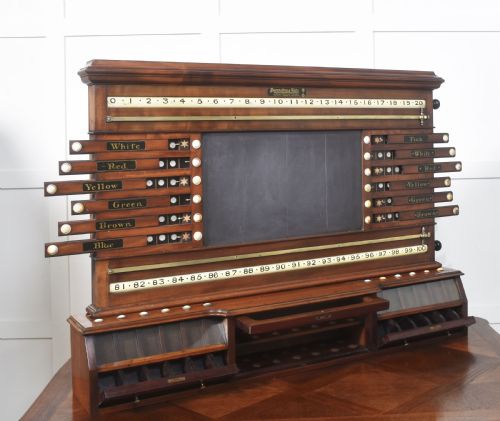


Traditional Table Game
These traditional table game pieces bring period craftsmanship and parlour amusement straight into the home, offering both decorative presence and tactile history.
Traditional Table Game
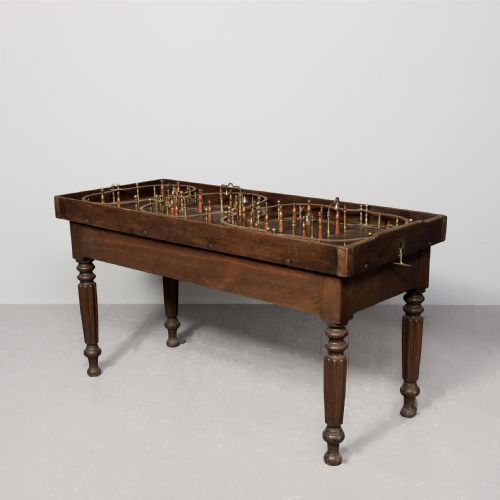
The objects on this page reflect the leisure habits of past households, encompassing dedicated furniture like Queen Anne style card tables alongside tabletop accessories such as skittles, scoreboards, and game bells. Materials span from polished mahogany and walnut to bone and brass, reflecting standard domestic manufacturing of the period.
How they were made
Cabinetmakers utilised robust timber such as mahogany, oak, walnut, and rosewood to construct sturdy tables and boards, often incorporating fine veneers like burr walnut. Surfaces frequently display hand-painted details or inlaid elements, particularly visible in chess tables and Edwardian card tables.
Smaller components and accessories rely on traditional materials including bone and brass for game pieces, bells, and hardware. Paper and fabric also appear in boxed sets and instruction manuals, completing the functional requirements of these parlour amusements.
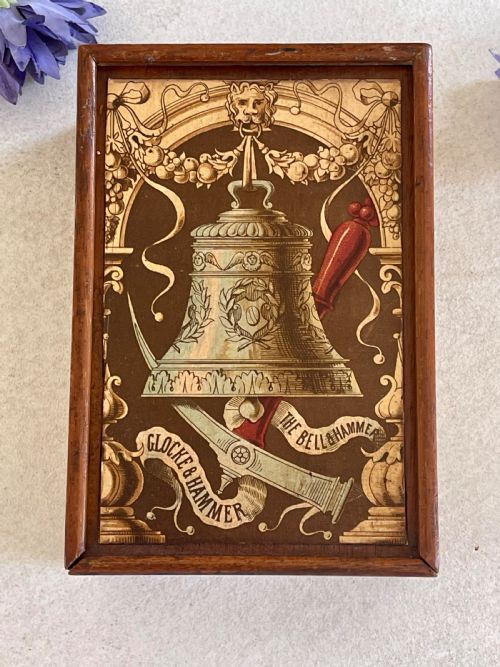
Several items include unexpected survivals, such as complete instruction manuals and brass game bells ready to summon order to a chaotic parlour.
What varies in quality
Quality in these pieces depends heavily on the grade of timber selected and the precision of the cabinetwork, visible in the tightness of joints and the crispness of carved or inlaid details. Tables styled in the Queen Anne or Edwardian Chippendale revival manners show varying degrees of sculptural ambition and decorative restraint.
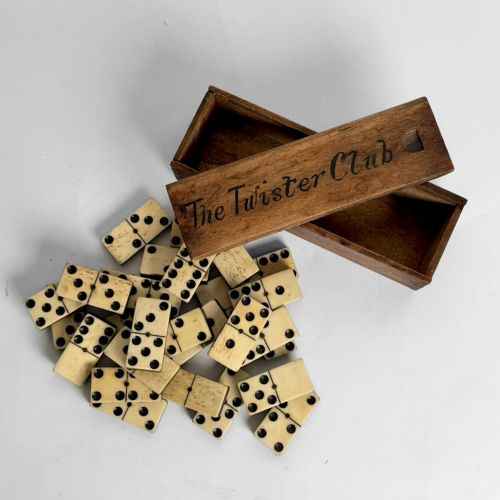
Completeness and originality dictate much of the standing of an item, particularly in boxed compendiums, domino sets, and games with peripheral equipment like hammers or scoreboards. Items retaining original surfaces and complete sets of playing pieces hold a different place from those assembled from mixed parts.
The Traditional Table Game Glossary
- Card Table
- A folding or pivoting table specifically designed for card playing, usually featuring a baize-lined surface when opened. These tables date predominantly from the Georgian, Victorian, and Edwardian periods.
- Compendium
- A comprehensive boxed set containing multiple games, such as chess, checkers, and backgammon, housed together in a fitted wooden case.
- Dominoes
- A gaming set consisting of small rectangular blocks marked with pips, used for various matching and scoring pastimes.
- Inlay
- A decorative technique where contrasting materials such as wood, metal, or stone are fitted into depressions within a solid surface to form patterns.
Traditional Table Game: Frequently Asked Questions
What is a games compendium?
A games compendium is a multi-game box housing equipment for several different pastimes, such as chess, draughts, and card games, all in one fitted container.
These sets were popular in nineteenth-century drawing rooms for entertaining guests with a variety of options without needing separate storage for each activity.
How do I date a card table?
Dating relies on observing the timber choice, leg style, and construction methods, such as noticing Queen Anne style cabriole legs or Edwardian mahogany framing.
Hardware, hinges, and the presence of hand-painted decoration also help narrow down whether a piece belongs to the Victorian era or the early twentieth century.
How were parlour games used?
Parlour games served as evening entertainment for family and guests in the drawing room before the widespread adoption of modern home media.
Items like skittles, squails, and game bells encouraged interactive social play during the Victorian and Edwardian periods.