




Traditional Stackable Side Tables
Traditional stackable side tables offer clever space-saving utility when nested together and practical surface space when separated around a room.
Traditional Stackable Side Tables
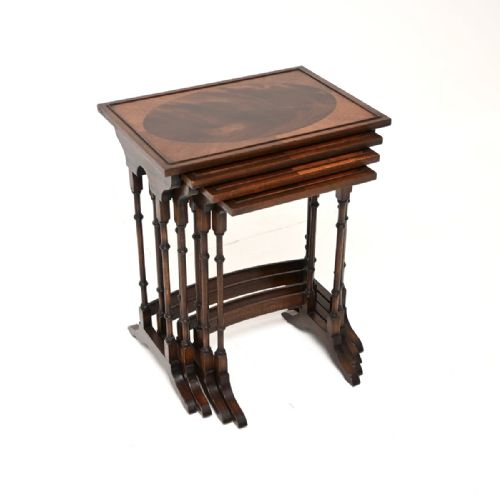
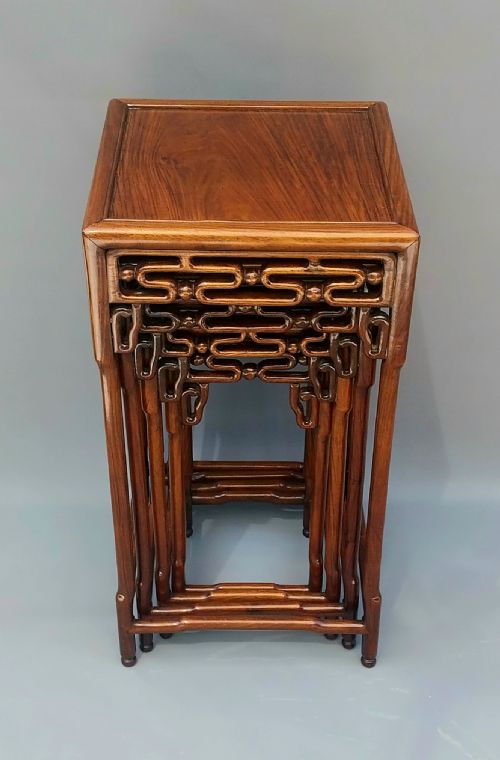
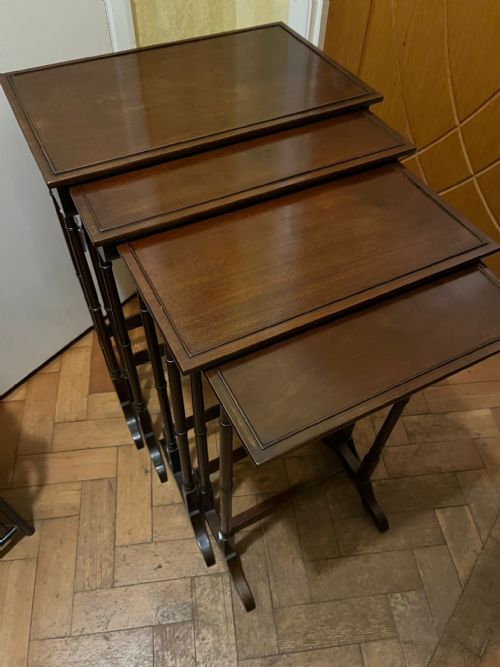
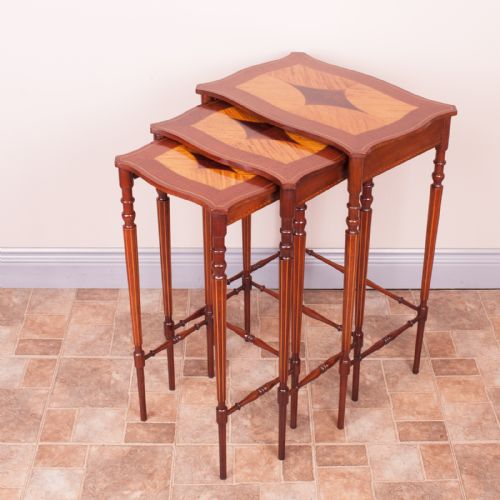
Traditional stackable side tables, appearing as nests of tables in the listings, solve the eternal problem of surface space in compact sitting rooms. When searching for traditional stackable side tables, buyers encounter sets containing three or four graduating tables designed to slide neatly beneath one another. These pieces originate from various periods including the Victorian and Edwardian eras, alongside pieces executed in the Georgian style and Chinese traditions.
The form typically manifests in mahogany, sometimes enhanced with inlay, satinwood, or rosewood, whilst Chinese examples utilise hongmu and lacquer with gold leaf. While rectangular tops dominate the selection, oval top variants also appear among the offerings. These items function equally well as individual side tables or coffee tables when deployed separately about the room.
How they were made
Cabinet makers constructed these nests using timber selected for both appearance and structural resilience, with mahogany forming the primary structural choice across English pieces. Veneer and solid hardwood appear frequently, whilst finer examples incorporate satinwood inlay to decorate the timber surfaces. Chinese workshops employed hongmu and lacquer techniques, occasionally embellishing the finished pieces with gold leaf detailing.
The construction requires precise dimensions to ensure each smaller table slides smoothly into the frame of the next without binding. Joinery techniques had to remain robust yet slender enough to maintain the delicate proportions characteristic of nests of tables from the nineteenth and early twentieth centuries.
Some sets manage to multiply fourfold whilst occupying the floor space of a single stray cat.
What varies in quality
The distinction between standard examples and superior pieces rests on the choice of materials and the crispness of the cabinet work. Tables described as having quality construction display tighter grain matching in the mahogany or rosewood veneers and cleaner execution of inlay work.
Proportion and stability define the upper tier of these pieces, ensuring that even the smallest table stands level and firm when removed from the nest. The integration of decorative elements like Chinoiserie lacquer or finely cut satinwood further elevates the status of a set.
The Traditional Stackable Side Tables Glossary
- Nest of tables
- A set of graduating tables designed to fit one beneath another to save floor space. They are typically found in sets of three or four.
- Quartetto
- A set of four tables designed to nest together. This term often appears in descriptions of nineteenth and early twentieth century tables.
- Hongmu
- A traditional Chinese term for dense hardwoods, often translated as red wood. It frequently appears in nineteenth-century Asian furniture.
- Inlay
- A decorative technique where contrasting woods or materials are embedded into the primary surface. Satinwood is commonly used for this purpose on mahogany pieces.
Traditional Stackable Side Tables: Frequently Asked Questions
What are traditional stackable side tables?
Traditional stackable side tables are sets of graduating tables designed to slide neatly underneath one another when not in use. They provide multiple surfaces for drinks or books while taking up the floor space of only a single table.
These pieces date from the Victorian and Edwardian periods as well as the early twentieth century, with styles ranging from plain mahogany to inlaid Georgian revivals and Chinese hongmu.
How were nests of tables used?
Historically, these tables remained nested against a wall or beside a chair until guests arrived or tea was served. Individual tables were then pulled out and placed around the room to hold cups, books, or decorative objects.
Today, they serve the exact same function in modern homes, offering flexible surface space that adapts easily to entertaining or daily relaxation.
What woods are used in these tables?
Mahogany is by far the most common timber found in these traditional sets, frequently accompanied by veneer, rosewood, and hardwood foundations. Finer British examples often incorporate satinwood inlay for decorative contrast.
Asian pieces utilise dense hongmu or feature lacquer finishes adorned with gold leaf, reflecting the diverse manufacturing traditions found within the category.
How do I tell the periods apart?
Dating relies on timber characteristics, construction methods, and stylistic cues associated with specific eras such as the Victorian and Edwardian periods. Pieces from the nineteenth century often display heavier proportions, whilst early twentieth-century examples lean towards refined Georgian or Queen Anne revival styles.
Chinese pieces from the late Qing dynasty or nineteenth century display distinct joinery and timber choices like hongmu, separating them clearly from European workshop output.