

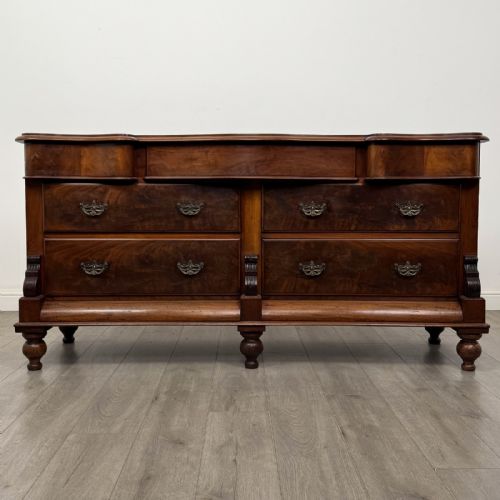
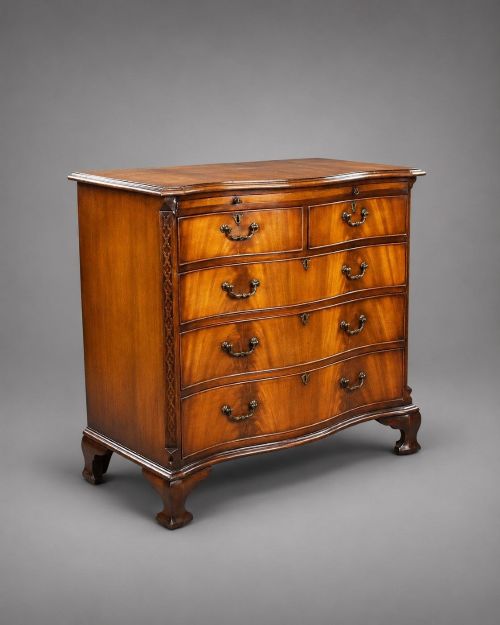
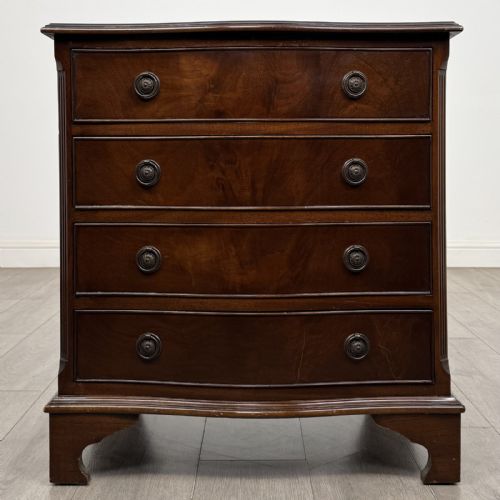
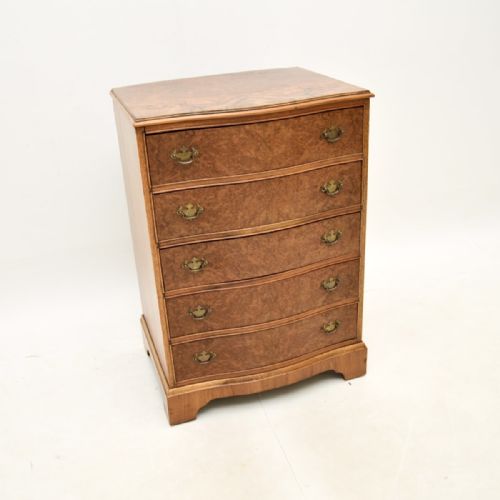



Traditional Serpentine Chest
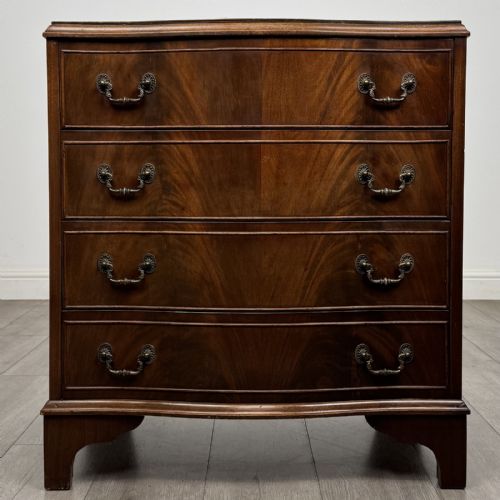
A traditional serpentine chest brings a sweeping, undulating front to a room, offering timeless storage fashioned in rich timbers.
Traditional Serpentine Chest
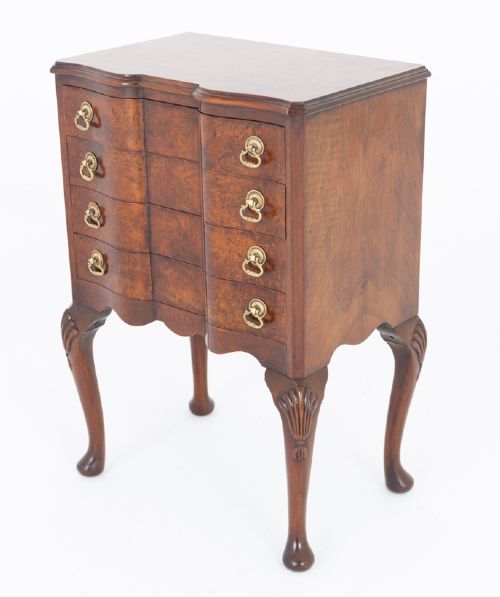
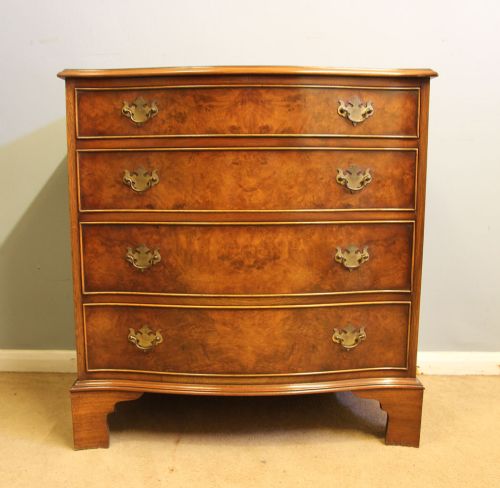
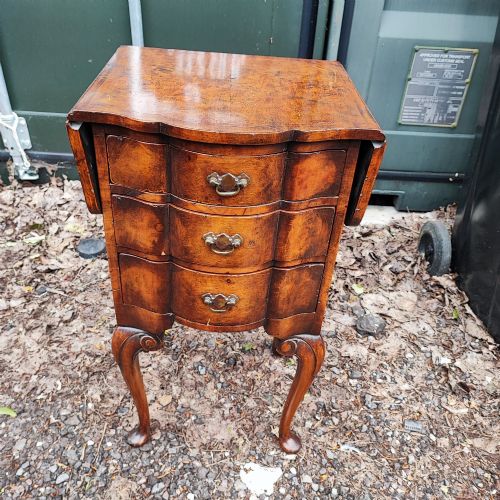
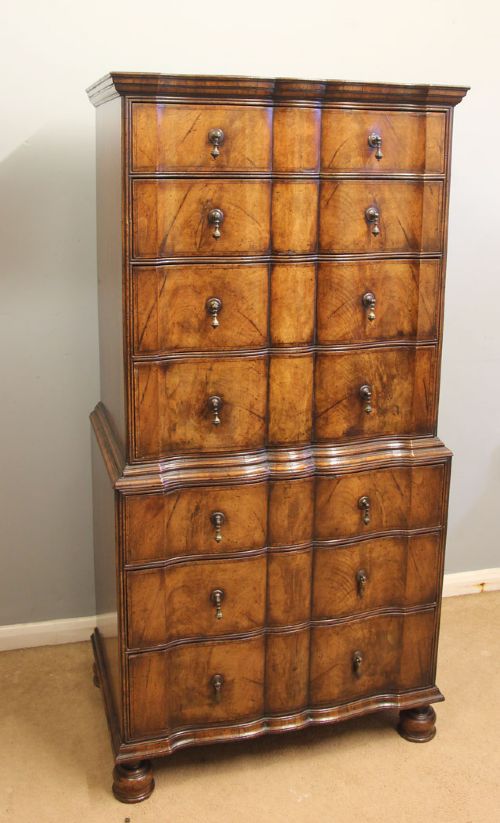
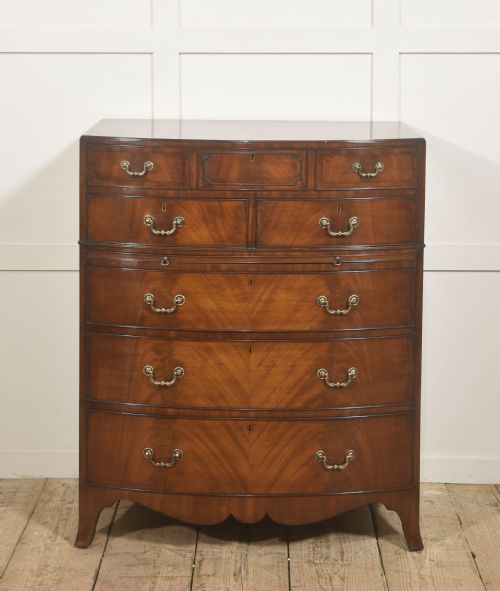
When you search for a traditional serpentine chest, you encounter a distinct case furniture piece characterised by its curved, undulating front edge. The listings here present numerous variations, from Georgian originals to Edwardian revivals and twentieth-century interpretations.
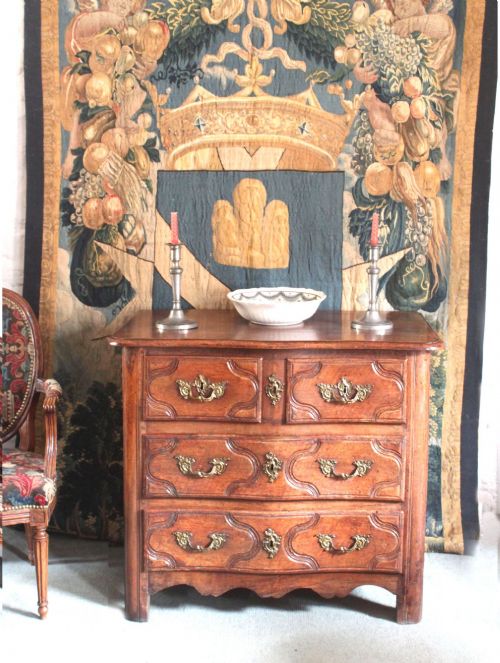
The selections span standard chests of drawers, tallboys, bedside cabinets, and commodes. Mahogany and walnut dominate the offerings, often appearing alongside period styles such as Queen Anne, Chippendale, and French Provincial.
Judging the quality of craftsmanship
Quality rests in the precision of the curved drawer fronts and the seamless application of veneers. Superior examples display careful grain matching across the facade and tight dovetail joints within the drawer construction.
The depth of the patina and the crispness of the carved details further separate finer pieces from simpler utilitarian items. Original brass hardware and well-preserved timber surfaces indicate careful historical maintenance.
Traditional Serpentine Chest Retail Price Guide 2026
Typical asking prices for traditional serpentine chest among the pieces listed under this phrase on Sellingantiques today, from the lower quarter to the upper quarter. They describe what is for sale here now, not the wider market.
Even the most serious walnut chest secretly harbours a drawer lined in cheerful nineteenth-century newspaper.
The Traditional Serpentine Chest Glossary
- Serpentine front
- A furniture front characterised by a double-curved line, convex at the centre and concave at the sides. This shape requires advanced woodworking skill to execute properly.
- Burr walnut
- A prized wood veneer harvested from the wart-like growths on walnut trees, noted for its swirling, intricate grain patterns. It adds significant visual texture to cabinet furniture.
- Tallboy
- A tall chest of drawers, often constructed as one chest stacked upon another, maximising vertical storage space. These pieces frequently incorporate the same curved fronts found on lower chests.
- Commode
- A low chest of drawers or cabinet, often originating from French furniture traditions. The term frequently describes serpentine pieces with refined decorative hardware.
- Dovetail joint
- A traditional interlocking woodworking joint used to secure drawer corners. Its presence and tightness signal traditional craftsmanship and durability.
Traditional Serpentine Chest: Frequently Asked Questions
What is a serpentine chest?
A serpentine chest is a set of drawers featuring a distinctive S-curve across the front. The design curves outward in the middle and inward toward the edges.
Craftsmen adopted this silhouette during the eighteenth century to add movement and elegance to heavy timber furniture.
How do I date a wooden chest?
Dating relies on examining the construction methods, timber choices, and hardware styles. Hand-cut dovetails and native hardwoods often indicate earlier periods.
Revival pieces from the Edwardian era or the 1920s mimic these older styles but utilise slightly different internal framing and secondary woods.
Are these chests suitable for modern bedrooms?
These chests offer practical storage while serving as a strong focal point in contemporary interiors. Their compact footprints allow them to fit into bedrooms and hallways easily.
Pairing antique wood tones with modern walls creates a balanced look that grounds the room.
What wood types are most common?
Mahogany and walnut appear frequently across these listings, alongside figured walnut and burr walnut veneers. These timbers provide dark, rich tones that take a high polish.
Cabinet makers also utilised general hardwoods for internal structures and secondary drawer linings.