
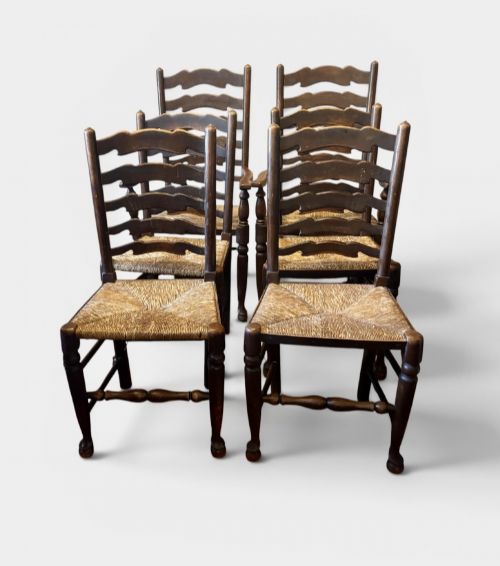


Traditional Rush Dining Chair
A traditional rush dining chair brings honest, tactile warmth to a room through woven natural seating and sturdy vernacular frames.
Traditional Rush Dining Chair
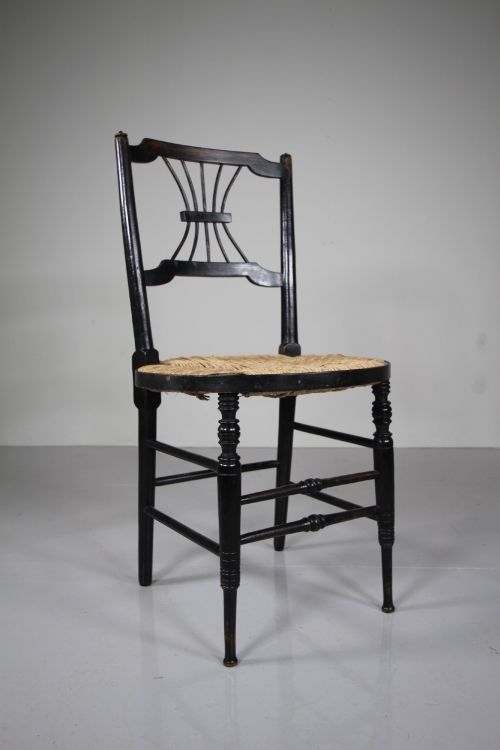
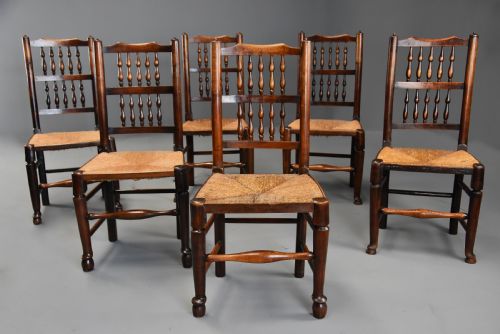
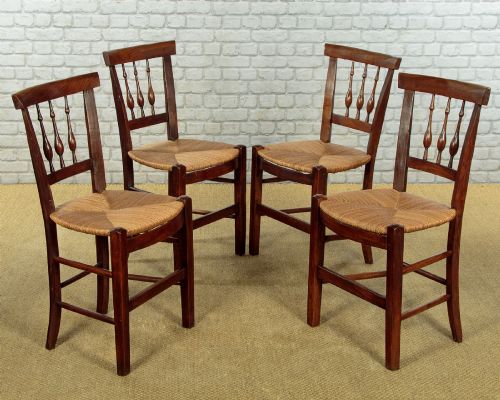
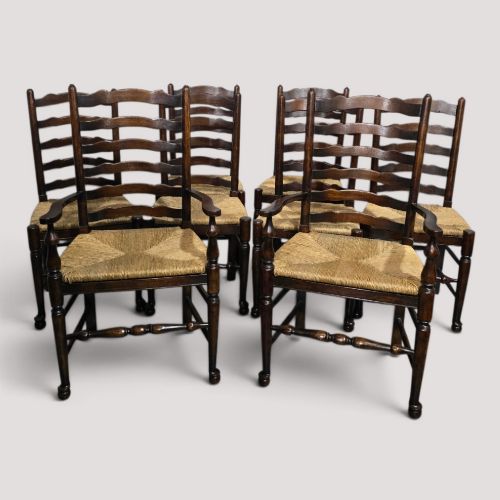
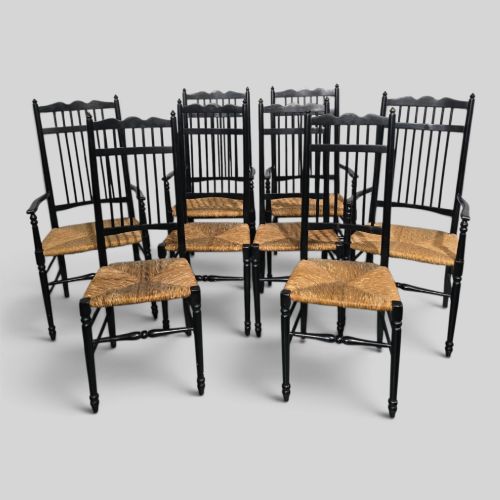
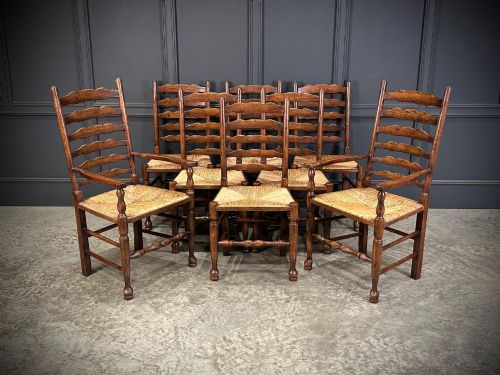
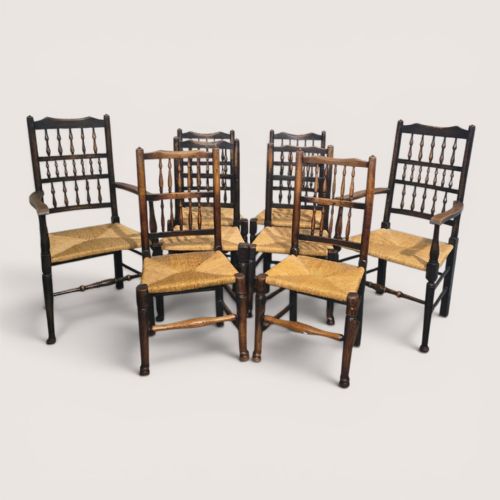
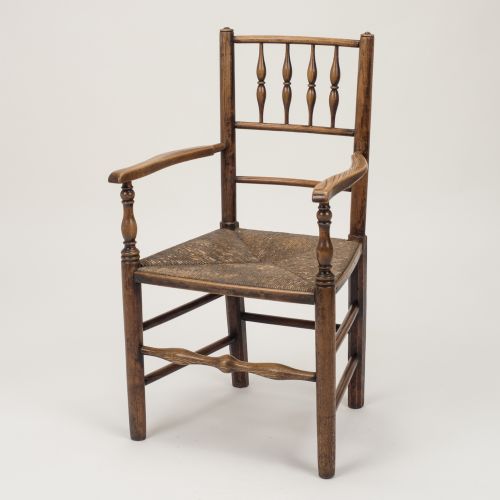
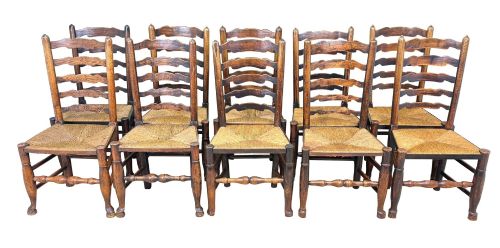
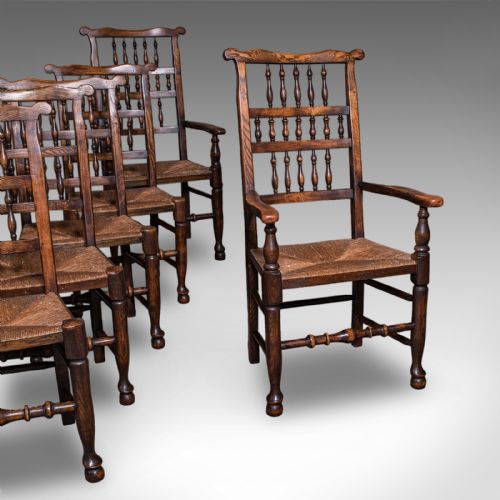
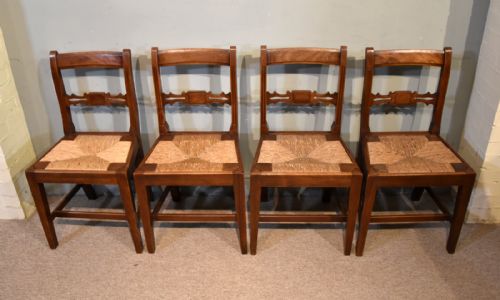
A traditional rush dining chair embodies centuries of vernacular woodworking traditions across England, France, and the Netherlands. These pieces include single side chairs, carvers with arms, high chairs, and matching sets ranging from pairs to groups of ten. The forms span from the 18th century through the 19th century, into Arts and Crafts revivals and the 1930s.
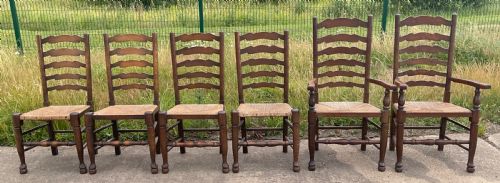
Ladder backs and spindle backs dominate the designs, alongside Morris-style frames and country farmhouse models. Elm, ash, fruitwood, oak, and beech form the primary skeletons, paired with woven rush or plaited straw seats. Pieces appear in natural polished woods, painted surfaces, and ebonised finishes.
Most examples meet the eye as country kitchen seating or studio workshop productions. Sets often arrive as harlequin collections or uniform groupings gathered over generations. Buyers select them for daily dining spaces that value historical utility and organic texture.
Materials and construction
Makers utilised native timber branches and planks for frames, turning spindles on lathes and steaming wood to achieve curved ladder backs. Elm, ash, and fruitwood provided strong, resilient skeletons capable of enduring daily use without heavy bracing. Oak and beech appeared frequently in larger sets and later Arts and Crafts interpretations.
Seats were hand-woven using dried marsh rush or plaited straw, wrapped tightly around wooden seat rails in distinct patterns. This technique required considerable tension to support body weight while maintaining a flexible, comfortable surface. Frames were typically joined using traditional pegged mortise and tenon joints rather than metal hardware.
Listings feature woods including oak, elm, ash, fruitwood, and beech, alongside painted and ebonised finishes across the 18th, 19th, and 20th centuries.
Evaluating craftsmanship
Quality rests primarily in the integrity of the timber frame and the tightness of the woven rush seat. Superior examples exhibit well-seasoned woods that have retained their original structural rigidity without excessive replacement parts. Patina on the wood develops naturally over decades through handling and polishing.
The precision of the lathe turning on spindle backs and the symmetry of the horizontal rungs separate standard kitchen seating from master workshop pieces. Tightly packed, even rush work indicates skilled hand-weaving that resists sagging over years of sitting. Maker attribution also elevates certain pieces into significant collector categories.
Rossetti·Dicon Nance·Lawrence Neal·Edward Gardener·Philip Webb·Morris & Co
The Traditional Rush Dining Chair Glossary
- Rush seat
- A seating surface woven from dried wetland rushes twisted into cord and wrapped around a wooden frame. This material offers a resilient, textured cushion that softens with age.
- Ladder back
- A chair back featuring multiple horizontal wooden slats curved to fit the spine. These rungs are tenoned into vertical rear posts.
- Carver
- An armchair designed to match a set of smaller side chairs, usually placed at the head of a dining table. They feature supportive armrests integrated into the frame.
- Súgán
- An Irish term for a twisted straw or hay rope used as a seating material. It performs a similar function to rush.
- Spindle back
- A chair back composed of numerous thin vertical wooden rods turned on a lathe. These rods connect the top rail to the seat.
Traditional Rush Dining Chair: Frequently Asked Questions
How do I clean a rush seat?
Dust the woven surface gently using a soft brush or vacuum attachment on low power. Avoid using excessive water, as moisture can cause dried marsh rush to rot or snap.
Treat spills immediately by blotting with a dry cloth rather than rubbing. Keep the room at a stable humidity level to prevent the natural fibres from becoming brittle.
Are these chairs comfortable for long dinners?
The woven rush material yields slightly under body weight, creating a surprisingly supportive surface. High ladder backs provide ergonomic lumbar support by following the natural curve of the spine.
Adding thin squab cushions is an option for extended seating, though many users enjoy the firm, authentic feel of the bare woven texture.
How do I spot a restored rush seat?
Newly woven rush appears bright green or pale yellow before darkening to a rich golden brown over time. Older, original weaving shows signs of smooth wear and a deeper amber patina.
Inspect the underside of the frame where the rush wraps around the rungs for modern twine or synthetic tying materials. Professional re-weaving is common and helps preserve antique frames for continued use.
Can I mix these chairs with a modern table?
Their organic wooden tones and simple lines allow them to sit comfortably alongside contemporary timber or glass dining tables. Mixing a harlequin set adds visual variety and breaks up uniform interior schemes.
Consider matching the wood species of the chairs to the table legs, or contrast painted finishes against natural wood surfaces for a balanced look.