


Traditional Rosewood Dining Chairs
Traditional rosewood dining chairs bring warmth and rich grain to a room, offering sturdy seating grounded in nineteenth-century craftsmanship.
Traditional Rosewood Dining Chairs
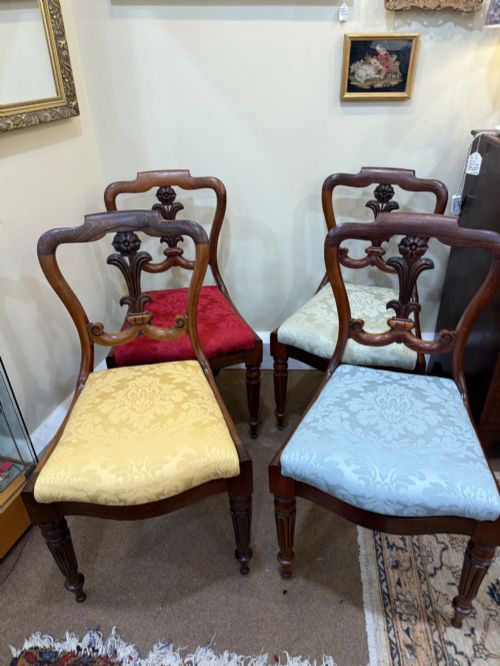
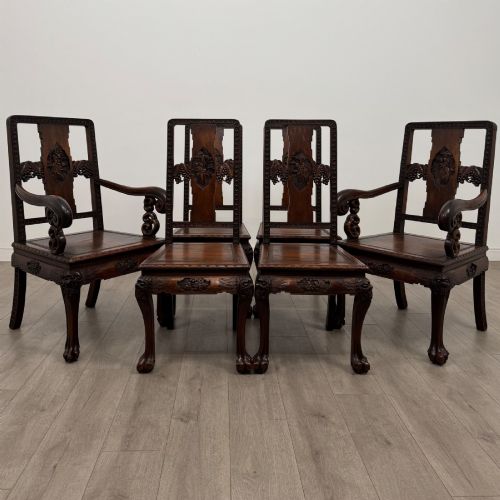
Traditional rosewood dining chairs encompass nineteenth-century seating forms ranging from Regency sets to Victorian balloon back designs. Buyers searching this phrase encounter dining chairs and side chairs shaped from dense rosewood timber.
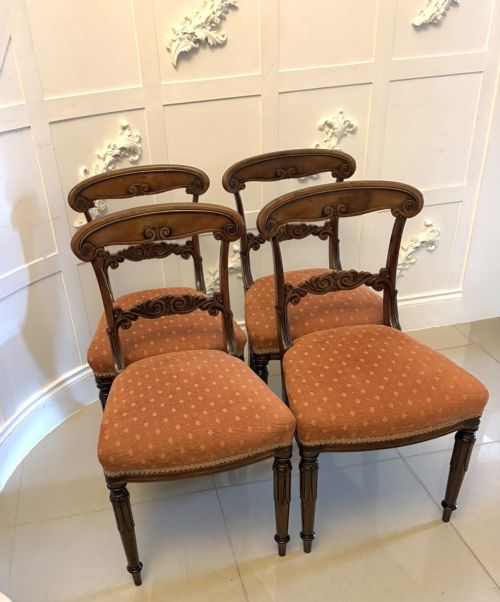
The version most commonly met on this page is the Victorian balloon back dining chair, often found in sets of six. Alongside these, Regency and William IV examples appear alongside occasional Edwardian pieces incorporating marquetry and inlay.
Makers utilised resilient rosewood alongside secondary timbers, often pairing the dark timber with fabric, velvet upholstery, or cane seats. These chairs served formal dining spaces throughout the nineteenth century and into the Edwardian era.
How they were made
Makers fashioned traditional rosewood dining chairs using dense rosewood, frequently shaping the timber into curved balloon backs and carved frames. Workshops employed traditional joinery methods to ensure stability across sets of four, six, or ten chairs.
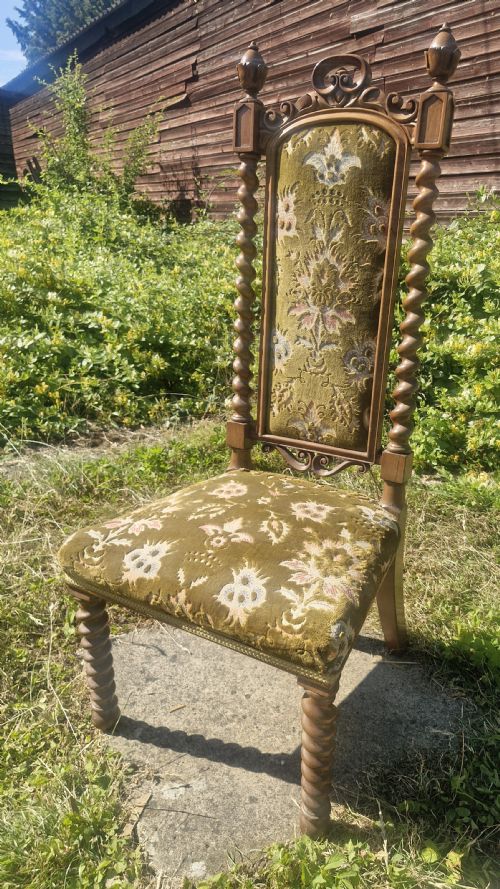
Upholstery techniques involved textile, fabric, and velvet upholstery secured over supportive bases, while certain pieces incorporated cane seating. Carved details and marquetry inlay distinguished the more elaborate Regency and Edwardian variations.
The styles recorded span Regency, William IV, Victorian Gothic Revival, and Edwardian designs.
What varies in quality
The distinction between standard examples and finer sets lies in the depth of the timber carving and the uniformity within a matched group. Sets retaining consistent wood grain and crisp architectural moulding command greater attention than mismatched or heavily altered groups.
The integrity of the rosewood frame and the precision of the joinery dictate the overall standard of construction. Pieces demonstrating refined proportions and deliberate detailing reflect superior nineteenth-century workshop output.
The Traditional Rosewood Dining Chairs Glossary
- Balloon back
- A chair back shaped in a continuous curved oval resembling a balloon, popular during the Victorian period. This design provided ergonomic support while displaying the grain of the rosewood timber.
- Regency
- A British design style spanning the early nineteenth century, characterised by classical restraint and influence from antiquity. Chairs from this period often feature saber legs and curved top rails.
- William IV
- A transitional style bridging late Regency and early Victorian design during the 1830s. Furniture from this era displays heavier proportions and robust carved scrollwork.
- Marquetry
- Decorative patterns formed by fitting contrasting veneers into wood panels. Edwardian makers utilised this technique to introduce geometric or floral motifs to salon and dining chairs.
- Cane
- Woven plant material utilised for chair seats and backs, offering a flexible and breathable surface. This technique appears across various nineteenth-century seating forms.
Traditional Rosewood Dining Chairs: Frequently Asked Questions
What periods do these chairs cover?
The pieces span the nineteenth century and the Edwardian era, capturing periods from Regency and William IV to mid Victorian design.
Most examples date between eighteen hundred and nineteen hundred, reflecting the height of rosewood furniture production.
How many chairs come in a set?
Sets vary in size depending on the specific listing, ranging from pairs and groups of four up to sets of six and ten.
Larger sets of six or ten pieces are typical for dining rooms, while smaller groups function well as side chairs.
What upholstery materials appear on them?
Listings record fabric, velvet upholstery, and textile coverings alongside woven cane panels.
Many chairs retain traditional upholstery methods appropriate to their Victorian or Regency origins.
How do Regency and Victorian chairs differ?
Regency chairs generally feature cleaner classical lines inspired by antiquity, often with saber legs and curved top rails.
Victorian examples frequently introduce the distinctive curved balloon back and richer carving associated with mid-nineteenth-century domestic interiors.