



Traditional River Scenery Artwork
Traditional river scenery artwork captures flowing waterways and pastoral banks through nineteenth and early twentieth-century oil and watercolour paintings.
Traditional River Scenery Artwork
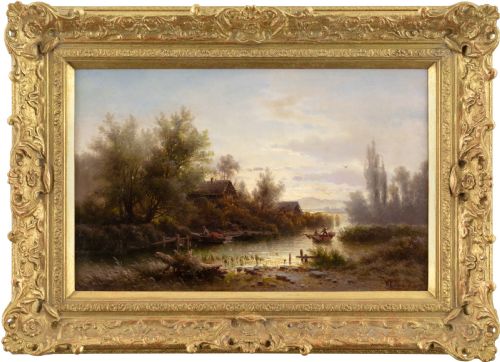
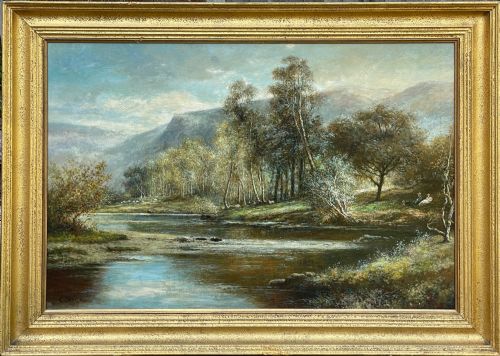
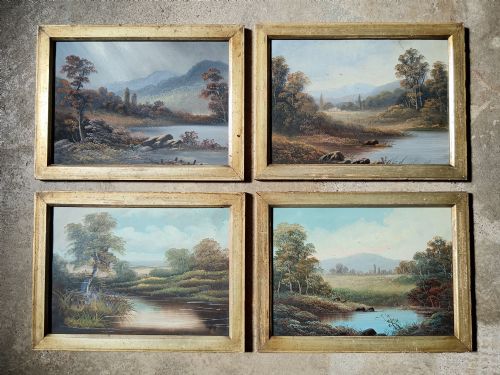
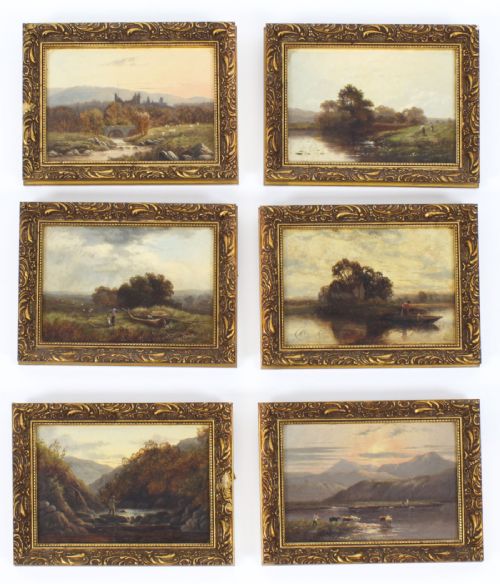
Traditional river scenery artwork encompasses framed paintings and watercolours depicting natural waterways, rural banks, and tranquil lakes. These pieces capture quiet English countrysides, Scottish vistas, and mountainous foreign streams through historic painting traditions.
The selections available here lean heavily into Victorian naturalism, nineteenth-century realism, and British impressionism. Buyers encounter individual canvas works, pairs, and sets by named artists alongside unsigned examples from the period.
Most compositions date from the Victorian era up through the early twentieth century, spanning decades such as eighteen seventy to nineteen thirty. The predominant formats include oil paintings on canvas and detailed works on paper.
Methods and materials of the period
Artists built these traditional river scenery artwork pieces using oil paint on stretched canvas or pigment on paper. Heavier opaque gouache also appears alongside traditional watercolours to capture atmospheric light and water.
The listings on this site feature nineteenth-century and early twentieth-century periods, utilising canvas, paper, oil paint, and giltwood materials.
Distinctions in quality and execution
Quality rests in the artist's handling of light upon water and the naturalism of the surrounding foliage and riverbanks. Softer brushwork and balanced compositions separate accomplished hands from standard decorative output.
The preservation of the original paint surface and the condition of the giltwood frame influence the overall integrity of the piece. Intact signatures and well-documented attributions further elevate individual works.
Albert Rieger·William Mellor·William Hoggatt·Noel Harry Leaver·Thomas Swift Hutton·James Poole·Thomas E Francis
The Traditional River Scenery Artwork Glossary
- Giltwood
- Wood carved and coated with gold leaf or metallic paint. This material forms the ornate frames frequently surrounding historic paintings.
- Gesso
- A plaster-like mixture applied to wooden frames as a base for gilding. It allows for intricate moulded decorative details.
- Impressionism
- A style focusing on loose brushwork and the accurate depiction of changing light. British interpretations often concentrate on domestic landscapes and river views.
- Watercolour
- Pigments ground in a water-soluble binder and painted on paper. This medium suits delicate atmospheric effects in landscape studies.
Traditional River Scenery Artwork: Frequently Asked Questions
How do I date a river landscape painting?
Dating relies on stylistic clues, framing materials, and artist signatures recorded on the work. Victorian and Edwardian canvases often display distinct stretcher construction and canvas stamps.
Secondary evidence such as artist exhibition records and biographical dates help narrow down the exact decade of creation.
What is the difference between oil and watercolour?
Oil paintings utilise pigment suspended in drying oils applied to canvas or wood panels, offering rich textures and deep tones. Watercolours employ water-soluble pigments on paper, creating translucent and lighter compositions.
Oils are typically framed behind glass less often than delicate watercolours on paper.
Where should I hang a landscape painting?
These historic works suit traditional interiors, libraries, and studies where natural light complements the warm tones of giltwood frames. Avoid placing oil paintings or watercolours in direct, harsh sunlight to protect the pigments.
Pairing framed sets together creates a balanced display along hallway walls or above mantelpieces.
Are these river scenes painted outdoors?
Many nineteenth and twentieth-century painters executed preliminary sketches or complete watercolours outdoors directly from nature. Studio finished oil paintings were frequently developed from these initial field studies.
Naturalism in the British landscape tradition prioritised observant rendering of actual rivers and countrysides.