







Traditional Qum Carpet
These traditional qum carpets bring hand-knotted Persian artistry into a room, offering intricate designs tied from wool, cotton, and silk.
Traditional Qum Carpet
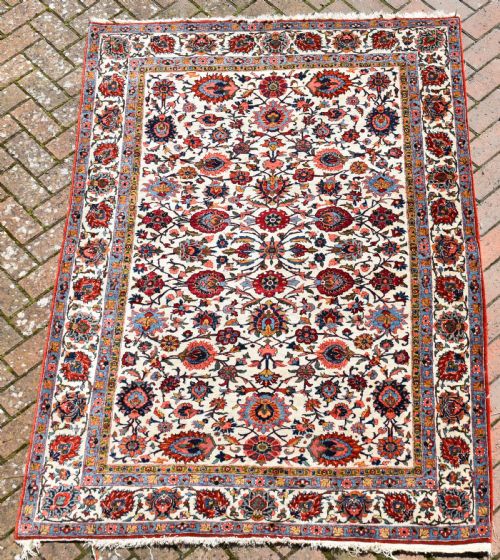
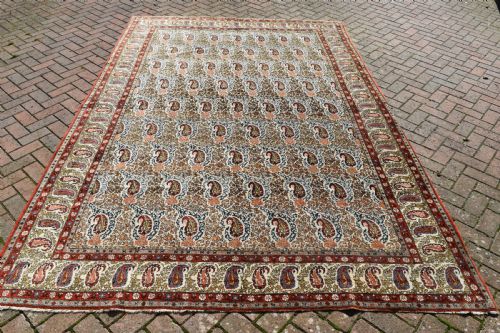
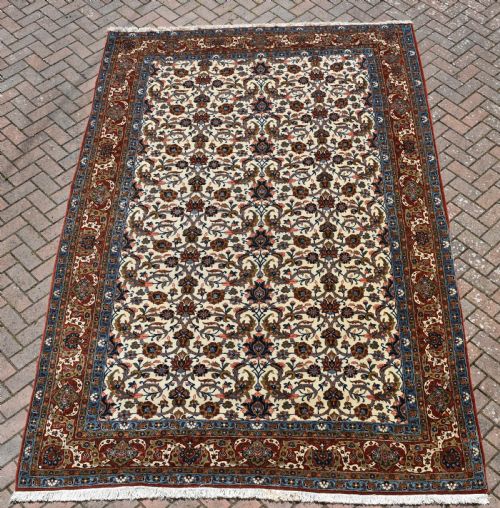
When you search for traditional qum carpet, you encounter hand-knotted floor coverings originating from central Persia. These pieces span the early decades of the twentieth century, specifically from nineteen ten to nineteen forty.
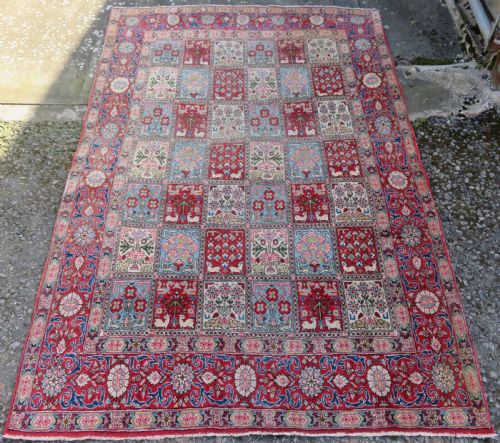
The inventory on this page consists of smaller rugs as well as larger room-sized carpets. Many display classic tile patterns typical of the weaving tradition in this region.
How they were made
Weavers construct these rugs using wool, cotton, and silk materials. The combination of these fibres provides both structural durability and fine textural contrast across the pile and foundation.
Each piece relies on traditional Persian knotting techniques executed by hand. This meticulous method allows for the creation of precise geometric and tile patterns found throughout the region's output.
Traditional Qum Carpet Retail Price Guide 2026
Typical asking prices for traditional qum carpet among the pieces listed under this phrase on Sellingantiques today, from the lower quarter to the upper quarter. They describe what is for sale here now, not the wider market.
The listings show pieces dated between nineteen ten and nineteen forty, utilising wool, cotton, and silk.
What varies in quality
Quality differences stem from the fineness of the knotting and the selection of materials. Pieces incorporating finer silk elements and denser pile construction demonstrate a higher degree of technical skill.
The scale of the weaving also influences the character of each piece. Larger room-sized carpets require sustained labour compared to smaller area rugs, altering the visual impact within an interior space.
The Traditional Qum Carpet Glossary
- Pile
- The upright yarn loops that form the usable surface of a carpet. In these pieces, the pile is hand-knotted using wool or silk.
- Foundation
- The underlying structure of a carpet, consisting of warp and weft threads. Cotton serves as the standard foundation material for these Persian works.
- Tile pattern
- A geometric layout featuring repeating square or compartment motifs. This design is characteristic of the rug-making traditions seen in qum.
- Room-size carpet
- A larger format floor covering designed to anchor a complete room. These pieces measure significantly larger than standard area rugs.
Traditional Qum Carpet: Frequently Asked Questions
What is a traditional qum carpet?
A traditional qum carpet is a hand-knotted floor covering originating from central Persia. These pieces date from the early twentieth century and utilise wool, cotton, and silk.
They appear in various formats ranging from compact area rugs to large room-sized carpets. Many examples feature distinct tile patterns that reflect the heritage of the region.
How do I care for my carpet?
Protect your carpet by placing it in areas with moderate foot traffic and away from direct sunlight. Regular gentle vacuuming without a beater bar removes trapped dust effectively.
Professional cleaning tailored for antique textiles preserves the natural fibres. Avoid harsh chemical treatments to maintain the integrity of the wool and silk pile.
Where were these carpets made?
These carpets originate from Qum, located in central Persia. The region developed a strong reputation for producing finely knotted floor coverings.
Weavers in this area drew upon established Persian design traditions. They incorporated materials like cotton foundations and detailed wool or silk piles.
What sizes are available?
The available pieces range from smaller formats such as two-metre rugs to large room-sized carpets exceeding four metres in length. Dimensions vary according to the specific purpose each rug was originally intended to serve.
Buyers can select from compact scatter rugs to expansive carpets capable of filling a major room. Each piece maintains distinct proportions suited to different interior layouts.