







Antique Qum Carpet
An antique qum carpet brings the supreme refinement of Persian weaving into a room, offering intricate design and enduring craft.
Antique Qum Carpet
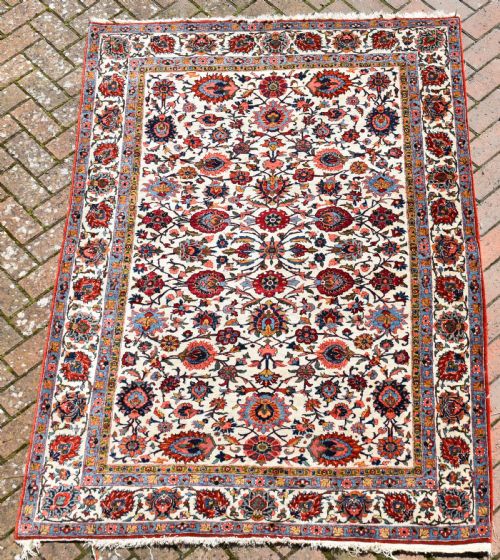
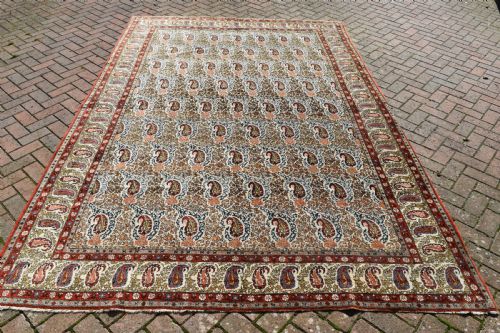
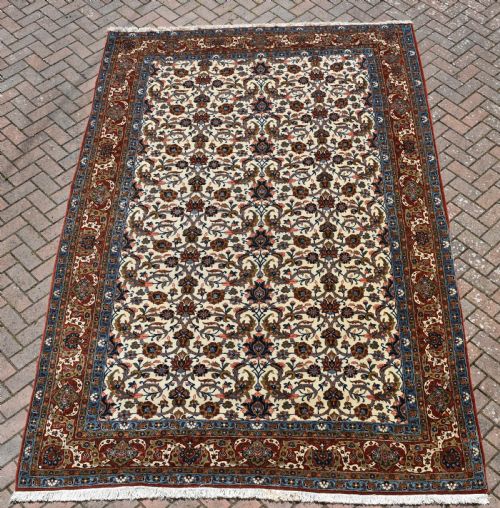
When you search for an antique qum carpet, you find floor coverings originating from the holy city of Qum in central Persia. These pieces date across the early decades of the twentieth century, specifically spanning the nineteen-tens through to the nineteen-forties. The inventory here ranges from compact rugs to large roomsize carpets suited to major spaces.
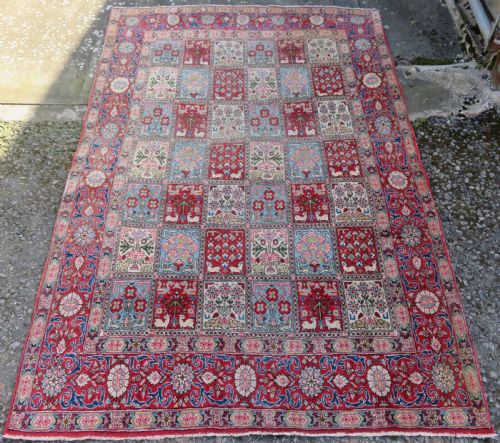
The aesthetic draws entirely on traditional Persian design vocabulary, frequently featuring detailed tile patterns and complex central medallions. Most examples met on this page adhere to classic regional formats, executed either as smaller area rugs or expansive carpets designed for grander interiors.
How they were made
The construction of an antique qum carpet relies on sturdy foundational materials paired with fine pile fibres. Weavers utilise cotton for the underlying warp and weft grid, providing structural stability to each piece.
The pile itself employs high-grade wool or pure silk, depending on the specific grade of the weaving. This combination allows for exceptional knot density and the crisp definition seen in traditional Persian motifs.
Antique Qum Carpet Retail Price Guide 2026
Typical asking prices for qum carpet among the pieces listed under this phrase on Sellingantiques today, from the lower quarter to the upper quarter. They describe what is for sale here now, not the wider market.
Listings show production dates spanning the nineteen-tens, twenties, thirties, and forties, utilising cotton, wool, and silk materials.
What varies in quality
The distinction between standard and superior pieces rests upon knot density and material selection. Finer examples utilise pure silk pile to achieve intricate detail and a lustrous handle that wool cannot replicate.
Execution of the design further separates the grades, with master weavers producing crisper lines and more harmonious colour palettes. Scale also influences stature, as large roomsize carpets demand greater technical precision across an expansive surface.
The Antique Qum Carpet Glossary
- Qum
- A city in central Persia renowned for producing finely knotted rugs and carpets. Weaving here developed later than in older centres, focusing on high technical precision.
- Pile
- The upright yarn loops forming the soft surface of a carpet. In these pieces, pile is typically woven from wool or silk.
- Warp
- The stationary vertical threads stretched upon a loom before weaving begins. These form the skeletal base of the carpet and usually consist of cotton.
- Weft
- The horizontal threads passed alternately over and under the warp threads to bind the knots in place. This material works alongside the warp to form the foundation.
- Tile pattern
- A decorative layout divided into geometric compartments or panels, frequently seen in Persian carpet design. Each individual section contains its own distinct floral or pictorial motif.
Antique Qum Carpet: Frequently Asked Questions
Where were these carpets made?
These carpets originate from Qum, a major historical city located in central Persia. The region developed a distinct reputation for producing highly refined floor coverings during the twentieth century.
The local workshops drew upon classical Persian design traditions while establishing their own standard of meticulous knotting and material use.
What materials are used?
The foundation typically consists of sturdy cotton, providing a stable grid for the structure. The surface pile utilises either fine wool or pure silk.
Silk examples offer a distinct sheen and allow for exceptionally detailed patterns due to the fine nature of the thread.
How do I date these carpets?
Dating relies on stylistic markers, material analysis, and structural characteristics recorded in historical weaving records. Pieces on this page primarily date from the early twentieth century, spanning from the nineteen-tens to the nineteen-forties.
Comparison with archival examples helps narrow the period of production based on weave tightness and dye characteristics.
How should I clean my carpet?
Professional cleaning by a specialist familiar with antique textiles is essential to preserve the fibres. Regular gentle vacuuming without a beater bar removes loose dirt.
Avoid harsh chemical treatments or excessive water, particularly on silk pile examples, to protect the natural dyes and structural integrity.
Are these carpets suitable for heavy traffic?
Wool pile pieces handle moderate foot traffic well when placed in residential settings. Silk examples require more careful placement due to their delicate nature.
Using an appropriate underlay helps reduce friction and extends the functional life of the textile on hard floors.