
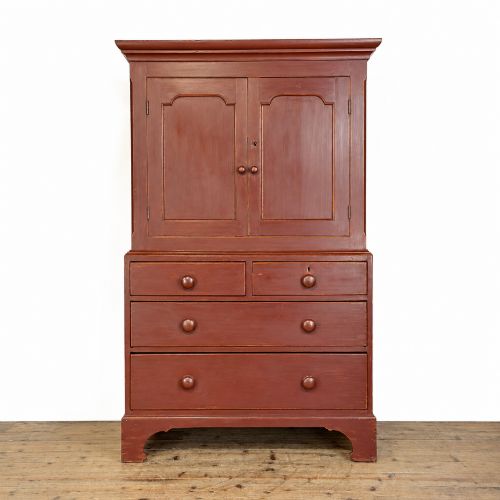
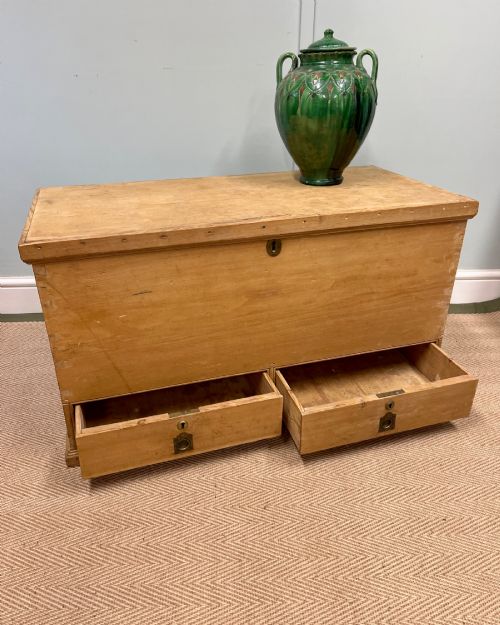
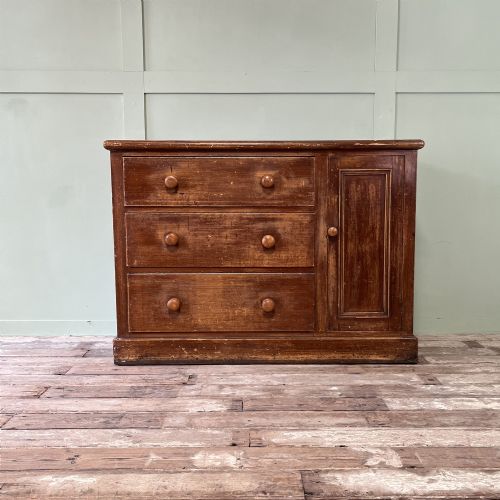
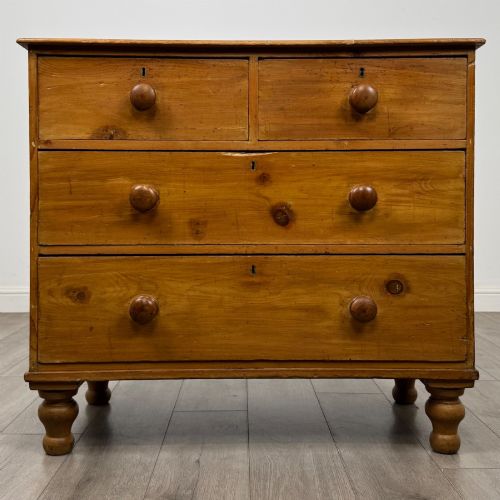

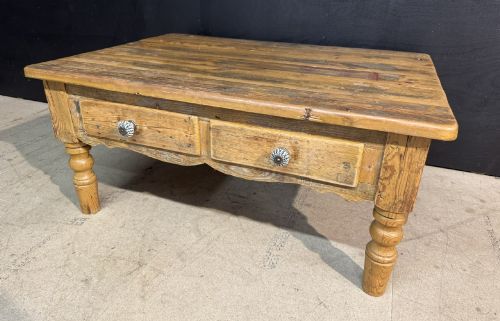
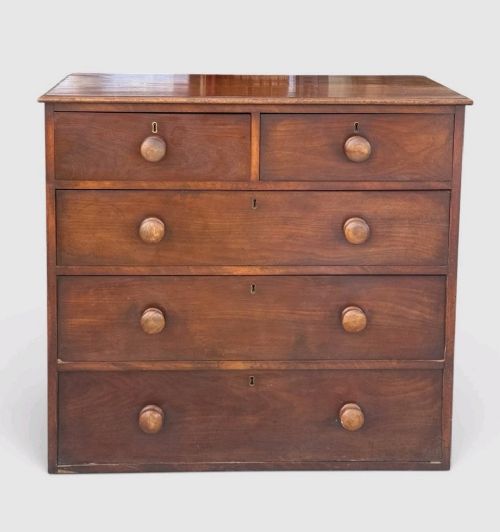
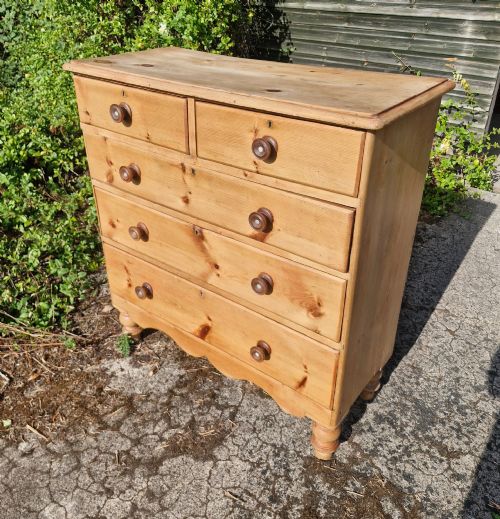
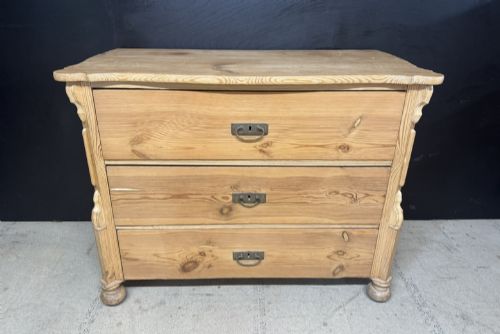
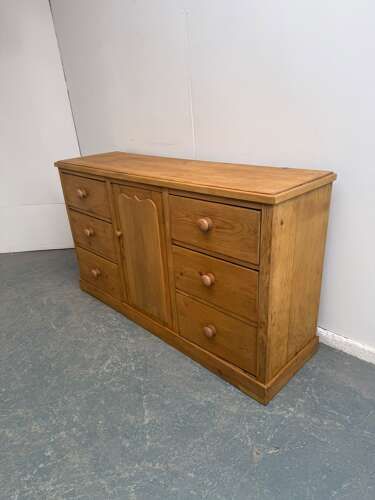
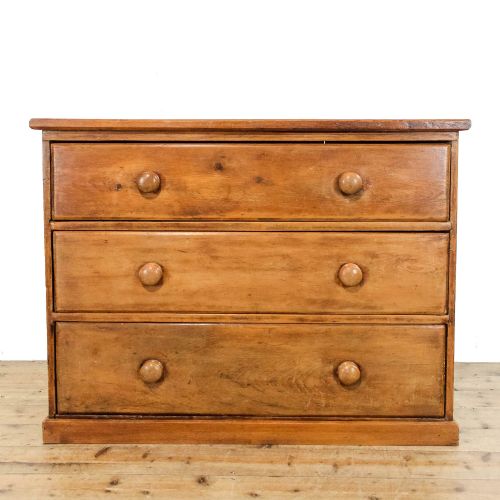
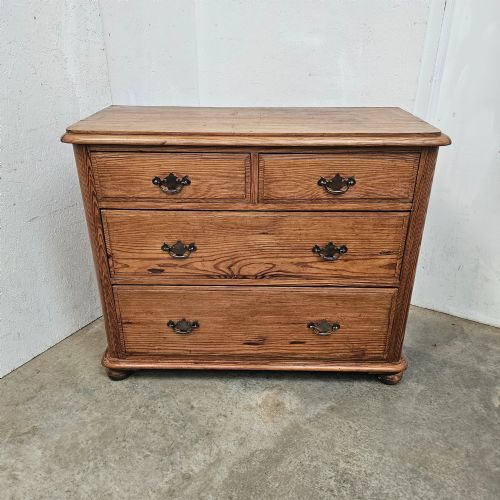
Traditional Pine Storage Drawers
Traditional pine storage drawers are utilitarian pieces built from softwood, offering practical domestic organisation with a weathered finish.
Traditional Pine Storage Drawers
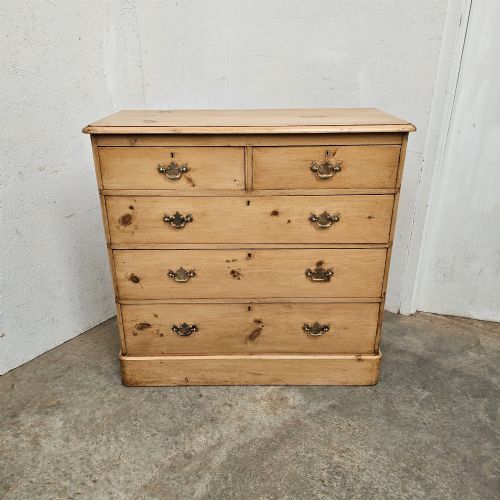
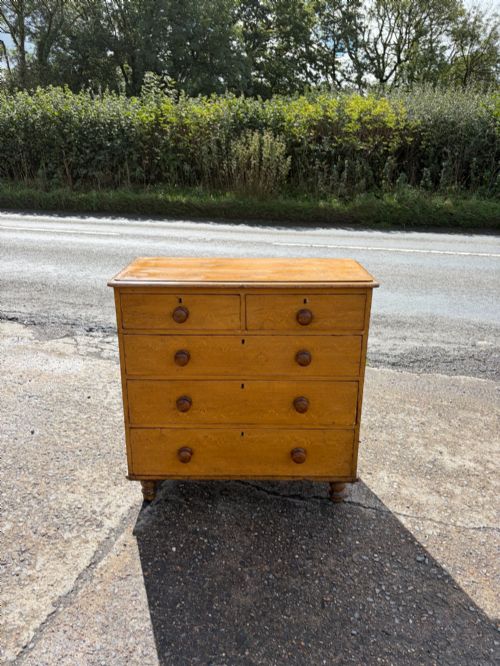
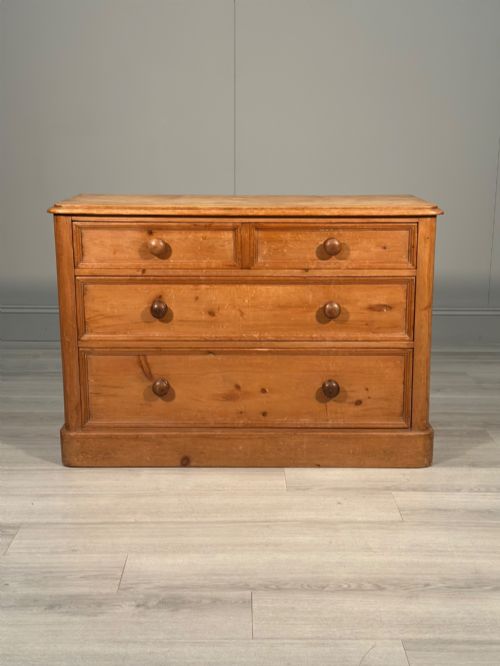
Traditional pine storage drawers comprise a variety of utility furniture forms intended for domestic organisation, predominantly seen as chests of drawers and kitchen dresser bases. These items span periods from the Georgian era through to the Edwardian period, with Victorian examples appearing most frequently.
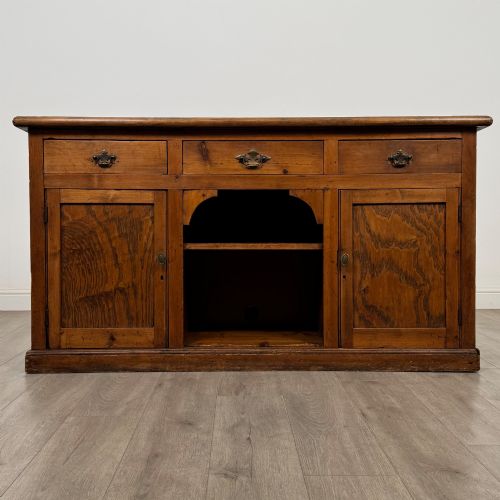
The primary forms found in this category include multi-drawer chests, dresser bases with cupboards, and smaller storage boxes. Regional variations such as English, Irish, and Hungarian pieces demonstrate distinct regional characteristics in their construction and proportions.
Materials and construction methods
Construction relies primarily on pine and pitch pine, supplemented by secondary timbers for internal components. Surfaces are finished in various ways, ranging from original paint and scrubbed finishes to wax polishes.
Hardware elements incorporate brass and iron for handles, key escutcheons, and hinges. Ceramic components occasionally appear on drawer pulls or internal fittings.
Listings demonstrate forms ranging from compact three-drawer chests to expansive five-drawer variants, alongside multi-door kitchen dresser bases.
Assessing quality in pine storage
Quality depends heavily on the integrity of the original surfaces and whether finishes like paint or wax remain undisturbed. Pieces retaining their early or original paint schemes typically command greater interest from collectors.
Proportion and scale dictate the visual success of each piece, alongside the retention of original brass or iron handles and functional drawer construction. Timber selection also plays a part, with dense pitch pine offering different tactile qualities compared to standard softwood.
The Traditional Pine Storage Drawers Glossary
- Pine
- A softwood timber utilised extensively for domestic furniture throughout the Georgian and Victorian periods. It provides a robust yet workable material for everyday storage items.
- Pitch pine
- A harder, resinous variety of pine known for its distinctive grain pattern and durability. It frequently appears in 19th-century utility furniture.
- Dresser base
- A lower cabinet featuring cupboards and drawers, historically used in kitchens for storing tableware and provisions. These often form the lower section of a larger Welsh dresser.
- Mule chest
- A storage chest fitted with one or more drawers at the base beneath the main compartment. This form bridges the gap between traditional blanket chests and modern drawer units.
- Scrubbed finish
- A treatment resulting from frequent washing and scouring of the bare timber surface. This process creates a pale, clean appearance on kitchen tables and dresser tops.
Traditional Pine Storage Drawers: Frequently Asked Questions
How do I date a pine chest of drawers?
Dating relies on examining construction techniques, drawer dovetails, and overall proportions. Georgian and early Victorian pieces often display hand-cut joints and distinct mouldings.
Later Victorian and Edwardian examples tend towards more standardised machining and different handle styles. Hardware choices and timber patination also provide reliable clues to the decade of manufacture.
What is the difference between painted and waxed pine?
Painted surfaces preserve the historic decoration of the item, which might include original pigmented layers or subsequent decorative schemes. These finishes protect the softwood underneath while showing the age of the piece through wear.
Waxed surfaces display the natural grain and colour of the timber, developed through decades of application and polishing. Both finishes represent authentic historical treatments rather than modern alterations.
Where were these pieces used in the home?
Chests of drawers served primarily in bedrooms for linen and apparel storage. Larger cupboards and dresser bases belonged in kitchens and pantries for household provisions and utensils.
Smaller boxes and modular units adapted to various domestic spaces for general storage needs. Their robust construction suited areas of heavy daily use.
How should I care for antique pine furniture?
Maintain a stable indoor climate away from direct heat sources and strong sunlight to prevent the timber from warping or splitting. Dust regularly with a dry cloth to protect the surface.
Apply traditional beeswax sparingly to waxed pieces to nourish the wood and maintain its sheen. Avoid modern silicone-based polishes that can damage historic finishes.