



Traditional Pine Shelving Unit
A traditional pine shelving unit brings honest utility and warmth to a room, offering sturdy open storage built from dependable softwood.
Traditional Pine Shelving Unit
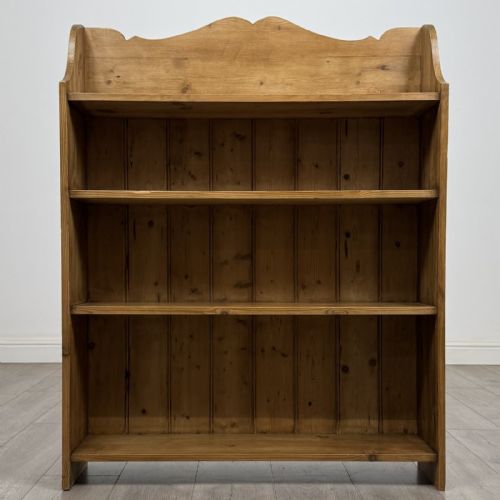
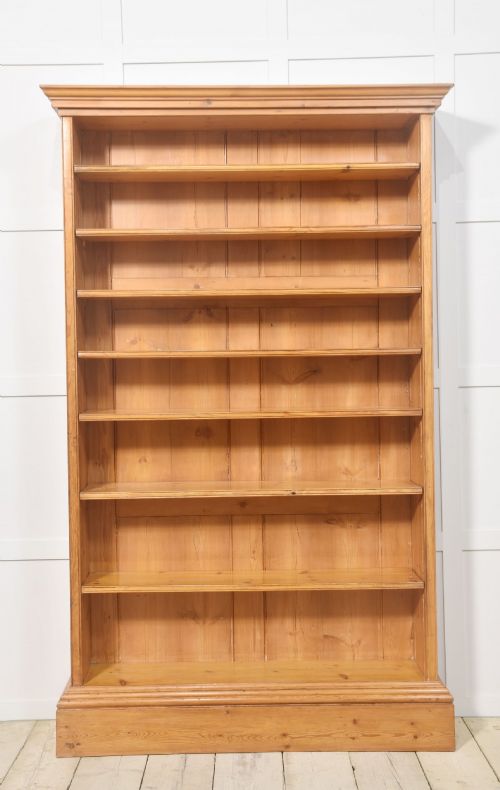
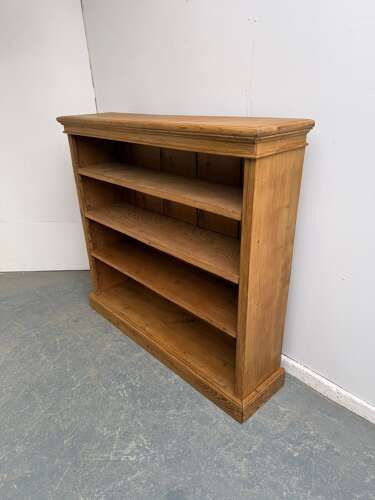
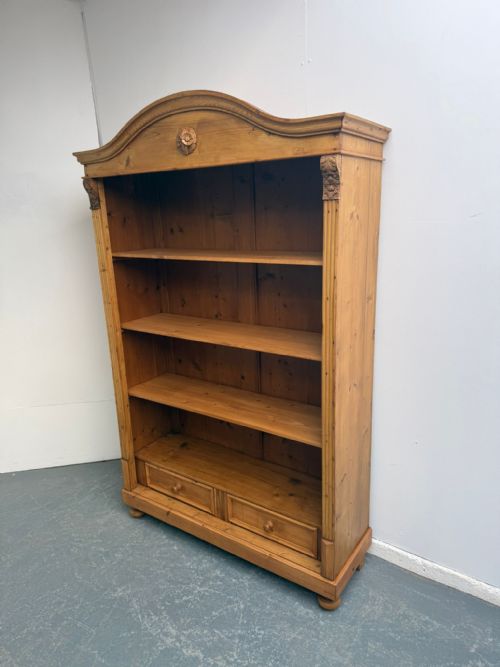
When you search for a traditional pine shelving unit, you are looking at practical storage furniture built from resilient softwood like deal and pitch pine. These pieces serve primarily as open bookcases, corner cabinets, and utility shelving for everyday organisation.
You are most likely to meet 19th-century and Victorian examples on this page, often finished with a warm wax or left in a simple rustic state. Their straightforward construction reflects a time when utilitarian furniture was built to last.
The forms range from wall-hanging or corner cabinets to large open bookcases with adjustable shelves and shaped galleries. Such variations in size and configuration show how these units adapted to different rooms in the Victorian home.
How they were made
Makers built these pieces using solid deal wood, pitch pine, and occasionally walnut for contrasting trim, relying on straightforward timber construction. Boards were joined to create sturdy frames capable of holding heavy rows of books and household goods.
Surfaces were frequently treated with wax to protect the soft timber while enhancing the natural grain and colour. Adjustable shelf mechanisms appeared in better examples, allowing owners to customise the interior space according to their needs.
Traditional Pine Shelving Unit Retail Price Guide 2026
Typical asking prices for traditional pine shelving unit among the pieces listed under this phrase on Sellingantiques today, from the lower quarter to the upper quarter. They describe what is for sale here now, not the wider market.
The listings span the nineteenth century, Victorian era, and early twentieth century, utilising pine, deal wood, pitch pine, and walnut.
What varies in quality
The distinction between ordinary utility pieces and finer examples often lies in the selection of timber and the presence of thoughtful details like a shaped gallery. Better units display careful attention to board thickness and structural proportion rather than heavy ornamentation.
Original adjustable shelf mechanisms and untouched waxed finishes elevate a piece above standard workshop output. The integrity of the original timber and the straightforwardness of the construction determine the enduring character of each unit.
The Traditional Pine Shelving Unit Glossary
- Deal wood
- A term historically used for fir or pine timber imported for furniture and construction. It provides a light, workable surface that takes wax well.
- Pitch pine
- A durable, resinous softwood prized for its strength and distinct grain pattern. It was frequently used in utilitarian and country furniture.
- Shaped gallery
- A low decorative upstand along the top shelf of a bookcase or cabinet. It adds a finished architectural line to an otherwise simple piece.
- Open bookcase
- A piece of storage furniture without doors, designed for easy access to books. These units rely on solid side panels and fixed or adjustable shelves.
Traditional Pine Shelving Unit: Frequently Asked Questions
What is a traditional pine shelving unit?
A traditional pine shelving unit is a piece of utility furniture constructed from softwoods like deal or pitch pine, typically featuring open shelves or corner storage.
These units date largely from the nineteenth century and Victorian periods, reflecting practical domestic storage needs of the era.
How do I clean a waxed pine bookcase?
Clean waxed pine gently using a soft, dry cloth to remove dust without disturbing the protective surface. Avoid harsh chemical cleaners that strip the historic wax finish from the softwood.
Occasional application of a suitable beeswax polish helps maintain the lustre and nourishment of the timber over time.
Are these shelves adjustable?
Many Victorian and nineteenth-century pine bookcases feature adjustable shelving systems supported by wooden pegs or ratchets. This allowed owners to alter shelf heights for different sizes of books and ledgers.
Unmodified original mechanisms are a notable feature when examining the interior construction of older units.
Where were pine cabinets used?
These practical pieces were built for studies, libraries, and living spaces where straightforward book storage was required. Corner cabinets specifically utilised neglected angles in smaller Victorian rooms.
Their robust timber construction suited both domestic parlours and working offices of the period.