








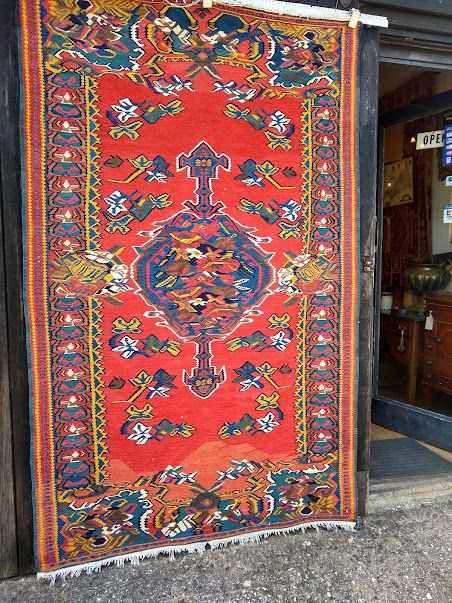
Traditional Persian Flatweave
A traditional persian flatweave brings nomadic heritage and geometry into a room, offering durability and flat-woven texture that collectors prize for floors and walls.
Traditional Persian Flatweave
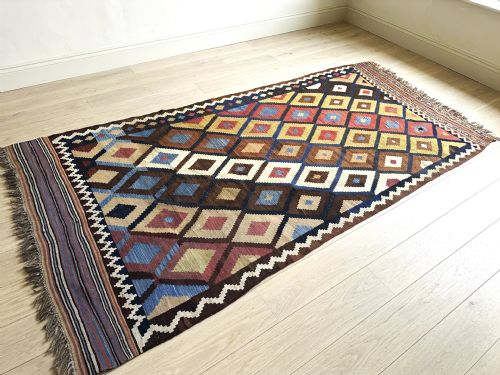
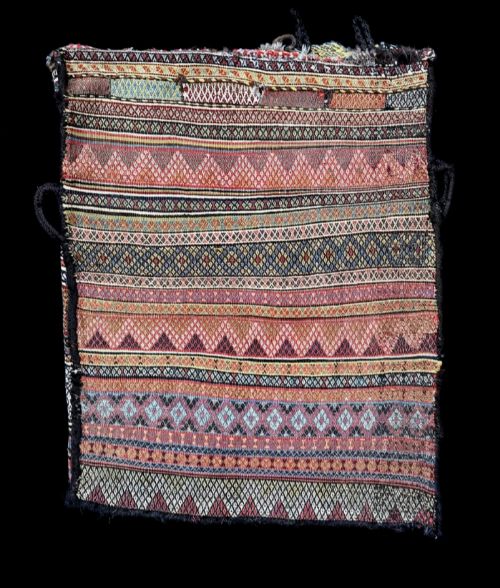
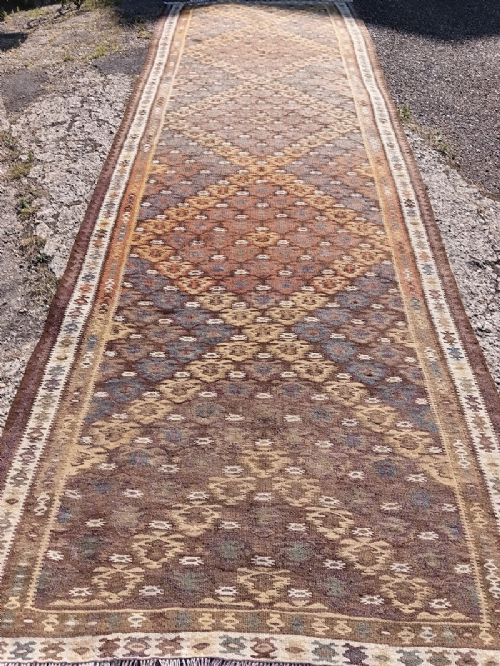
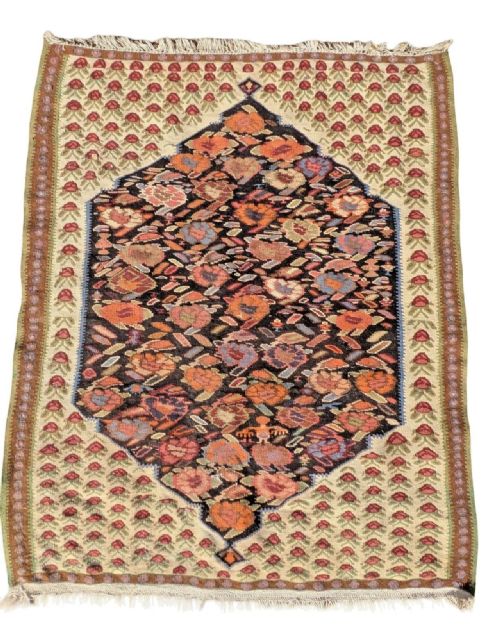
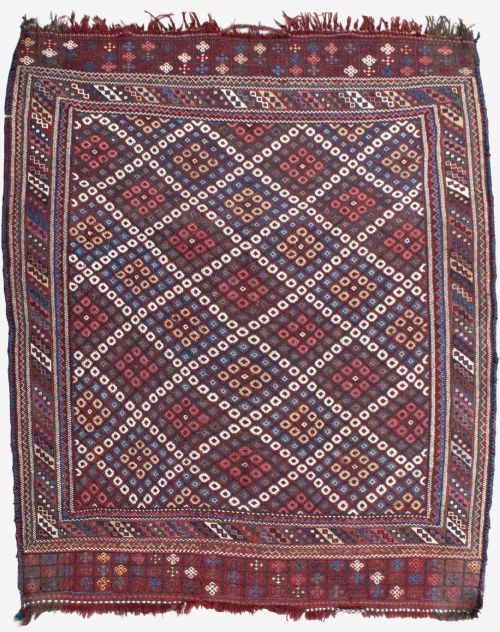
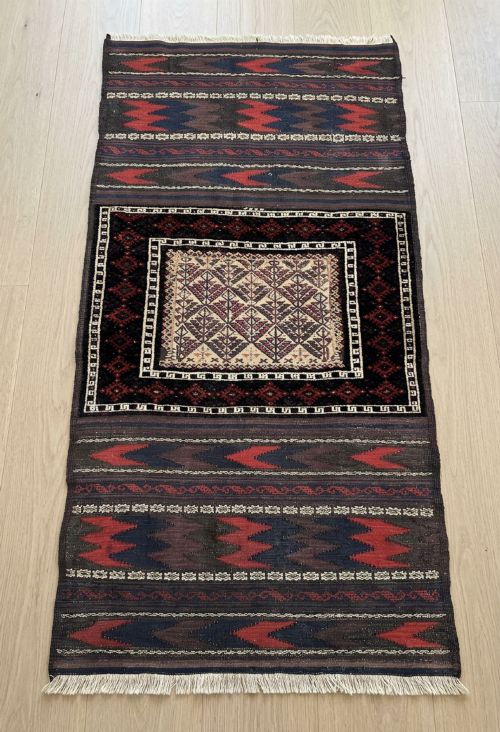
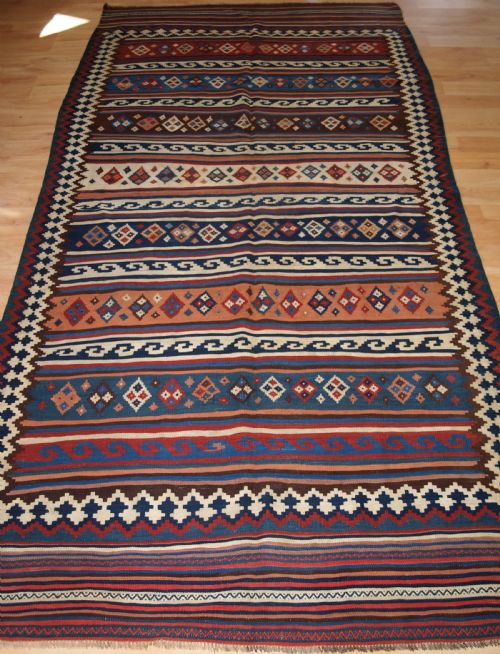
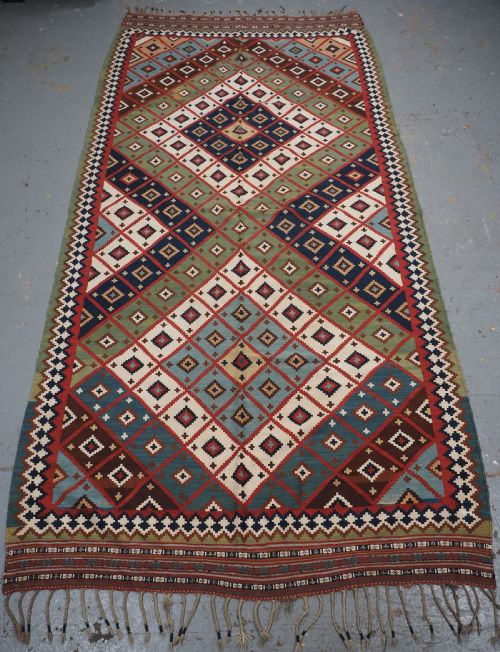
A traditional persian flatweave is a pileless textile originating from tribal and regional workshops across Persia, dating from the late nineteenth century into the early twentieth century. When exploring this selection, buyers encounter formats ranging from large room-size carpets and narrow runners to functional tribal bags, sofrehs, and cushions.
The aesthetic is rooted in distinct regional traditions, encompassing Qashqai, Bidjar, Senneh, Bakhtiari, Afshar, and Shahsevan makers. These works serve as practical floor coverings or wall hangings that bring structural pattern into an interior without heavy pile depth.
Materials and construction
These textiles rely primarily on wool and cotton foundations combined with hand-spun wool for the weft threads, utilising interlocking or slit-weave techniques to build geometric and floral motifs.
Makers depended on natural dyes to colour the yarns, producing deep hues that soften over decades of exposure and use.
Traditional Persian Flatweave Retail Price Guide 2026
Typical asking prices for traditional persian flatweave among the pieces listed under this phrase on Sellingantiques today, from the lower quarter to the upper quarter. They describe what is for sale here now, not the wider market.
Nomadic weavers stored salt in specialised bags, ensuring livestock had access to minerals while travelling across harsh terrain.
Distinctions in quality
Quality rests upon the tightness of the weave and the precision of the geometric or floral layout executed by the weaver. Finer pieces demonstrate careful control over the tension of the hand-spun wool, resulting in crisp pattern definition and structural integrity.
The palette and subtlety of the natural dyes further separate standard examples from superior works, as well-preserved colour harmony elevates the visual depth of the flatweave.
The Traditional Persian Flatweave Glossary
- Kilim
- A flat-woven carpet or rug produced without a pile by tightly interweaving warp and weft strands. This construction method creates a lightweight textile suitable for both floor placement and hanging.
- Sofreh
- A flat-woven spread traditionally used for dining, kneading dough, or ritual purposes. These textiles often feature distinct field arrangements and tribal markers.
- Chanteh
- A small tribal bag or vanity pouch woven by nomadic groups for personal use. They display miniature representations of larger carpet designs.
- Soumak
- A supplementary weft-wrapping technique that creates a braided texture on the face of the textile. It offers greater structural weight than standard flat-weaving.
- Warp
- The stationary vertical threads stretched onto the loom before weaving commences. The weft threads pass horizontally through these foundational strands.
Traditional Persian Flatweave: Frequently Asked Questions
How do I care for a flatweave rug?
Vacuum gently without a beater bar and use a breathable rug underlay to prevent sliding and friction on hard floors.
Professional specialist cleaning is recommended to maintain the natural wool fibres and protect the natural dyes.
Can I use these rugs in high traffic areas?
The flat-woven construction lacks pile, making these textiles resilient against foot traffic in hallways and living spaces.
Placing them in moderate-traffic zones preserves the structure of the hand-spun wool over decades of daily use.
How do I distinguish regional styles?
Examine the specific geometry, medallion formations, and border structures characteristic of tribal groups such as the Qashqai, Senneh, or Bidjar.
Regional palettes and specific weaving techniques like Soumak work often indicate the exact provenance and tribal origin.
Are these textiles purely for floors?
Nomadic weavers originally utilised many of these pieces as storage bags, dining spreads, or saddle components rather than floor coverings.
Today, collectors frequently mount smaller flatweaves and bag faces on walls as textiles or repurpose them into decorative cushions.