


Traditional Painted Bedroom Dresser
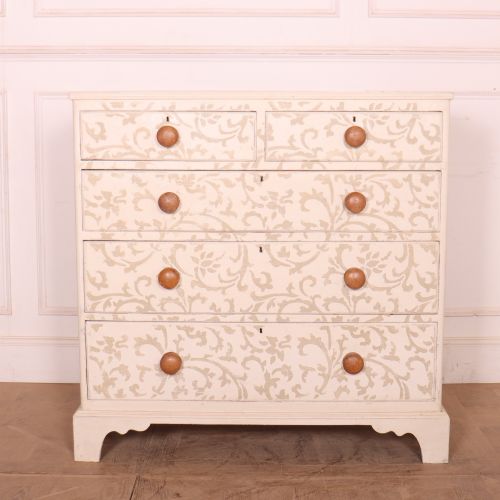
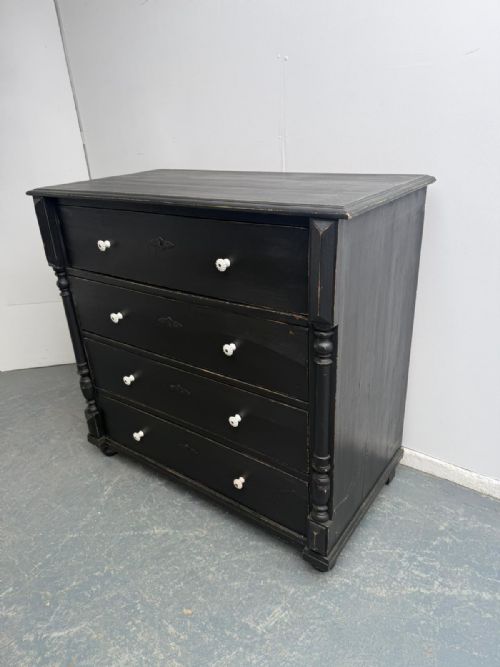
A traditional painted bedroom dresser brings storage and colour to a room, grounded in pine and original paint.

Traditional Painted Bedroom Dresser
A traditional painted bedroom dresser is typically a chest of drawers or washstand intended for domestic storage. Pieces range from Georgian and Victorian periods through to the late nineteenth century.
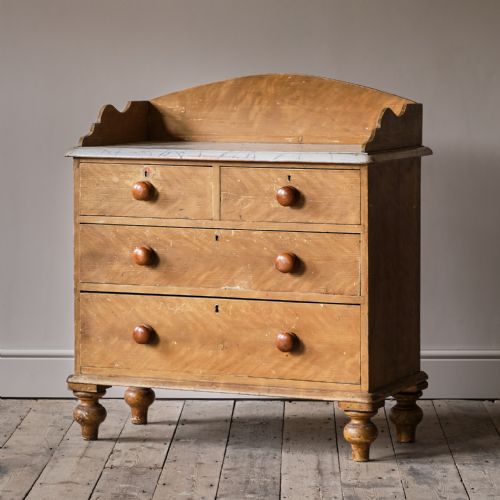
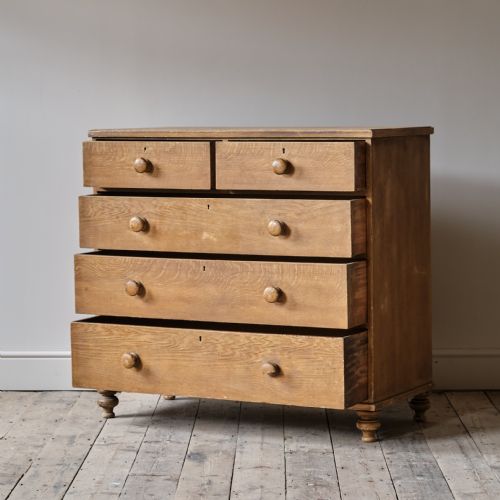
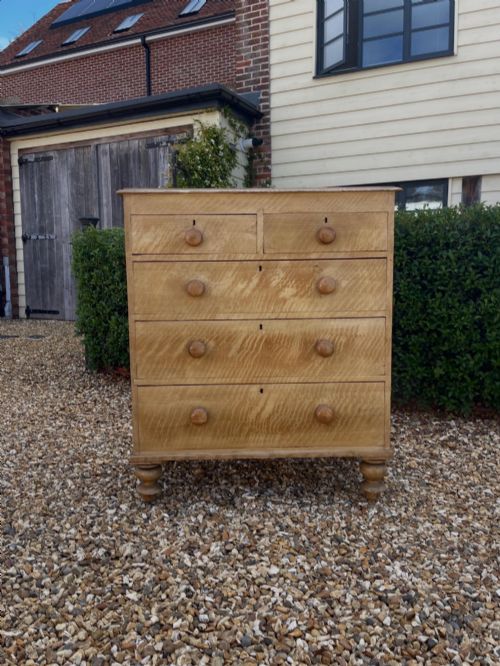
The version most commonly met on this page is a pine chest of drawers in original paint, often configured with multiple drawers or a two-over-three arrangement. Examples span English country workshops to Hungarian variations.
Forms include straightforward chests, tall five-drawer versions, serpentine commodes, and chest-on-chest constructions. Materials vary from plain timber to scumbled pine and decorated surfaces.
How they were made
Makers constructed these pieces primarily from timber such as pine, utilising wood joinery for the carcases and drawer boxes. Surfaces received layers of paint, hand painting, or scumble finishes to create textural depth.
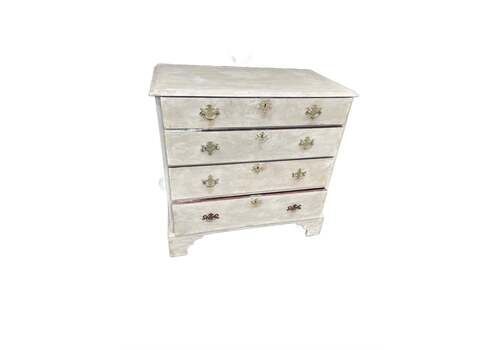
Hardware details typically include brass or iron fixtures, whilst ceramic elements appear on select washstand and chest variants. Construction methods reflect nineteenth-century and Georgian cabinet-making standards.
Materials recorded across the page include pine, timber, paint, brass, iron, and ceramic, taking the form of chests of drawers, commodes, and washstands.
What varies in quality
Quality rests upon the preservation of original paint surfaces and the integrity of the underlying timber. Untouched decorative schemes hold distinct character compared to later overpainting.
Form and proportion dictate the upper tiers of the range, seen in serpentine fronts and Georgian chest-on-chest builds. Structural soundness in the drawers and carcase completes the distinction.
Edwards and Roberts
The Traditional Painted Bedroom Dresser Glossary
- Scumble
- A decorative painting technique where a translucent glaze is manipulated over a base coat to imitate grain. This finish appears frequently on nineteenth-century country pieces.
- Serpentine front
- A furniture front curving outward at the ends and inward at the centre in a continuous wave. This shape demands high skill from the cabinet-maker.
- Chest-on-chest
- A tall storage unit formed by stacking one chest of drawers directly upon a larger base chest. Georgian makers favoured this format for grander bedchambers.
- Washstand
- A low cabinet or table designed to hold a basin and pitcher for personal washing. Many examples share dimensions with standard bedroom chests.
- Original paint
- The initial surface coating applied to a piece of furniture during its period of manufacture. Collectors prize this state for its historical honesty.
Traditional Painted Bedroom Dresser: Frequently Asked Questions
What is a traditional painted bedroom dresser?
A traditional painted bedroom dresser is a wooden chest of drawers or washstand finished with paint or scumble. These pieces originate from the eighteenth and nineteenth centuries.
They serve as practical bedroom storage while bringing period character and colour to an interior space.
How do I care for original paint?
Original painted surfaces require gentle dusting with a dry cloth and protection from direct sunlight and moisture. Avoid modern chemical cleaners that can lift historic pigments.
Wax is sometimes used on unpainted timber sections, but painted areas generally need only a stable indoor climate to survive.
Are these chests from the Victorian period?
Many listings date from the Victorian era, spanning several decades of the nineteenth century. These pieces often feature pine construction and multiple drawer configurations.
Earlier examples from the Georgian period also appear, alongside distinct regional pieces like Hungarian chests.
What is scumbled pine?
Scumbled pine is timber treated with a translucent glaze dragged over a lighter base colour to simulate richer wood grains. Nineteenth-century country craftsmen used this method to elevate plain wood.
This technique creates a mottled, textured surface that reacts distinctively to light.