


Traditional Oil Painting Children
A traditional oil painting children brings domestic intimacy into a room through layered pigments stretched on canvas across past centuries.
Traditional Oil Painting Children
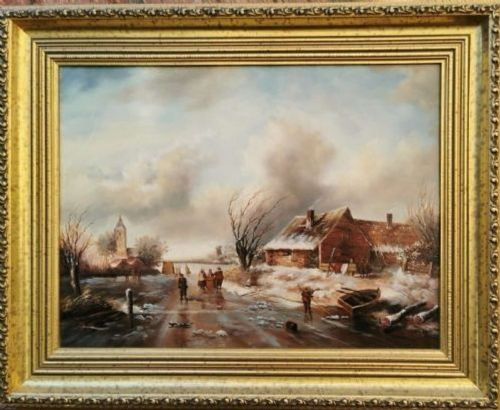
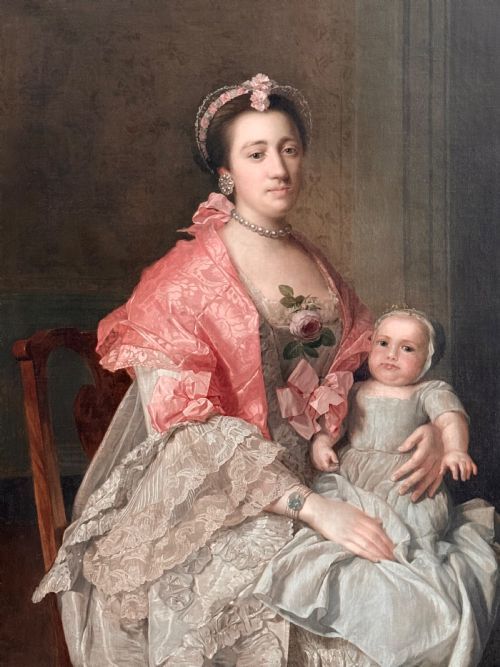
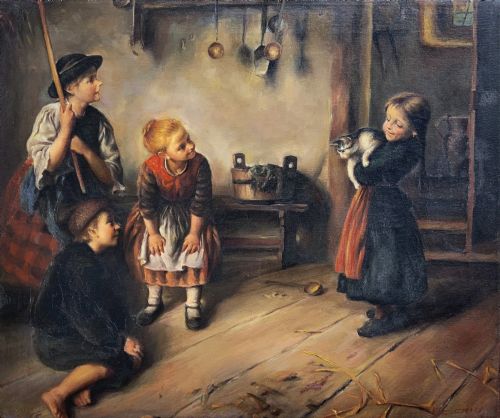
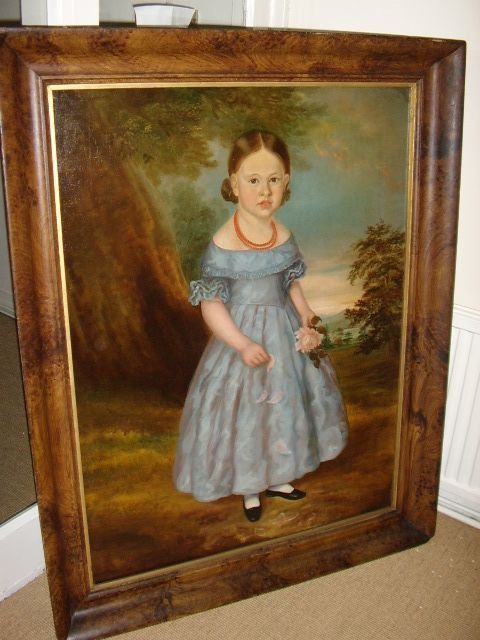
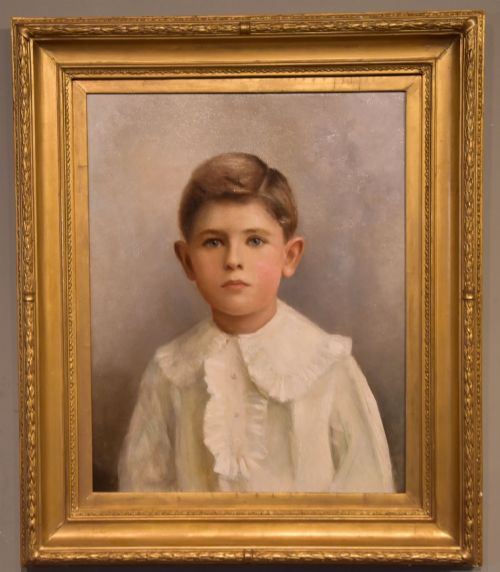
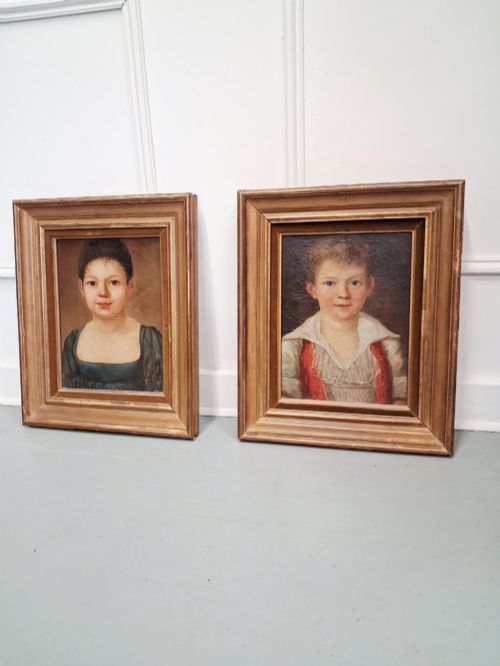
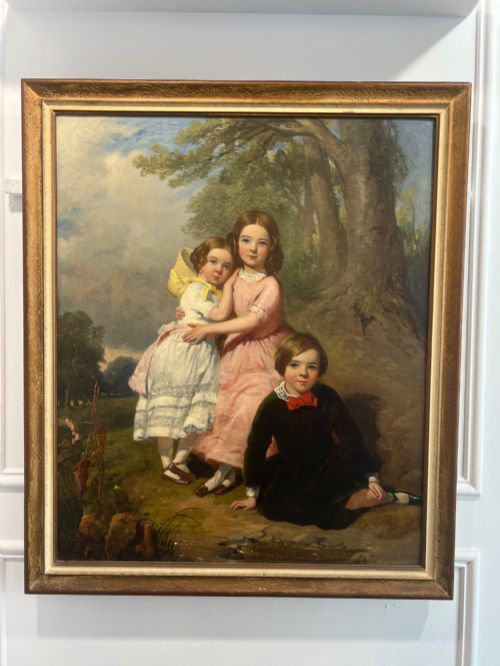
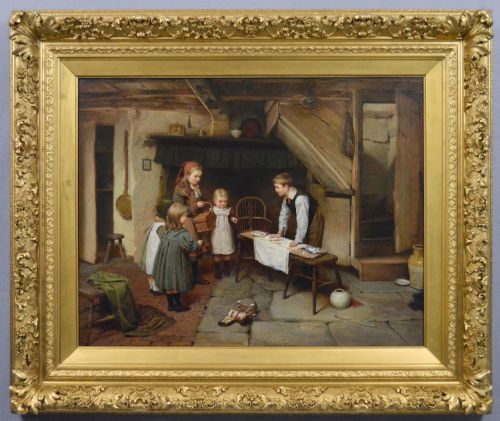
Traditional oil painting children captures young subjects in domestic, rural, or formal studio settings across the eighteenth, nineteenth, and early twentieth centuries. These works range from intimate family portraits to narrative genre scenes depicting play, pets, and everyday life.
The selections available span Georgian, Victorian, and Edwardian periods, executed in oil on canvas, panel, or board. British and European schools dominate, offering both naive depictions and academic portraiture.
Materials and construction
Painters used oil paint applied to woven canvas supports, often stretched over wooden frames or laid upon wooden panels and board. Ground layers and gesso prepared the surfaces before the application of pigmented oil binders.
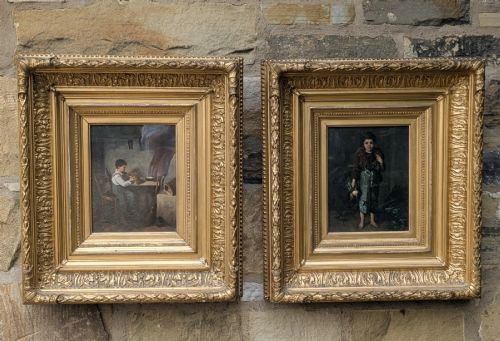
Many historical frames utilise carved wood and gilt or gold leaf ornamentation to finish the piece, protecting the perimeter of the canvas while adding decorative weight.
Materials recorded across the inventory include oil paint, canvas, wood, gesso, giltwood, and gold leaf.
Artistic merit and preservation
Quality rests upon the skill of the brushwork, the psychological depth captured in the faces of the children, and the compositional balance of the surrounding interior or landscape. Finer works display sophisticated handling of light and shadow, whereas naive or provincial pieces rely on simpler, flatter applications of pigment.
Condition plays a central role, distinguishing works with intact original canvas surfaces and stable paint layers from those requiring extensive patch repairs, relining, or overpainting.
Henry Windsor Fry·Harry Brooker·Arthur Percy Dixon·Jane Maria Bowkett·Franz Xaver Winterhalter·Henry Weigall·Alfred Banner·Alfred Provis·Richard Buckner·Ralph Hedley·Henry Scott·John Russell·Charles Lewis·John Duvall
The Traditional Oil Painting Children Glossary
- Genre painting
- A style depicting scenes from everyday life involving ordinary people. These works often show children playing, gathering berries, or interacting with domestic animals.
- Canvas
- A heavy woven fabric used as a surface for oil painting. It is typically stretched tightly over a wooden frame before work begins.
- Gesso
- A plaster-like mixture used to prepare wood or canvas surfaces for painting. It provides a smooth, stable ground for oil pigments.
- Naive school
- Art produced by painters without formal academic training. These works feature charming perspective distortions and direct, unpretentious compositions.
- Oil on panel
- A technique where paint is applied directly to a prepared wooden board rather than fabric. Panels offer a rigid, durable support for fine brushwork.
Traditional Oil Painting Children: Frequently Asked Questions
What periods do these paintings represent?
The works span from the eighteenth century through the Victorian and Edwardian eras up to the mid-twentieth century. They reflect the shifting artistic tastes and domestic ideals of each successive period.
Earlier pieces often lean toward formal portraiture, while nineteenth-century examples frequently embrace genre scenes of children at play or within cottage interiors.
How should I care for an antique canvas?
Keep paintings away from direct sunlight, high humidity, and rapid temperature fluctuations to prevent the canvas from sagging and the oil paint from cracking. Gentle dusting with a soft, dry brush is sufficient for maintenance.
Avoid using water or cleaning solvents on the painted surface. Consult a professional conservator if structural repairs are needed.
What is the difference between a portrait and a genre painting?
A portrait specifically records the likeness of a named individual, often commissioned by family members to preserve a record of a child. Examples include documented subjects like Louisa Cooke or Kathleen Winifred Molesworth.
Genre paintings depict anonymous children engaged in daily activities, such as playing with pets or gathering berries, created to tell a visual story rather than record a specific identity.
Are these paintings supplied with frames?
Many pieces retain their period frames, which can include gilt wood, gesso mouldings, or simpler wooden constructions appropriate to their era. The frame style often helps corroborate the age of the artwork.
Some listings note if a canvas is unframed, allowing buyers to select a housing that suits their interior display preferences.