




Traditional Office Seating
Traditional office seating brings functional nineteenth and early twentieth century design to workspaces through sturdy mahogany, oak, and leather.
Traditional Office Seating
Traditional office seating comprises desk chairs, armchairs, and revolving designs intended for workspace utility. Buyers find pieces ranging from nineteenth century mahogany library chairs to early twentieth century oak swivel models.
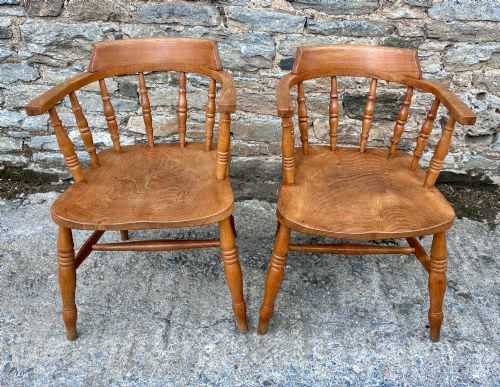
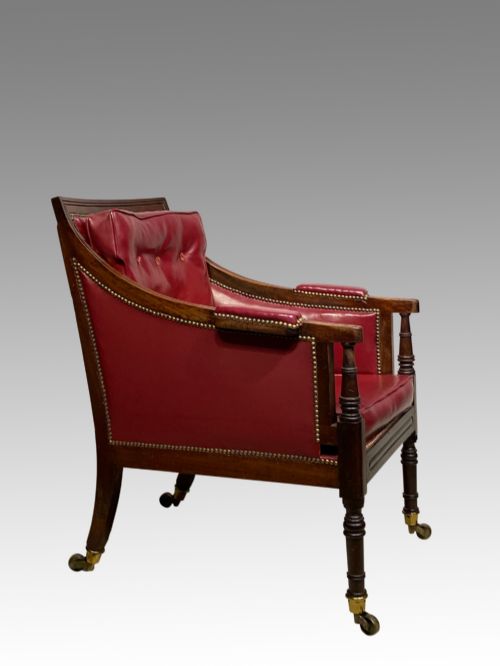
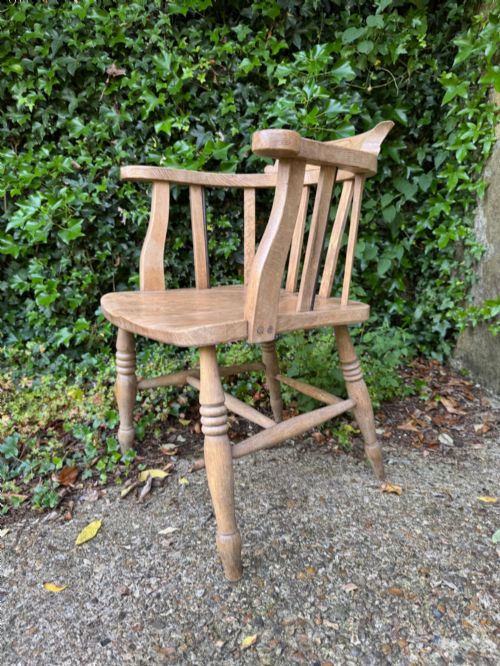
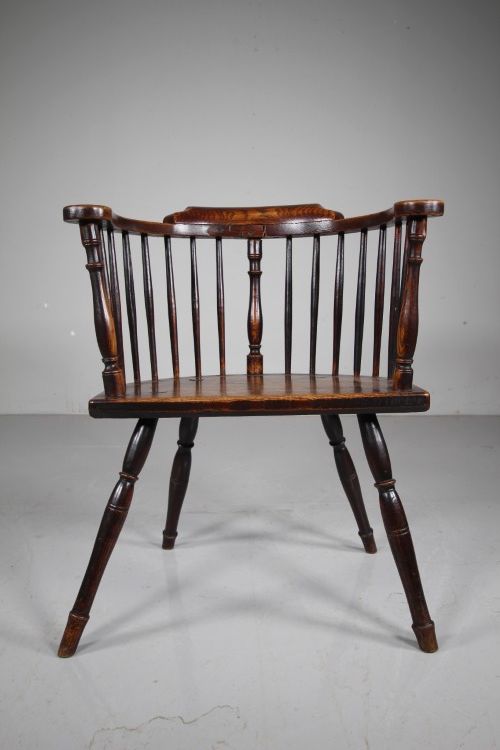
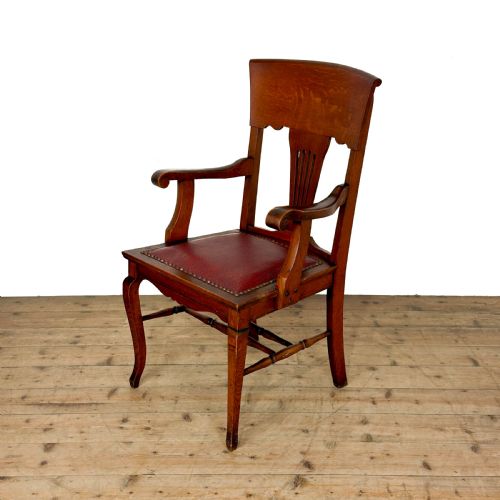
Victorian and Edwardian examples dominate the selection, often pairing solid timber frames with buttoned leather seats. Captains chairs and smokers bows provide deeper wooden seats suited to prolonged desk work.
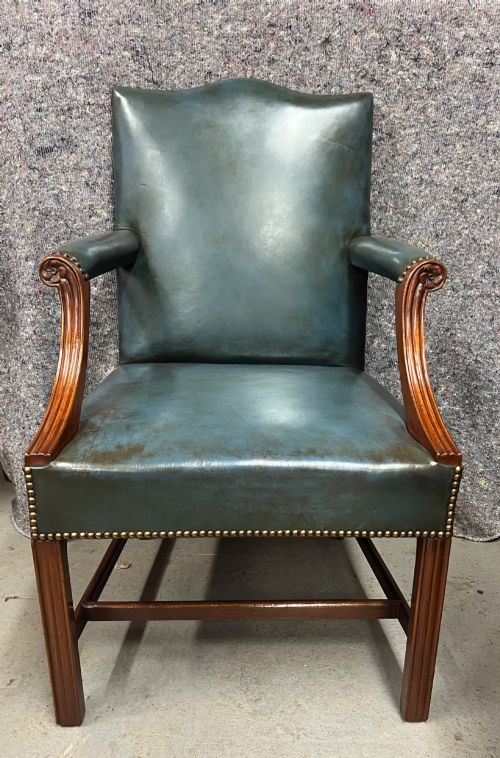
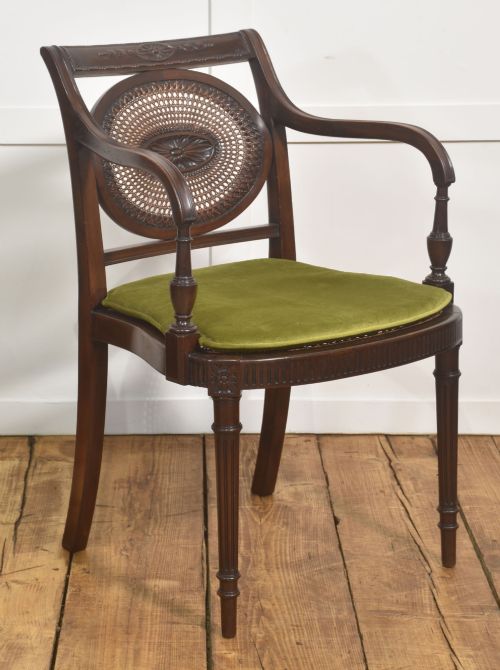
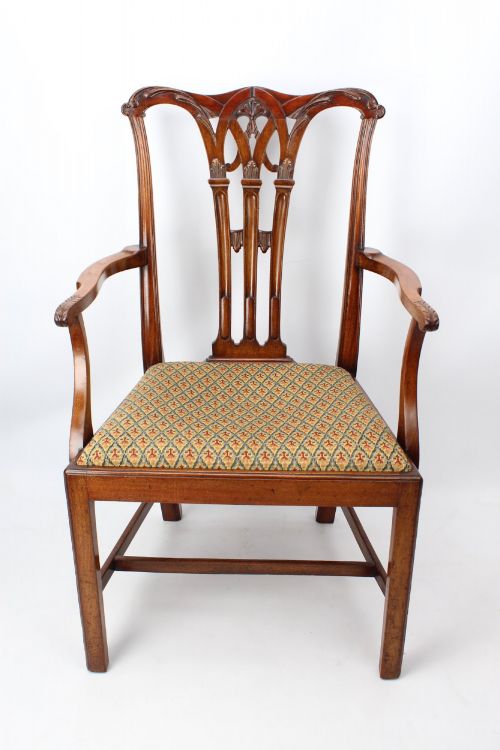
Revival styles such as Chippendale and Sheraton appear alongside simpler country elm models. These forms reflect the functional requirements of studies and libraries from the eighteen-seventies through the nineteen-twenties.
Materials and construction
Craftsmen built these chairs using durable hardwoods including mahogany, oak, beech, and elm. Frames frequently feature carved details, turned spindles, and pegged joints to withstand daily movement.
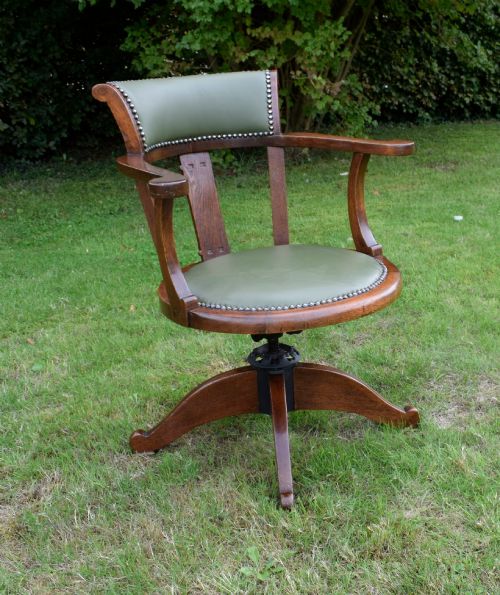
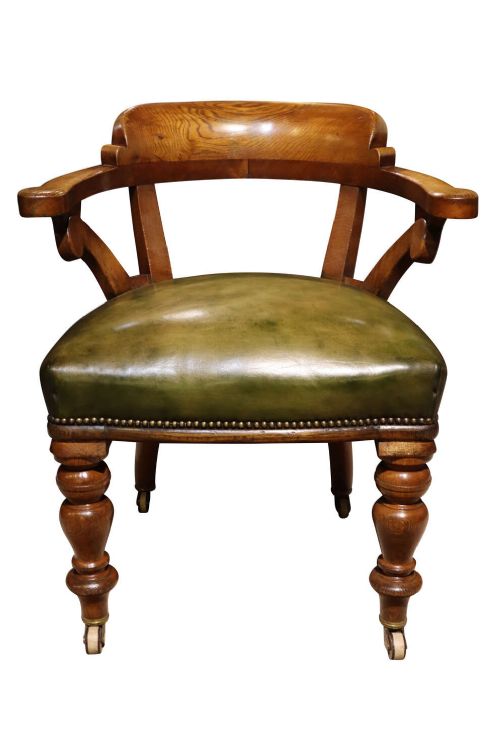
Upholstery materials range from deep green, red, and tan leather to wool fabric, velvet, and cane. Brass studs secure the leather edges to the wooden frames on many nineteenth century desk chairs.
Several captain's chairs retain deep ink stains on their wooden arms, marking decades of late-night bookkeeping by past clerks.
Judging quality and proportion
Quality rests upon the selection of timber and the integrity of the joinery in stress points like arms and back rails. Heavier mahogany and quarter-sawn oak frames offer greater stability than lighter utility pieces.
The sophistication of the carving and the presence of original swivel or tilt mechanisms distinguish finer workshop production from standard office output. Intact leather upholstery with period brass studding elevates a piece above standard replacement covers.
George Bartholomew and Co
The Traditional Office Seating Glossary
- Smokers bow
- A sturdy low-backed wooden armchair with a rounded continuous armrail, often used in offices and commercial spaces. These feature solid elm or beech seats shaped for sitting comfort.
- Captains chair
- A robust wooden armchair with a low spindle back designed for traditional workspaces. They frequently incorporate shaped seats and sturdy turned supports.
- Revolving chair
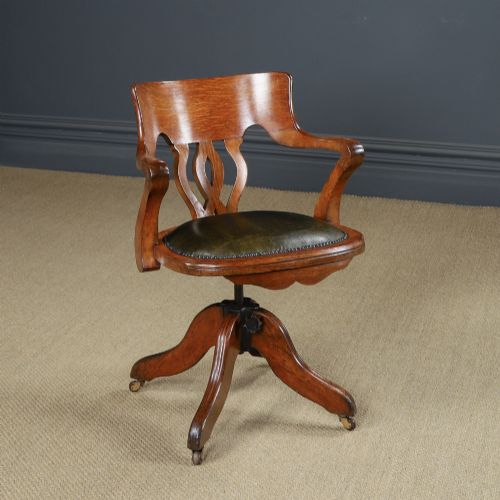
- A desk chair fitted with a mechanical swivel and tilt base originating in the late nineteenth century. These allow movement for clerical and administrative work.
- Library chair
- An upholstered armchair designed for reading rooms and studies, typically featuring leather hide and mahogany or oak frames. They offer generous proportions for long periods of desk use.
- Sheraton revival
- A late nineteenth or early twentieth century style emulating the refined neoclassical furniture of the eighteenth century. These pieces utilise lighter mahogany timbers and delicate inlay.
Traditional Office Seating: Frequently Asked Questions
Are these chairs comfortable for daily computer work?
Many traditional designs offer supportive upright backs and generous wooden or leather seats suited to modern desks. Swivel and tilt mechanisms on early twentieth century models provide adjustable positioning.
Buyers often pair solid oak or mahogany frames with ergonomic considerations by checking seat heights and back angles before purchase.
How do I identify a Victorian desk chair?
Victorian office chairs typically feature rich mahogany or golden oak timbers combined with buttoned leather upholstery and brass studding. Turned wooden legs and robust frames distinguish them from later twentieth century seating.
Construction details such as hand-cut screws and traditional joinery help confirm nineteenth century origins.
What is the difference between a captain's chair and a smoker's bow?
Both styles use a continuous curved wooden armrail, but captain's chairs usually feature vertical spindle backs arranged in a semi-circle. Smoker's bows often have shorter backs and heavier turned supports.
Both forms served administrative and domestic desk duties throughout the Victorian and Edwardian periods.
Do swivel desk chairs from 1900 still function properly?
Early twentieth century swivel mechanisms rely on iron spindles and wooden threaded screws that generally permit rotation and tilt functions. Regular maintenance and light lubrication keep these mechanical components operating smoothly.
Inspectors should check the central column and base for stability to ensure safe daily use.