

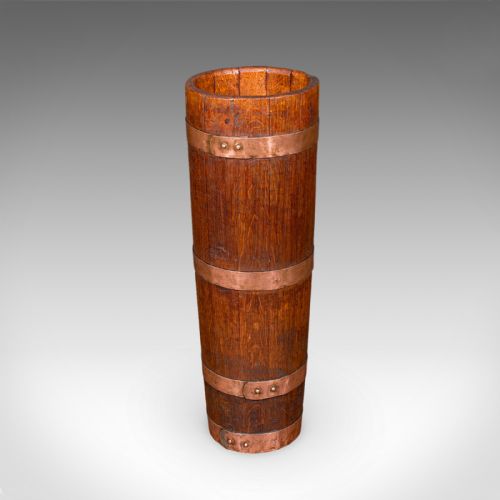


Traditional Oak Vessel
These traditional oak vessel examples bring sturdy coopered construction and rich timber patination into modern homes.
Traditional Oak Vessel
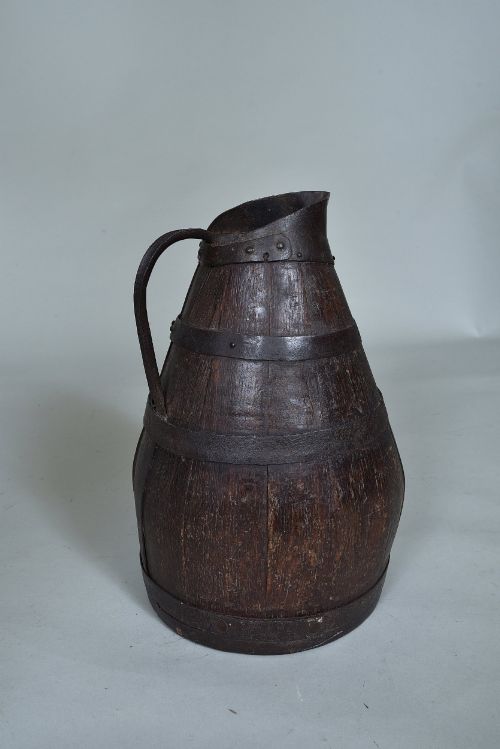
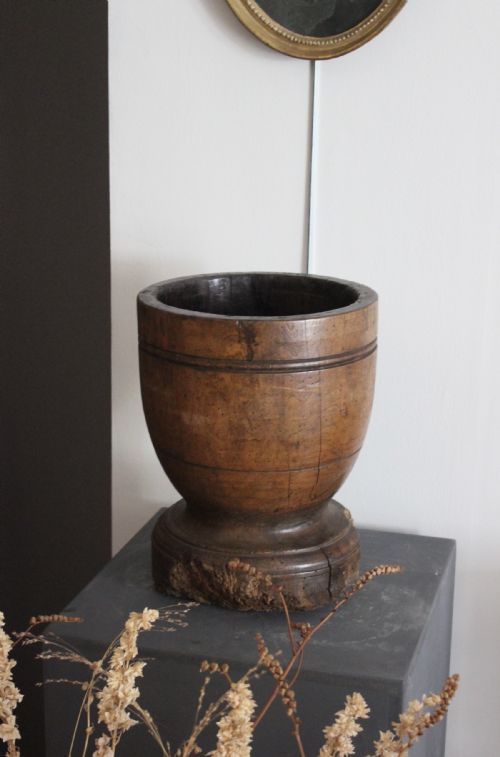
When you search for a traditional oak vessel, you encounter a robust selection of coopered items created from solid timber and banded with metal. These pieces encompass functional utilitarian objects spanning the Georgian, Victorian, and Edwardian eras.
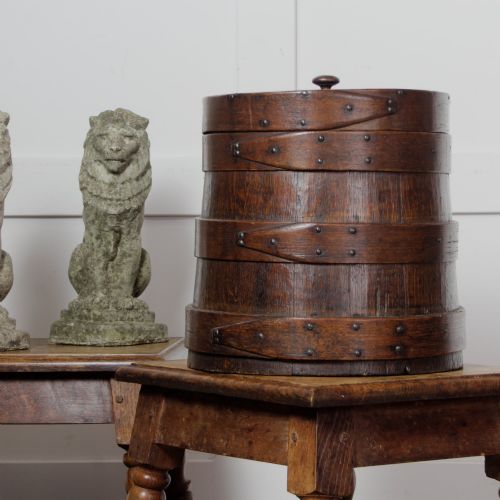
The assortment on this page most frequently presents utilitarian forms such as well buckets, log bins, butter tubs, and umbrella stands. Many examples incorporate brass, copper, or iron bands that secure the tight-fitting wooden staves.
Origins stretch across English country houses and farmhouses, alongside continental examples including Dutch coopered vessels. Domestic utility dictated the original designs, which now transition easily into fireside storage, planters, and hallway stands.
How they were made
Makers utilised solid oak, elm, and other supportive timbers, shaping individual staves with precision so they curved tightly together to form watertight or structurally sound bodies. Cooperage techniques relied on careful beveling rather than modern adhesives to maintain the vessel shape.
Metalwork played a structural and decorative role, with blacksmiths and coopers binding the wooden bodies using wrought iron, brass, or copper bands. These metal hoops were often secured with carefully spaced rivets or pins to hold the expanding and contracting wood in place.
Traditional Oak Vessel Retail Price Guide 2026
Typical asking prices for traditional oak vessel among the pieces listed under this phrase on Sellingantiques today, from the lower quarter to the upper quarter. They describe what is for sale here now, not the wider market.
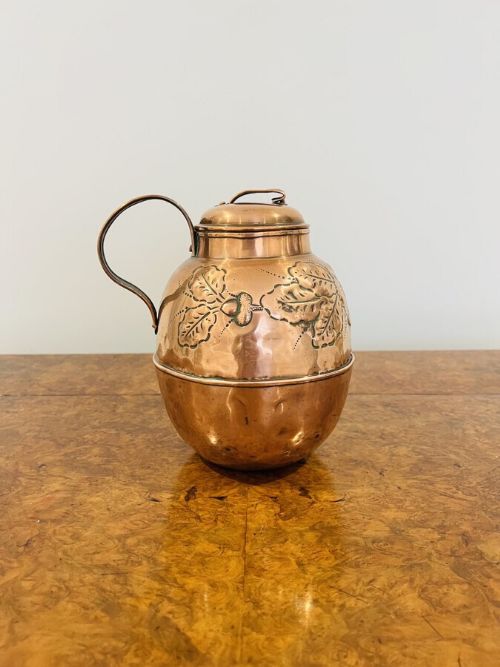
Object forms span umbrella stands, well buckets, log bins, flour bins, butter tubs, and decorative jugs.
What varies in quality
The grade of timber and the precision of the cooperage set finer examples apart from simpler utility items. Tighter stave joints and more substantial timber thickness indicate superior workshop output.
Metal furniture quality shifts between plain iron straps and ornate brass or copper banding with decorative handles. Original patination on both the wood and the metal defines the visual desirability of the finished piece.
The Traditional Oak Vessel Glossary
- Coopered
- Manufactured by a cooper using curved wooden staves bound together with metal hoops. This method was traditionally used for barrels, buckets, and tubs.
- Treen
- Small handmade wooden household objects and utilitarian wares. The term derives from the Middle English word for tree.
- Stave
- One of the narrow vertical strips of wood that form the sides of a traditional barrel, bucket, or tub. Staves are shaped with angled edges to fit tightly against one another.
- Patina
- The surface sheen and colour developed by wood and metal over decades of handling, use, and exposure to the elements. Good patina reflects honest age and care.
Traditional Oak Vessel: Frequently Asked Questions
What were traditional oak vessels used for?
These pieces served practical domestic and agricultural functions, ranging from hauling water and storing grain to holding firewood, butter, or walking sticks.
Over time, utility dictated their robust construction, ensuring they could handle heavy daily wear in country houses and farmhouses.
How do I date a coopered oak piece?
Dating relies on examining the timber grain, the method of shaping the staves, and the style of the metal bands. Georgian and Victorian examples often display hand-forged iron or heavy brass fittings that differ from later industrial production.
Nail types, handle attachments, and overall wear patterns further help narrow down the period of manufacture.
Can I use an old well bucket as a planter?
Many buyers repurpose well buckets and tubs as indoor plant holders or garden containers. Lining the interior protects the historic oak timber from moisture damage.
Using a separate inner pot preserves the dry condition of the base staves while allowing you to display greenery.
How should I clean a brass bound oak bucket?
Dusting with a dry soft cloth preserves the historic surface of both the oak and the metal bands. Avoid harsh modern chemical cleaners that strip the natural timber patination.
If cleaning the metal is necessary, apply brass cleaner carefully with a small brush to prevent staining the surrounding wood.