


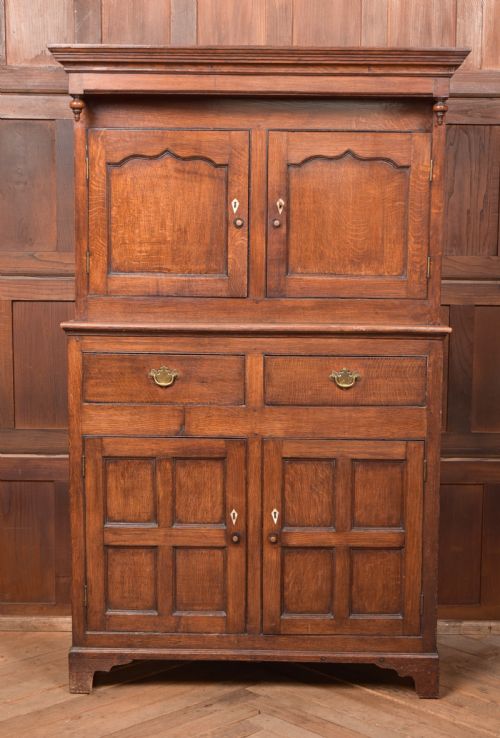


Traditional Oak Sideboard Unit
These traditional oak sideboard unit pieces bring solid construction and centuries of craftsmanship to modern dining spaces.
Traditional Oak Sideboard Unit
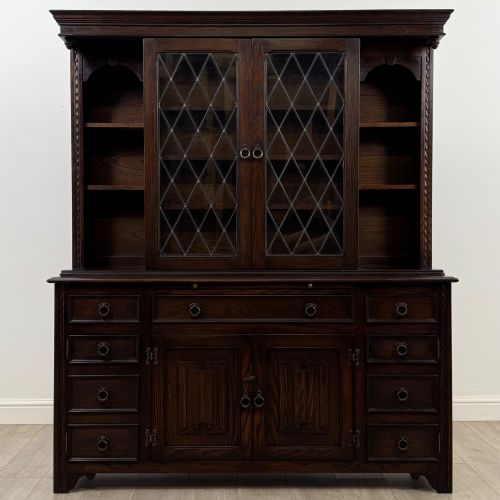
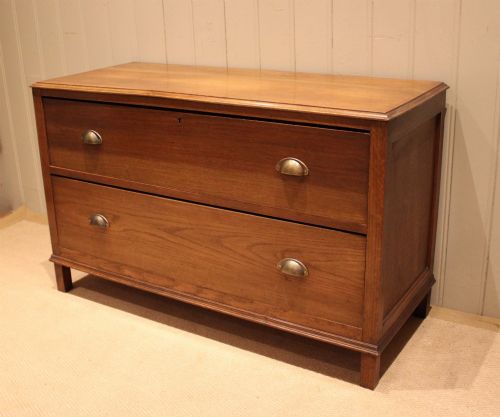
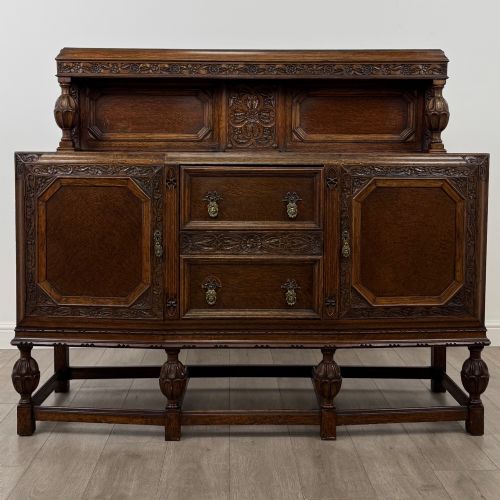
A traditional oak sideboard unit search reveals a diverse collection of storage furniture spanning several centuries and distinct regional styles. Buyers encounter forms ranging from early court cupboards and country dressers to Edwardian sideboards and compact side cabinets.
The pieces listed on this page lean heavily towards British and European country furniture traditions, with notable examples originating from the eighteenth and nineteenth centuries. Edwardian revivals and Jacobean styles appear frequently alongside simpler utilitarian forms.
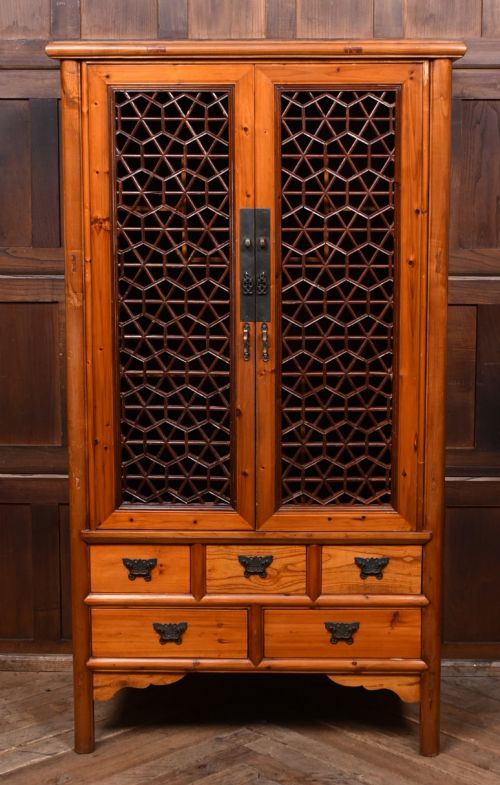
Objects on display include specialised storage pieces such as larder cupboards, housekeepers cupboards, and dressers equipped with plate racks. Solid oak dominates the selection, frequently paired with secondary timbers like pine and cedar.
Materials and construction methods
Makers relied primarily on solid oak for structural frames, panels, and drawer fronts, utilising its dense grain for durability. Secondary timbers such as pine and cedar frequently appear in interior shelving and drawer linings.
Metal hardware incorporates brass and iron for drawer pulls, hinges, and key escutcheons. Glazed doors on display cabinets feature lead to secure the glass panes within wooden frames.
Some nineteenth-century larder cupboards managed to travel all the way from Japan before settling into British oak collections.
Distinguishing quality across periods
Quality separates pieces through the depth of hand-carving and the integrity of the original timber joints. Earlier examples from the seventeenth and eighteenth centuries often display distinctive tool marks and pegged joinery that signal traditional cabinetmaking methods.
Later revival pieces and twentieth-century interpretations vary according to the weight of the solid oak utilised and the proportion of secondary woods. Finer examples maintain crisp detailing on moulded cornices and panelled doors.
The Traditional Oak Sideboard Unit Glossary
- Court cupboard
- A traditional enclosed storage piece featuring upper and lower sections, often heavily carved with Jacobean motifs. These heavy case pieces served as status symbols in early dining halls.
- Plate rack
- An open shelving superstructure attached to the top of a dresser, designed for displaying ceramic plates and platters upright. This fixture is common on country dressers from the eighteenth and nineteenth centuries.
- Jacobean Revival
- A nineteenth and twentieth century design movement that reinterprets seventeenth century English furniture styles. Pieces in this style feature dark finishes, geometric mouldings, and strapwork carving.
- Housekeepers cupboard
- A large utilitarian storage cabinet traditionally used for linens and dry goods in large estates. These tall storage units feature multiple panelled doors enclosing interior shelving.
Traditional Oak Sideboard Unit: Frequently Asked Questions
What is a traditional oak sideboard unit used for?
These pieces provide substantial storage for dining rooms, kitchens, and living spaces, functioning as servers, cabinets, or display units.
Historically, they held tableware, linens, and provisions, while modern interiors utilise them to store crockery and display decorative objects.
How do I date a traditional oak sideboard unit?
Dating relies on examining construction techniques, hardware, and stylistic details such as revival motifs or vernacular country designs.
Earlier pieces from the eighteenth century exhibit hand-cut joinery and vernacular proportions, whereas Edwardian and twentieth-century examples often reflect revival aesthetics.
Are these pieces made of solid oak?
The selection consists largely of solid oak construction, supplemented occasionally by timbers like pine and cedar for internal elements.
Examining the grain and interior drawer construction helps confirm the material composition across different periods.
How do I care for a traditional oak sideboard unit?
Maintaining these pieces involves keeping them away from direct heat sources and sudden humidity changes to protect the timber.
Applying occasional appropriate wax preserves the finish and nourishes the surface of the antique wood.