



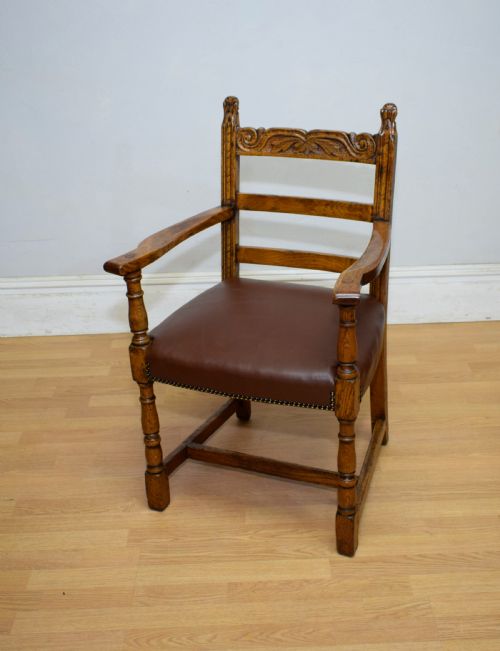

Traditional Oak Ladderback Carver
Traditional oak ladderback carver chairs offer sturdy country vernacular seating built with characteristic horizontal back rails and supportive armrests.
Traditional Oak Ladderback Carver
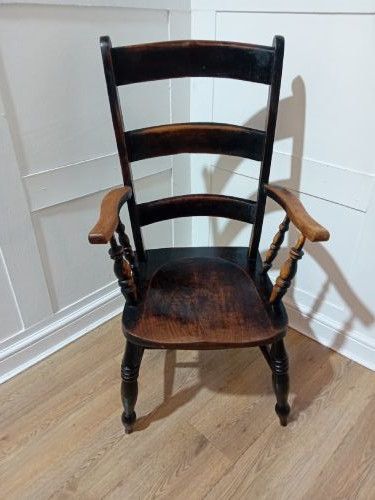
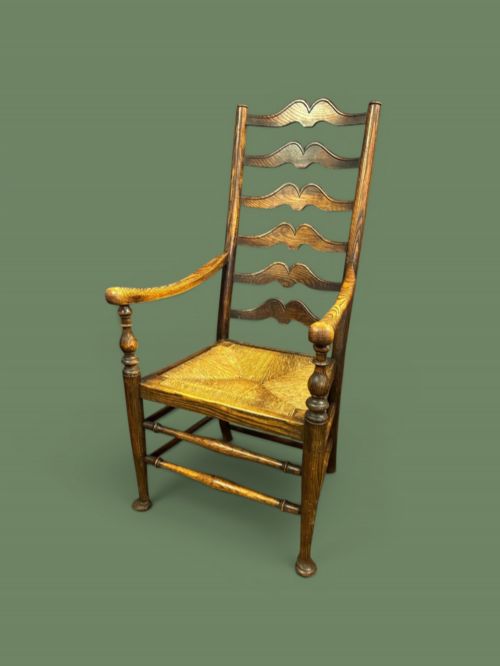
A traditional oak ladderback carver is an armchair designed for comfort at the head of a dining table or at a desk, featuring a series of horizontal slats across the backrest. These sturdy seats belong to country vernacular and Arts and Crafts traditions, often appearing alongside sets of matching side chairs.
The pieces on this page span several centuries and styles, ranging from Georgian vernacular examples through Victorian country pieces to 1930s studio workshops like St Ives. While many are constructed from oak, related timbers such as ash, elm, and beech frequently appear in the listings.
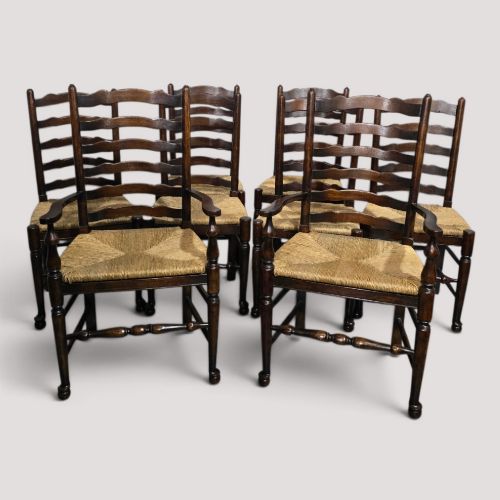
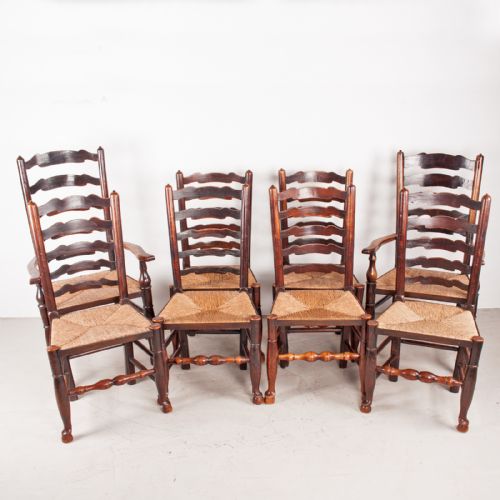
Makers utilised traditional regional designs, resulting in variations like Thames Valley Oxford chairs and Cheshire ladderbacks with woven rush seats. Buyers encounter single carvers, pairs, and larger suites configured as sets of dining chairs including armchairs.
What varies in quality
The integrity of the frame construction and the tightness of the joinery dictate the stability of each carver. Original surfaces and untouched finishes hold greater interest for collectors than heavily sanded timber.
The execution of the turned spindles and the neatness of the rush weaving demonstrate the skill of the original country workshop. Matching sets, particularly harlequin groupings or large numbers of chairs from the same period, represent considerable assemblage effort.
Listings span from the eighteenth century through the Victorian era to 1930s studio workshops, featuring oak, ash, elm, and beech timbers.
Liberty and Co·Dicon Nance St Ives Studio
The Traditional Oak Ladderback Carver Glossary
- Ladderback
- A chair back constructed with multiple horizontal wooden slats resembling the rungs of a ladder. These curved or flat rails support the spine.
- Rush seat
- A seating surface woven from dried marsh rushes around a wooden frame. This traditional method provides a resilient and slightly yielding texture.
- Vernacular
- Everyday furniture made by regional craftsmen following local traditions rather than high-style metropolitan fashions. These pieces prioritise utility and local materials.
- Harlequin set
- A collection of chairs that match in general style and period but vary slightly in detail, often gathered together over time. This term frequently applies to country dining sets.
Traditional Oak Ladderback Carver: Frequently Asked Questions
How do I identify a carver chair?
A carver chair is simply an armchair designed to match a set of dining chairs, usually placed at the head of the table. It has integrated armrests and often shares the same ladderback design as the smaller side chairs.
In many traditional dining arrangements, a set comprises six or eight side chairs accompanied by one or two matching carvers for the hosts.
Are rush seats durable for daily use?
Rush seats woven from natural marsh grasses are surprisingly tough and have supported sitters for centuries in country kitchens and dining rooms. With sensible care, they withstand normal daily seating without difficulty.
Keep rush seats away from excessive moisture and sharp objects to prevent the natural fibres from fraying over time.
What is a harlequin set of chairs?
A harlequin set is a group of dining chairs that share a common style, such as the ladderback form, but differ slightly in their turning, wood grain, or exact proportions. Country dining sets were frequently built up this way over decades.
This variation adds character to a dining room while maintaining a cohesive visual appearance around the table.
How do I care for antique oak furniture?
Maintain antique oak and rush furniture by dusting gently with a dry cloth and avoiding modern silicone polishes that build up on the grain. Feeding the dry timber with traditional wax occasional maintains the finish.
Place chairs away from direct heat sources and strong sunlight to prevent the timber from splitting and the rush from becoming brittle.