
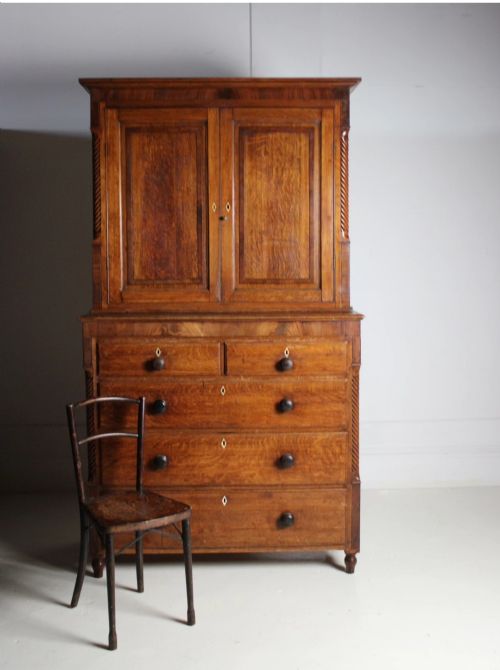
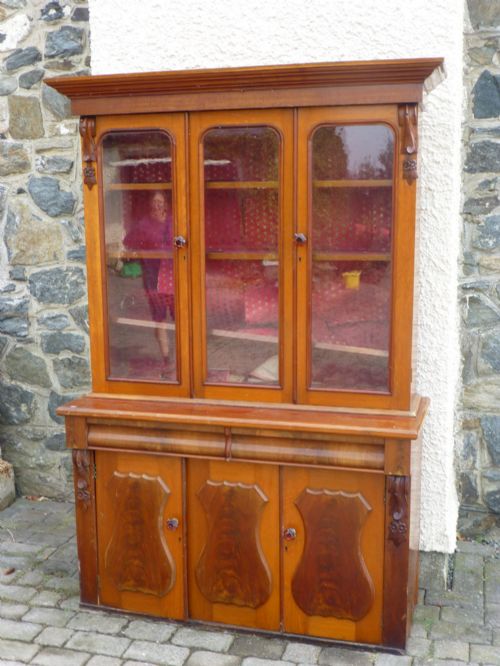
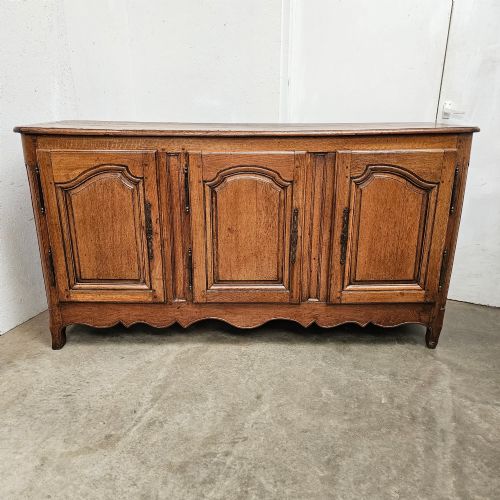


Traditional Oak House Cupboard
These pieces known as a traditional oak house cupboard offer sturdy storage, bringing honest timber character to a room.
Traditional Oak House Cupboard
A traditional oak house cupboard is a solid timber storage piece originating from domestic vernacular traditions. Buyers search for these items to anchor a room with heavy, honest woodwork shaped by centuries of domestic use.
The selections available here span formats such as eighteenth-century housekeeper cupboards, hanging wall cupboards, and glazed Welsh dressers. Oak predominates alongside supporting timbers like elm and pine, reflecting regional British and continental rural workshops.
Georgian and Victorian examples dominate the choices on this page, offering substantial proportions and practical shelving. Buyers will frequently encounter pieces combining deep panelled doors with working iron or brass hardware.
How they were made
Makers constructed these cupboards using solid oak planks joined with pegged mortise and tenon framing. Secondary timbers such as elm or pine frequently appear in internal shelving and backboards, managed with simple hand tools.
Hardware relies on forged wrought iron hinges and locks, often accompanied by brass handles on later Georgian iterations. Surfaces display the tool marks of early planed finishes rather than factory-sanded uniformity.
Listings on this page span the eighteenth, nineteenth, and early twentieth centuries, incorporating both oak and elm timbers alongside painted finishes.
What varies in quality
Quality rests in the retention of original timber surfaces, unaltered panel work, and authentic period hardware like blacksmith locks. Superior examples maintain their primary proportions without excessive timber replacement in the base boards or cornices.
Construction depth separates standard vernacular items from finer estate pieces, particularly in the thickness of the oak panels and drawer linings. Hand-carved mouldings and well-fitted doors indicate a higher grade of regional joinery.
The Traditional Oak House Cupboard Glossary
- Vernacular
- Everyday domestic furniture built by regional craftsmen rather than mengikuti metropolitan design manuals. These pieces prioritise utility and local timber availability over high-style ornamentation.
- Dresser base
- The lower section of a kitchen dresser, usually featuring a combination of drawers and cupboards beneath a solid top. They served as primary work surfaces in large country houses.
- Housekeeper cupboard
- A large storage cabinet designed for linen, dry goods, and household provisions within a large estate. They typically feature panelled doors enclosing multiple interior shelves.
- Breakfront
- A piece of furniture where the central section projects forward from the flanking outer sections. This architectural arrangement adds visual weight and depth to larger dressers and cabinets.
Traditional Oak House Cupboard: Frequently Asked Questions
Where should I place a house cupboard?
These large cupboards suit dining rooms, large kitchens, or hallways where their depth can be accommodated comfortably without crowding the floor area.
Ensure the room humidity remains stable to protect the timber panels from excessive movement over seasonal changes.
How do I care for oak furniture?
Feed the timber periodically with natural beeswax and buff it gently with a soft cloth to maintain the surface sheen.
Keep these pieces away from direct heat sources and strong sunlight to prevent the oak from drying out or splitting.
Can these cupboards hold heavy items?
The solid oak construction and pegged framing provide exceptional structural strength for storing heavy crockery, books, or dense linens.
Internal shelves are generally supported by sturdy timber bearers designed to take considerable weight without sagging.
How do I distinguish eighteenth-century pieces?
Look for hand-planed board surfaces, pegged frame construction, and forged iron hardware rather than modern screws or machine-cut veneers.
Older examples often display subtle irregularities in the timber grain and hand-cut dovetails within the drawer construction.