
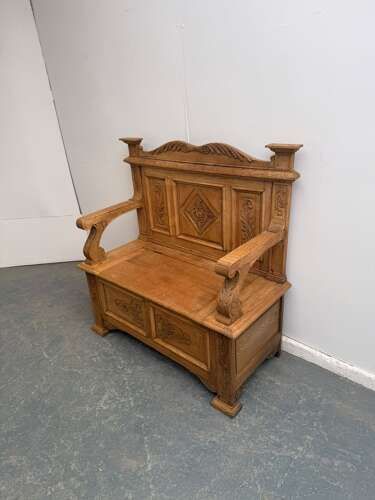
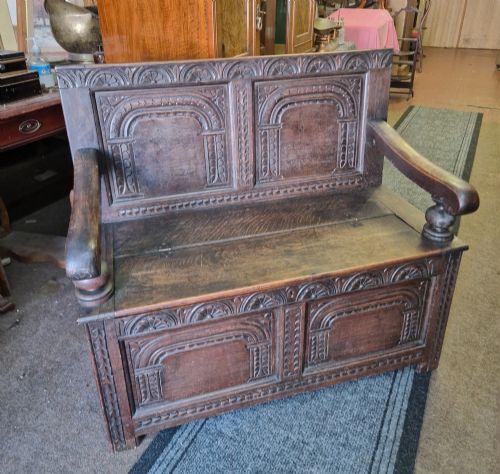
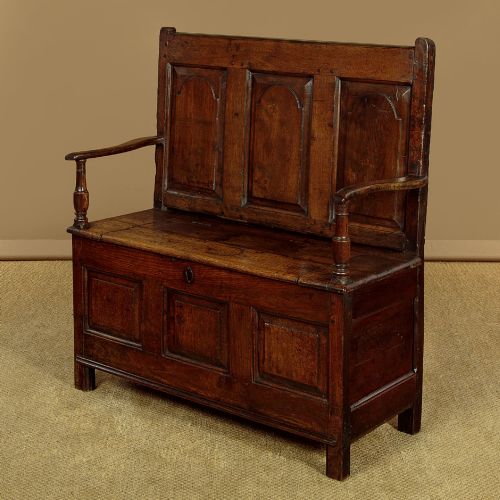


Traditional Oak Coffer Settle
These traditional oak coffer settle pieces combine seating and storage in heavy timber, offering robust practicality for any hallway or living space.
Traditional Oak Coffer Settle
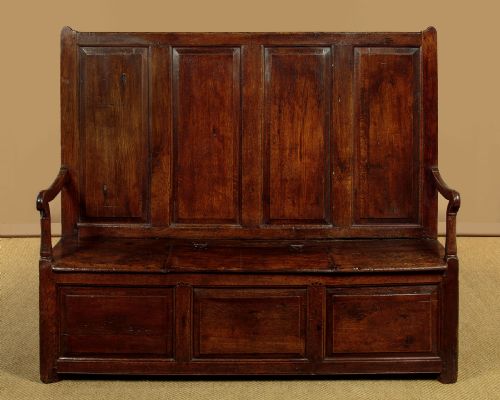
A traditional oak coffer settle is a dual-purpose item providing a high-backed seat above a enclosed storage box or coffer base. When searching for a traditional oak coffer settle, buyers encounter examples ranging from vernacular regional pieces to revival designs.
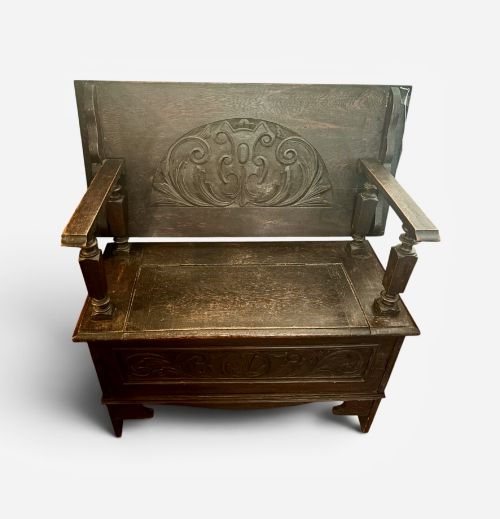
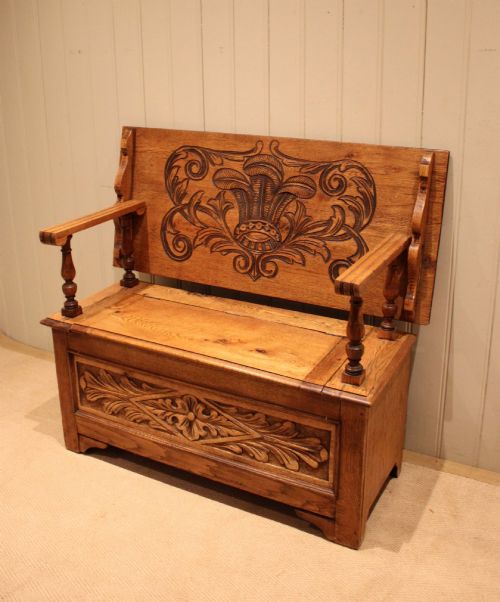
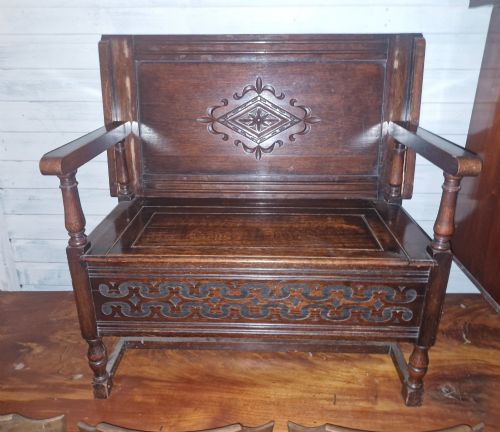
The selections on this page span the eighteenth century, the Victorian era, and early twentieth century revivals such as the nineteen-twenties. Forms vary from straight-backed benches to convertible monk's benches featuring fold-over tops and lift-up lids.
Originating primarily from domestic and rural settings, these forms serve as hall benches and seats. Regional styles include Welsh vernacular and English country traditions alongside Gothic revival interpretations.
What varies in quality
The grade of timber and the depth of the cabinetmaking separate standard examples from finer items. Superior pieces display carefully selected solid oak with well-balanced proportions in the panel construction.
Carving execution defines the distinction between simpler vernacular work and ornate revival pieces. Crisp, deliberate chisel work on high-back panels and arms indicates a higher standard of craftsmanship.
The integrity of the storage mechanism, including original iron hinges and sound box construction, influences the overall standard of survival. Alterations to the lift-up seat or replaced panels shift an item's standing among collectors.
Listings feature solid oak and pine materials alongside iron hardware, spanning the eighteenth century to the nineteen-thirties.
The Traditional Oak Coffer Settle Glossary
- Coffer settle
- A seat featuring a built-in storage box beneath the squab or bench. This form combines seating with enclosed chest storage for household goods.
- Monk's bench
- A convertible form where the backrest folds down over the arms to create a table top. This dual-purpose furniture type appears frequently in later revival periods.
- Vernacular
- Regional furniture built by local craftsmen following traditional local designs rather than London court fashions. Welsh vernacular pieces represent distinct regional building traits.
- Jacobean revival
- A nineteenth and twentieth century style imitating seventeenth century geometric carved ornament and heavy turned supports. This aesthetic appears on numerous later settles.
- Panelled
- A construction method using solid framing members enclosing thinner wooden panels. This technique prevents warping in large surfaces like high backrests.
Traditional Oak Coffer Settle: Frequently Asked Questions
What is a traditional oak coffer settle?
A traditional oak coffer settle is a wooden bench featuring a high back and a box base with a lift-up lid for storage. It serves as both seating and a chest.
These pieces originate from various periods including the eighteenth century and later revival eras, functioning primarily in hallways and living rooms.
How do I use a monk's bench?
A monk's bench operates by tilting or folding the high backrest forward over the arms to form a flat table surface. This allows the piece to switch between a chair and a table.
Users should operate the folding mechanism carefully to protect the timber joints and original hinges from undue stress.
Where were these settles placed historically?
Historically, settles stood in hallways, kitchens, and large living spaces near hearths to block cold drafts. The high back shielded occupants from floor-level draughts.
The enclosed box base kept blankets, boots, or household stores protected from dust and damp conditions.
How can I tell the age of a settle?
Dating relies on examining construction marks, tool traces, timber shrinkage, and stylistic indicators such as carved motifs. Eighteenth-century examples show hand-riven and pegged joinery.
Later Victorian and twentieth-century revival pieces often display machine-sawn timber and different fastening methods alongside period-specific revival styles.
How do I care for an oak settle?
Maintaining an oak settle involves keeping it away from direct heat sources and drastic humidity changes to prevent timber splitting. Applying a traditional wax finish preserves the surface sheen.
Lifting the seat lid gently and checking iron hinges periodically ensures the mechanical parts remain aligned and functional.