


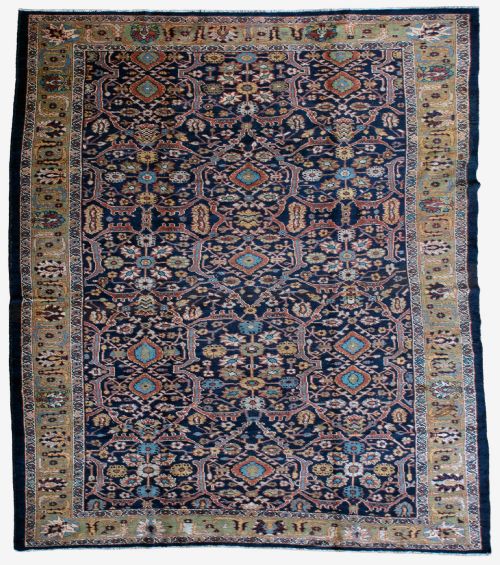
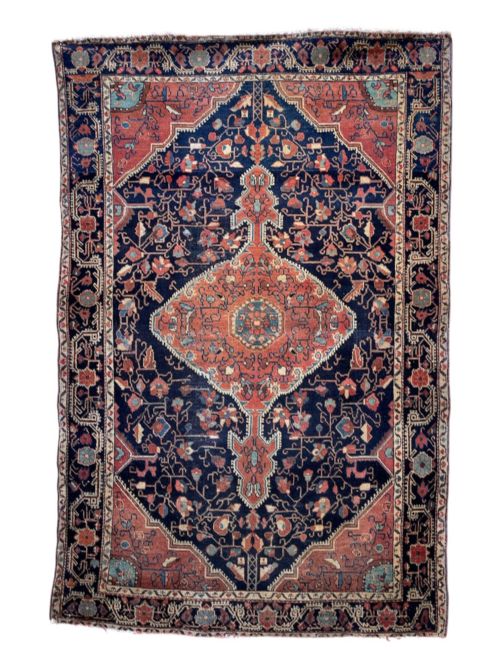
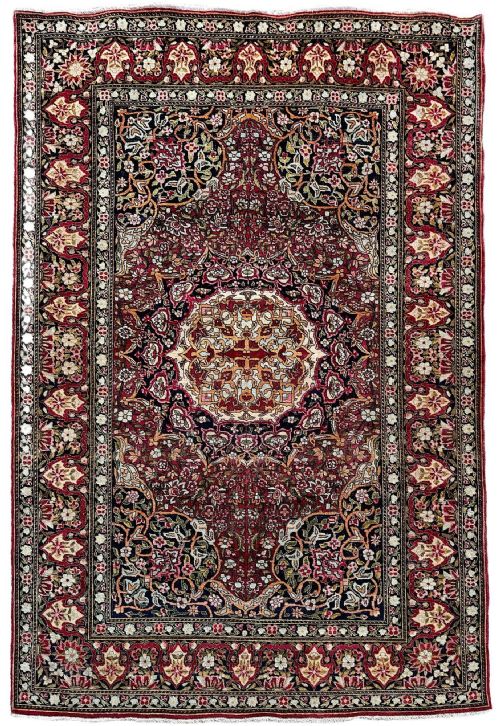
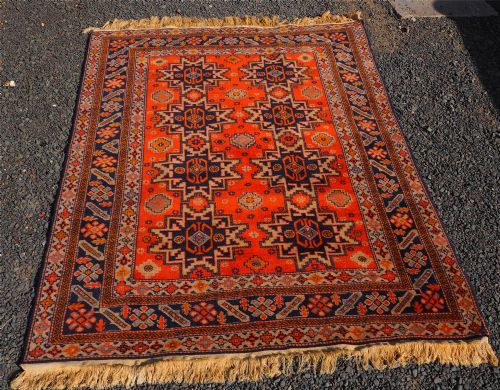
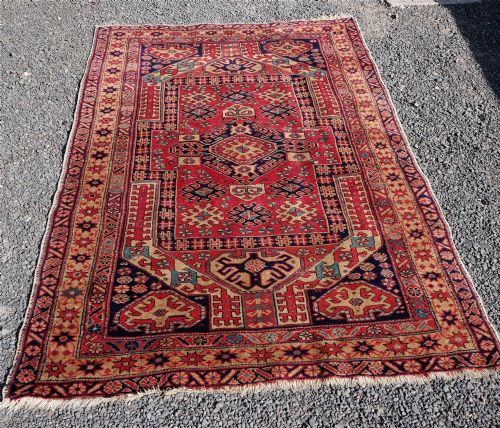
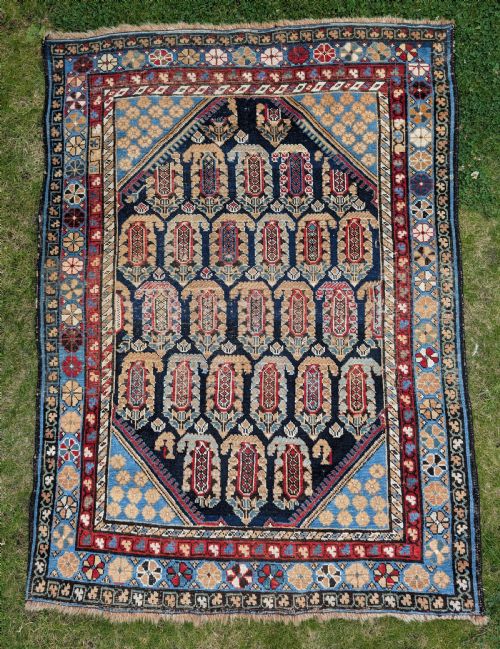
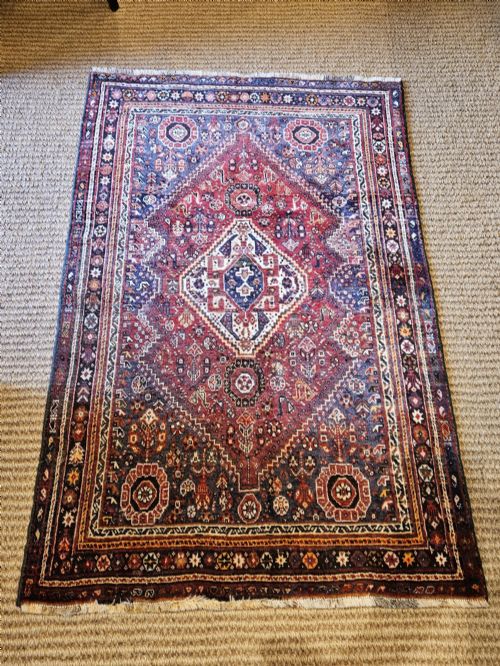
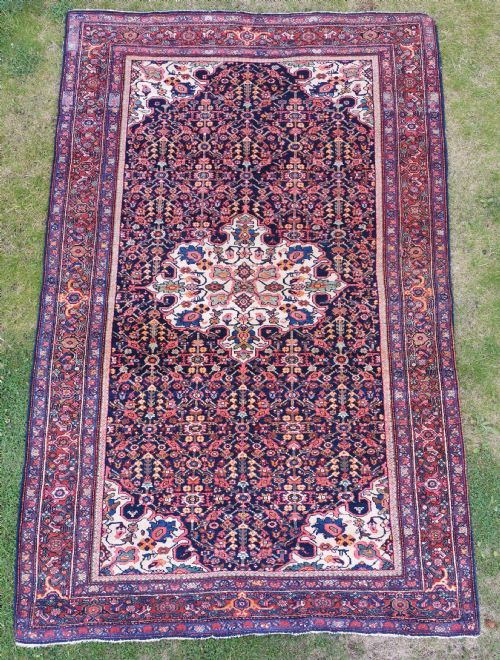
Traditional Navy Oriental Carpet
A traditional navy oriental carpet brings deep indigo ground work and regional geometric or floral patterns into a room.
Traditional Navy Oriental Carpet
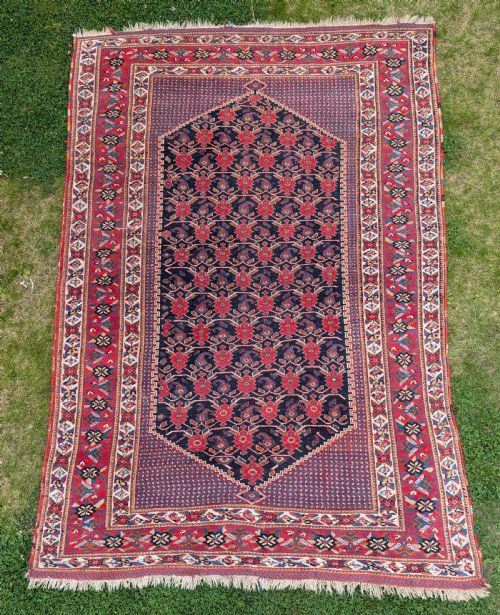
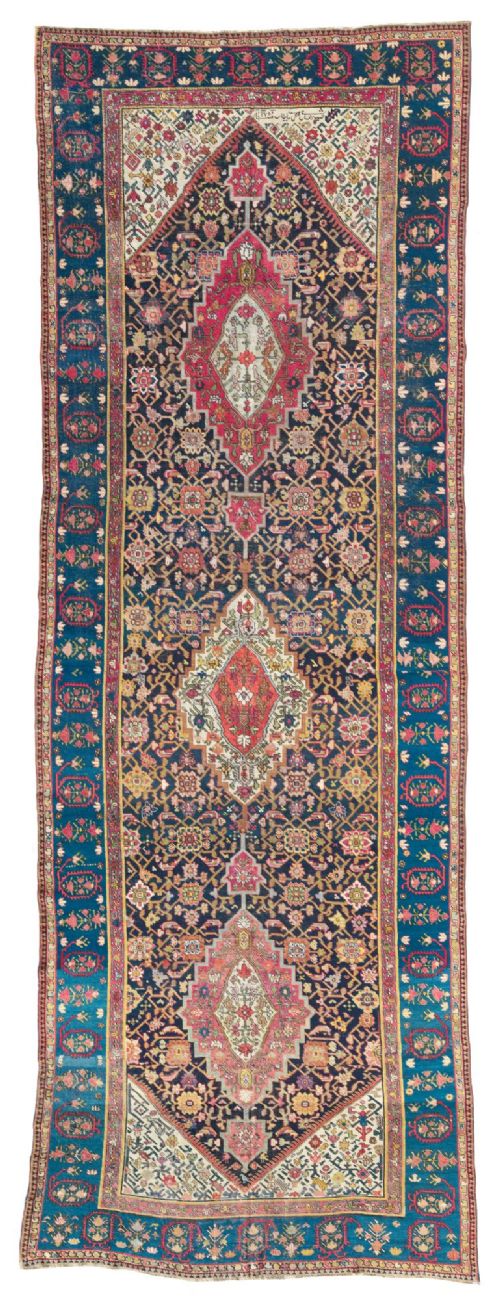
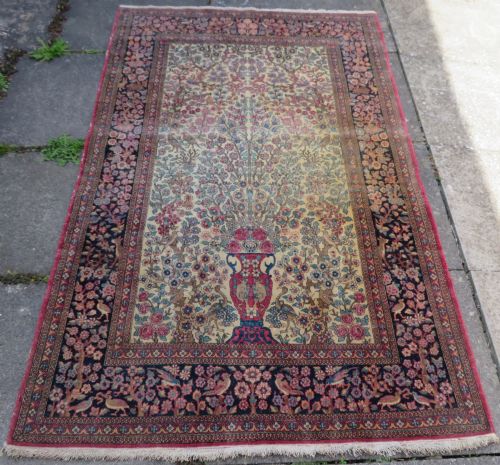
A traditional navy oriental carpet is a hand-knotted floor covering originating from Persia, the Caucasus, or surrounding tribal regions. These textiles span periods from the mid-nineteenth century through the early twentieth century, taking the form of area rugs, large carpets, and long hallway runners.
The selections available include formal city weaves like Heriz, Saroukh, and Isfahan alongside tribal expressions such as Khamseh, Bakhtiar, and Caucasian pieces. Buyers encounter various formats, from compact prayer rugs to expansive room-sized carpets carrying dark blue fields.
Regional weaving traditions dictate the specific iconography, ranging from central medallions and lattice patterns to tree of life motifs. Each piece reflects the particular knotting habits and aesthetic priorities of its specific origin.
How they were made
Makers constructed these carpets using wool, hand-spun wool, cotton, and occasionally silk foundations and piles. Wool provided the durable surface fibre, while cotton or wool served for the warp and weft threads that formed the structural grid.
Weavers tied individual knots by hand onto the vertical warp threads, securing each horizontal row with multiple passes of weft before shearing the pile to an even level. This intensive manual labour produced dense structures capable of withstanding generations of use.
Some nineteenth-century weavers hid tiny intentional asymmetry in their geometric borders to ward off the evil eye.
What varies in quality
Quality separates through the density of the knotting and the precision of the design execution. Finer knots permit intricate curves and detailed geometric motifs to render sharply across the navy field.
The purity and preparation of the dyeing materials also determine the merit of a carpet. Uniform saturation and rich depth in the indigo grounds distinguish superior examples from simpler village work.
The Traditional Navy Oriental Carpet Glossary
- Mihrab
- A niche design element often found on prayer rugs, representing the direction of prayer. It typically arches at one or both ends of the central field.
- Kelleh
- A large format rectangular carpet, traditionally longer than it is wide. These pieces often serve grand hallway or reception spaces.
- Runner
- A long, narrow carpet format designed specifically for corridors, stairs, and hallways. They guide movement through domestic spaces.
- Medallion
- A central ornamental design motif placed in the middle of the carpet field. It serves as the primary focal point for symmetrical regional compositions.
- Warp
- The vertical foundation threads stretched tightly on the loom before knotting begins. The fringe of the carpet typically consists of the extended warp ends.
Traditional Navy Oriental Carpet: Frequently Asked Questions
How do I clean a wool carpet?
Regular gentle vacuuming without a beater bar removes surface grit and prevents fibre abrasion. Professional specialist washing remains necessary for deep cleaning to protect the natural dyes.
Water exposure should stay minimal during routine maintenance. Immediate blotting handles accidental spills without rubbing the pile.
Where should I place a runner?
Runners suit narrow spaces such as hallways, corridors, and entryways where foot traffic concentrates. They soften hard flooring while protecting high-wear areas from direct impact.
Leaving a margin of bare floor around the edges helps frame the piece properly. A suitable underlay prevents shifting and adds cushioning underfoot.
How can I tell regional styles apart?
Regional distinctions appear in the geometry, palette choices, and structural stiffness of the weave. City workshops often produce balanced floral arrangements, whereas tribal pieces lean towards bold rectilinear symbolism.
Examining the knot type and back structure provides further clues to origin. Different weaving centres utilised distinct colour combinations and wool textures.
Are these carpets suitable for daily use?
Hand-knotted wool construction yields high durability suited to everyday residential environments. The natural lanolin in the wool fibre resists common household staining.
Placing the piece away from direct, harsh sunlight prevents uneven fading of the navy dye. Rotating the rug periodically ensures balanced wear patterns over time.