


Traditional Monastery Dining Table
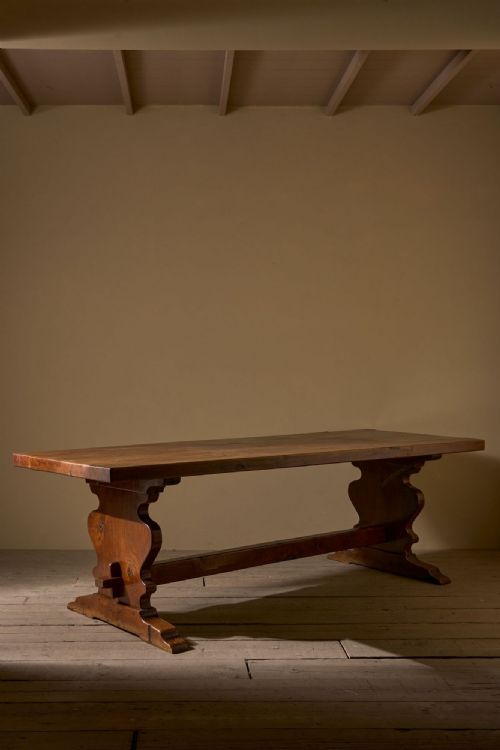
A traditional monastery dining table anchors a large room with centuries of sturdy character.
Traditional Monastery Dining Table
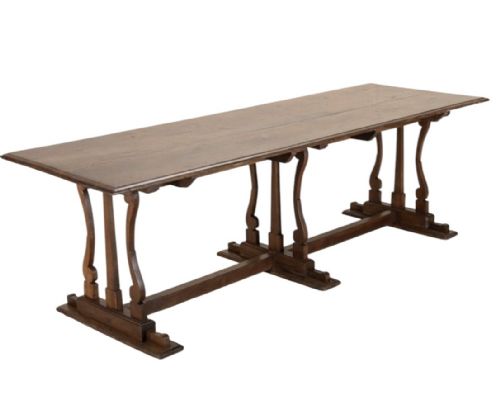
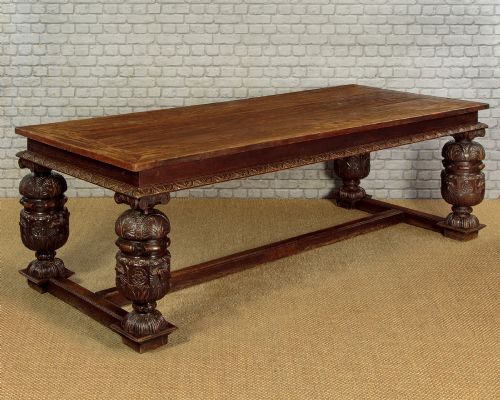
A traditional monastery dining table is a long, heavy dining surface built to seat large groups comfortably for meals and gatherings. These pieces draw on historical refectory forms designed for communal dining in religious houses, adapted over time for domestic use.
The pieces appearing here span several centuries, reaching from the seventeenth century through the eighteenth and nineteenth centuries into the twentieth century. Examples include forms from the Edwardian era alongside earlier periods, offering substantial timber construction suitable for modern dining rooms.
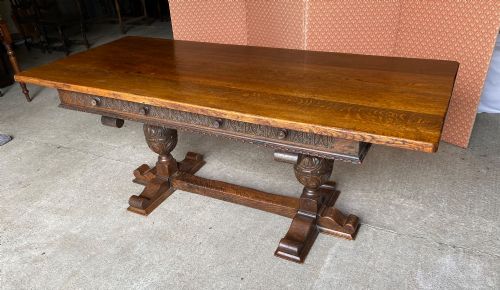
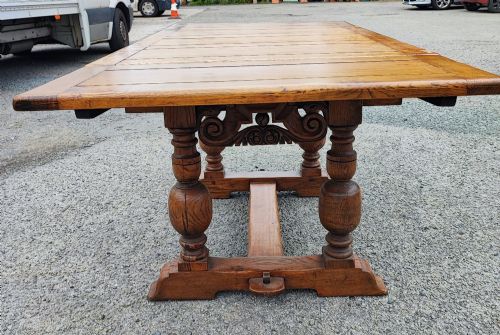
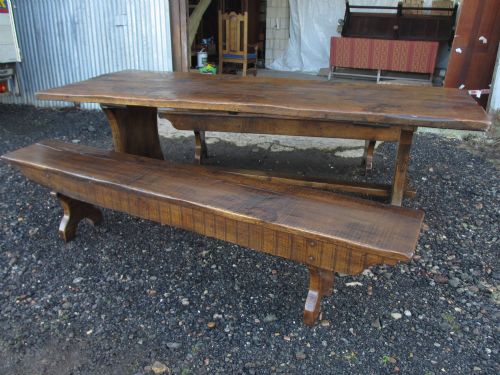
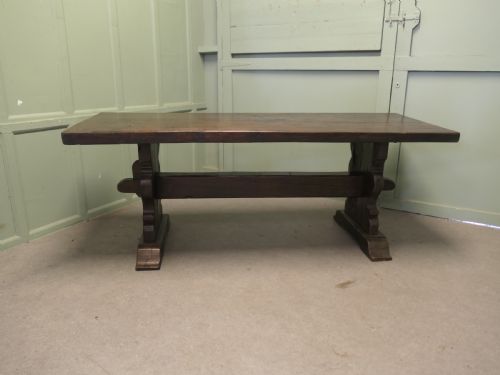
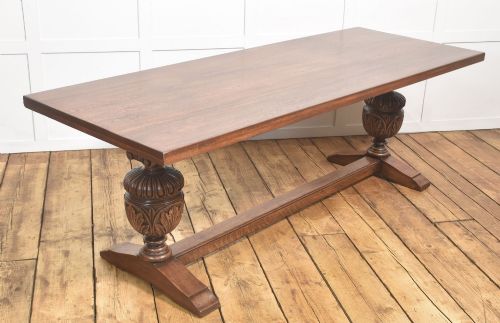
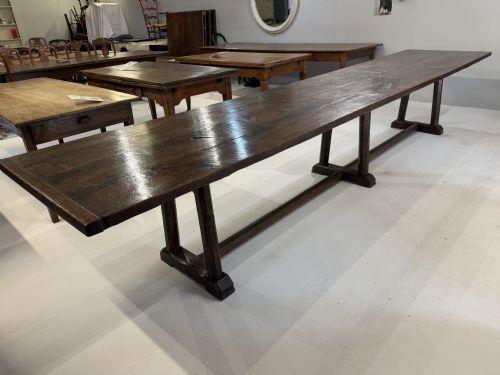
Most items you encounter in this category use solid timber boards supported by trestle ends or shaped legs. Makers often incorporated draw leaf mechanisms or planked tops to accommodate more diners around the board.
How traditional monastery dining tables were made
Craftsmen built these tables primarily using solid oak, alongside walnut, elm, pine, and mahogany. Carpenters selected these hardwoods for their durability and strength under heavy daily use.
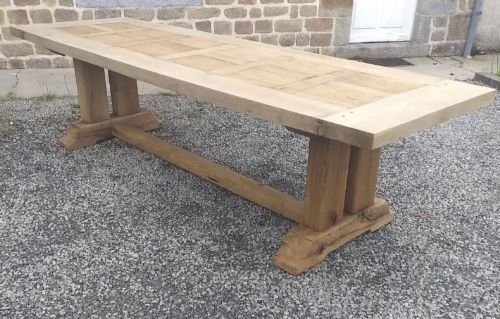
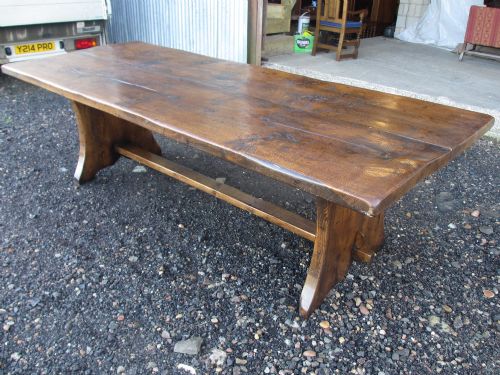
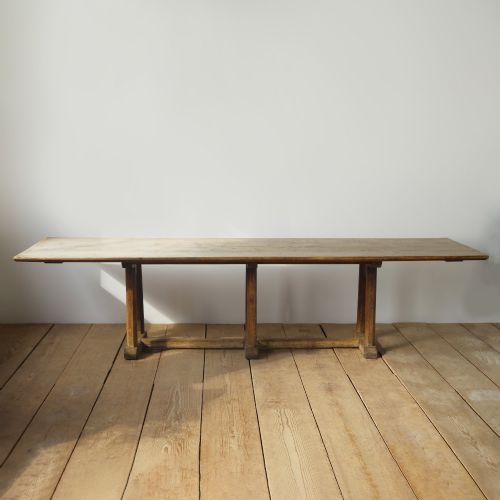
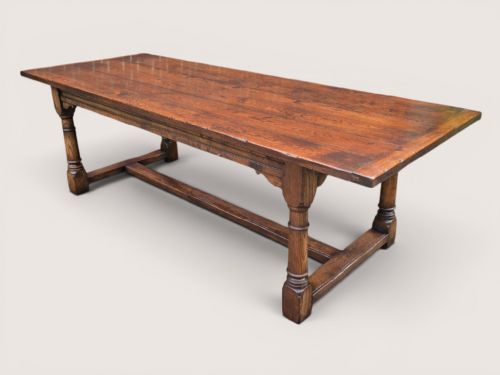
Construction techniques involved thick timber planks joined together to form expansive tops, often supported by trestle ends or stretcher bases. Some surfaces feature bleached finishes or natural patinas developed through years of handling.
Listings span multiple centuries, incorporating oak, walnut, elm, pine, and mahogany across various country and Gothic styles.
What varies in quality in traditional monastery dining tables
Quality rests in the selection of the timber and the integrity of the joinery supporting the heavy top boards. Tables built from thick, quarter-sawn oak planks display a richer grain and superior stability compared to lighter constructions.
The proportion and design of the trestle ends or legs determine the visual weight and balance of the piece. Master carpenters shaped these supports with careful attention to structural harmony and long-term durability.
The Traditional Monastery Dining Table Glossary
- Refectory table
- A long dining table traditionally used for meals in communal dining halls. These pieces typically feature elongated proportions and sturdy stretcher bases.
- Trestle ends
- Upright supports placed at either end of a table to hold the top board. They provide robust stability without obstructing legroom along the sides.
- Draw leaf
- An extension system where subsidiary leaves slide out from beneath the main top to lengthen the table. This mechanism allows the surface area to expand when hosting guests.
- Planked top
- A tabletop constructed from several individual wooden boards joined side by side. This method accommodates the expansion and contraction of solid timber over time.
- Bleached oak
- Timber treated to lighten its natural dark colour while retaining the visible grain pattern. This finish appears across various period and twentieth-century examples.
Traditional Monastery Dining Table: Frequently Asked Questions
How do I seat twelve people?
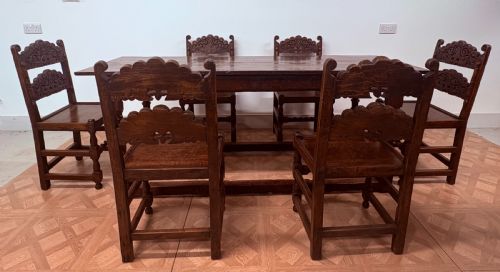
Large refectory and monastery tables provide ample length along the sides to accommodate numerous chairs or matching bench forms. Selecting an appropriate length ensures guests have sufficient knee clearance between the trestle supports.
Measuring the distance between the end legs helps confirm whether chairs fit comfortably at the head of the table. Long planked surfaces naturally lend themselves to flexible seating arrangements for large gatherings.
What is a refectory table?
A refectory table is a long, narrow dining table originally designed for monastic dining halls. These pieces combine heavy timber tops with sturdy underframes.
Over the centuries, makers adapted the form for domestic dining rooms and country kitchens. The enduring design prioritises communal seating and robust construction.
How do I clean solid oak?
Maintaining solid oak surfaces requires simple dusting with a soft, dry cloth to remove daily particles. Avoiding harsh chemical cleaners preserves the natural patina and protective finish of the timber.
Applying a suitable wax occasionally nourishes the wood and protects against moisture. Promptly wiping up spills prevents staining on antique and vintage timber.
Are these tables heavy?
These tables utilise dense hardwoods like solid oak and walnut, making them exceptionally heavy and solid. This weight contributes to their stability during daily use in busy dining spaces.
Moving or positioning these large pieces typically requires more than one person to lift safely. The substantial structure ensures the furniture remains firmly in place.