


Traditional Mahogany Low Stool
These traditional mahogany low stool examples offer low seating and footrests rooted in eighteenth and nineteenth century domestic spaces.
Traditional Mahogany Low Stool
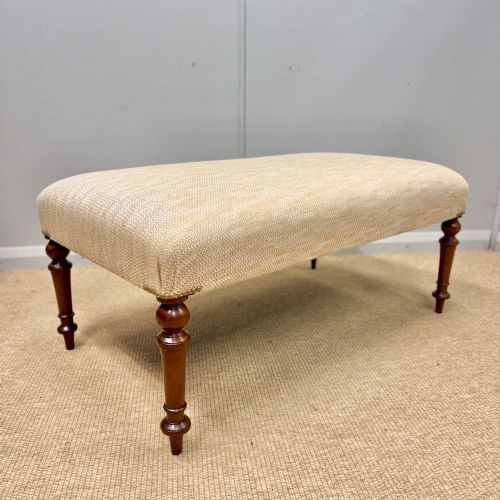
When you search for a traditional mahogany low stool, you encounter low seating designed as footstools, dressing table seats and compact ottomans. These forms emerge primarily from nineteenth century production alongside earlier eighteenth century Georgian examples.
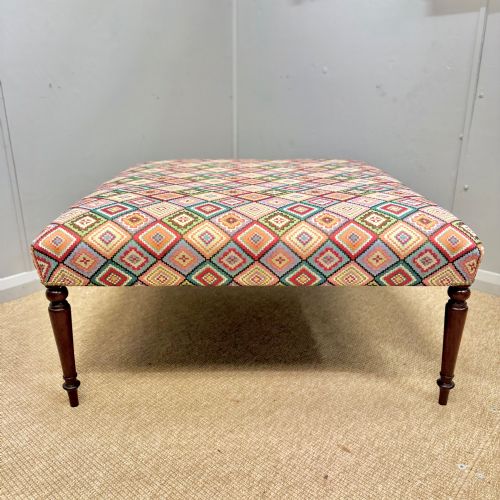
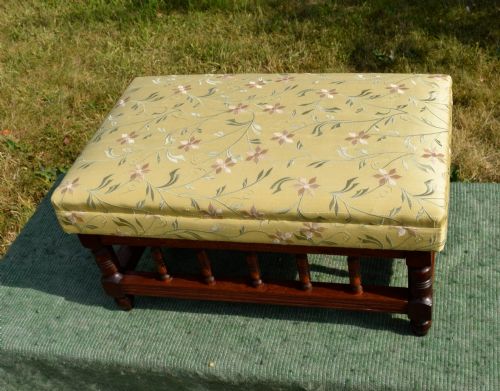
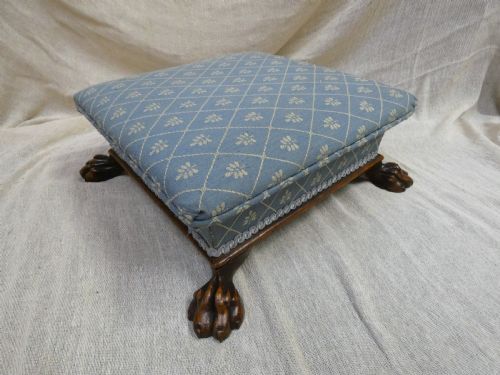
The pieces appearing on this page span oblong, square and oval formats, often finished with upholstered tops in various fabrics. Many examples adopt revival styles such as Queen Anne, Chippendale and Regency.
Makers utilised timber frames paired with textiles including velvet, wool, tapestry fabric and standard upholstery. Certain variations incorporate brass castors or caned tops to suit different interior settings.
How they were made
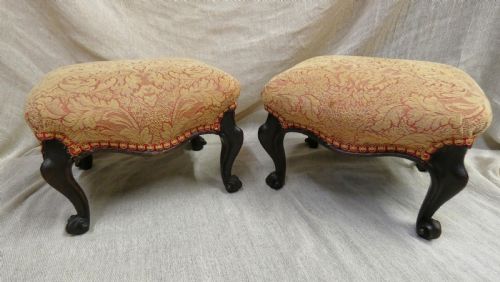
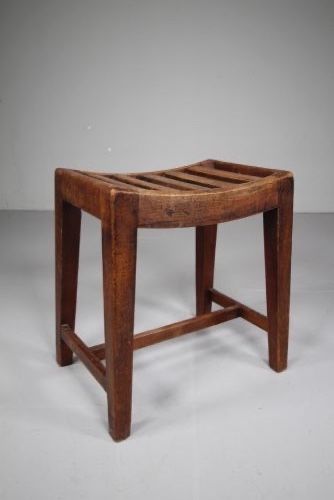
The construction relies on solid mahogany frames shaped into cabriole legs, straight rails or carved profiles. Artisans joined these structural elements using traditional timber joinery methods.
Upholstery forms a primary component of these items, utilising webbing, stuffing and textiles such as velvet, wool and tapestry fabric. Brass castors frequently appear on larger nineteenth century examples to aid mobility.
Some nineteenth century examples were built exceptionally low to accommodate ladies wearing heavy crinoline skirts.
What varies in quality
Quality differentiates through the crispness of timber carving on cabriole legs and frame edges. Hand-carved details and substantial mahogany scantlings distinguish finer workshop output from simpler production.
The integrity of the frame construction and the quality of the upholstery materials determine the overall execution. Pieces featuring integrated brass castors and dense hardwood frames represent higher standards of period craftsmanship.
Howard and Sons·Whytock and Reid
The Traditional Mahogany Low Stool Glossary
- Cabriole leg
- A furniture leg featuring a double curve, swelling outward at the knee and tapering inward to the foot. This form derives from classical motifs and appears frequently on eighteenth and nineteenth century seating.
- Mahogany
- A durable tropical hardwood prized for its deep reddish-brown colour and stable grain. It served as the primary timber for high-quality English furniture across the Georgian and Victorian periods.
- Castor
- A small wheel mounted in a swivel housing attached to the base of furniture legs. They allowed heavy nineteenth century footstools to move easily across carpets.
- Caned top
- A seating surface woven from split rattan or cane in a patterned mesh. This technique provides a lightweight, breathable panel fitted within a solid wood frame.
- Deep buttoning
- An upholstery technique where twine is pulled through padding and secured with buttons to create a diamond pattern. This method holds the internal stuffing firmly in place.
Traditional Mahogany Low Stool: Frequently Asked Questions
What is a traditional mahogany low stool used for?
These items served primarily as footstools for resting feet while seated in armchairs or as low seats near dressing tables. Their compact proportions allowed them to be tucked away when not in use.
In modern rooms, they function well as flexible occasional seating or as low surfaces when paired with a tray.
How do I date a traditional mahogany low stool?
Dating relies on examining the timber characteristics, leg styles and construction methods used in the frame. Georgian pieces often display restrained carved details, whereas Victorian examples may incorporate heavier proportions or castors.
Revival styles from the early twentieth century frequently copy earlier eighteenth century forms while retaining machine-cut joinery evidence.
Are these stools comfortable to use daily?
Their comfort depends largely on the internal padding and the textile used for the upholstery top. Many period examples feature firm horsehair or modern equivalent stuffing suited for resting feet.
Reupholstered pieces can offer softer support depending on the density of the foam or traditional stuffing layers installed inside.
How should I care for the mahogany frame?
Maintain the timber by dusting it regularly with a dry, soft cloth to prevent particle buildup. Avoid placing the furniture near direct heat sources or strong sunlight to protect the polished surface.
Occasional application of appropriate wax polish helps nourish the wood and preserves its natural lustre over time.