


Antique Slatted Bench Stool
An antique slatted bench stool is a practical seat or stand built with open wooden bars, offering sturdy utility and timeless character.
Antique Slatted Bench Stool
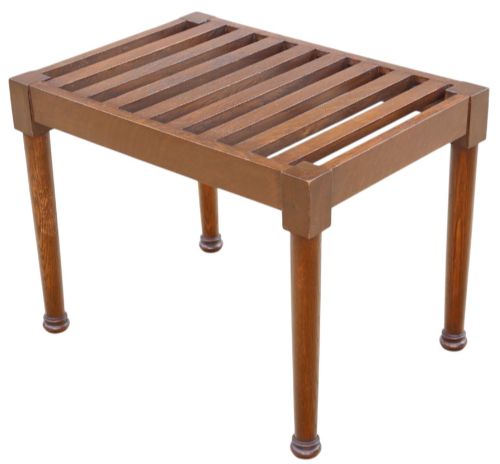
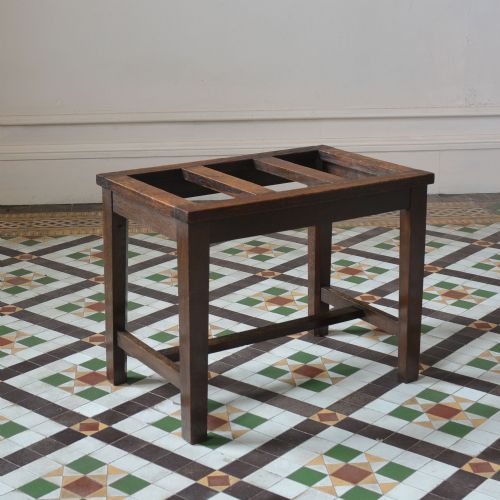
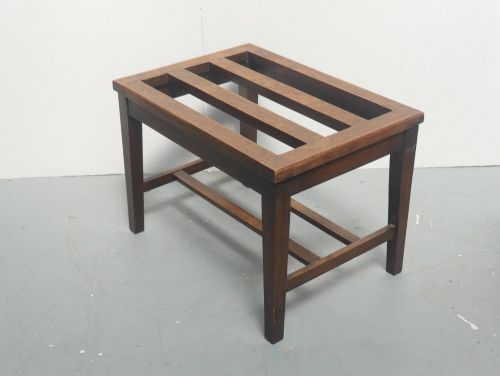
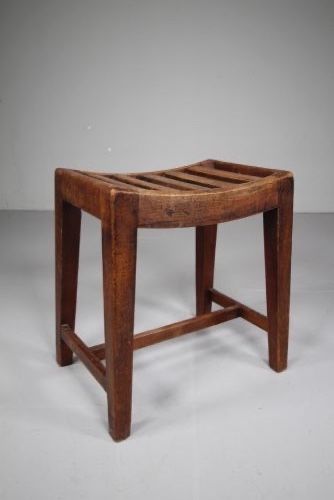
An antique slatted bench stool serves various functional roles around the home, appearing frequently as a luggage stand, window seat, or piano stool. These pieces span multiple periods including the eighteenth century, Victorian era, Edwardian period, and early twentieth century.
The most common forms on this page include luggage racks and low seats configured with wooden slats. They cross several traditional styles such as Georgian, Victorian, Edwardian, and Arts and Crafts.
Makers utilised resilient timbers to construct these items, producing both simple utility furniture and finer inlaid piano seats. Their enduring appeal lies in this combination of straightforward utility and period craftsmanship.
How they were made
Cabinetmakers constructed these pieces primarily from solid hardwoods like mahogany and oak, occasionally incorporating contrasting satinwood inlay for decorative effect. Frames were joined using traditional timber framing techniques suited to supporting weight.
Surface treatments preserved the natural grain of the wood while upholstery fabrics appeared on specific seating forms like window seats and piano stools. Slatted tops were assembled with individual wooden bars spaced evenly across the frame.
Listings feature items spanning the eighteenth century through the Edwardian period, constructed mainly in mahogany and oak.
What varies in quality
The standard of timber selection and joinery distinguishes finer examples from simpler utilitarian pieces. Superior items display careful attention to wood grain matching and refined structural proportions.
Decorative additions such as satinwood inlay or shaped woodwork elevate certain forms above plain functional luggage stands. Original fabric upholstery and intact framing integrity also influence the overall character of each piece.
The Antique Slatted Bench Stool Glossary
- Slatted
- Constructed with narrow strips of wood spaced apart to form a surface. This design reduces weight while maintaining structural strength.
- Luggage stand
- A low bench or rack designed to hold travel bags off the floor. These items often feature folding or fixed frames with slatted tops.
- Satinwood inlay
- A decorative technique inserting contrasting light-coloured wood into the primary timber surface. It adds refined detail to Edwardian and Georgian furniture.
- Saddle seated
- Shaped into a contoured wooden form resembling a riding saddle. This ergonomic design provides comfortable support on stools.
- Window seat
- A low bench designed to fit beneath a window frame. These pieces often incorporate upholstered tops or detailed woodwork.
Antique Slatted Bench Stool: Frequently Asked Questions
What was a luggage rack used for?
A luggage rack provided a convenient surface for guests to place travel trunks and suitcases at a comfortable height. These stands kept bags off the floor and made unpacking easier in bedrooms.
Over time, many of these sturdy wooden frames transitioned into general household use as occasional benches or display surfaces.
How do I date an Edwardian stool?
Edwardian furniture dating between nineteen hundred and nineteen ten often displays lighter timbers and restrained decorative elements. Look for characteristic Edwardian mahogany frames or inlaid satinwood details.
Construction methods from this era combined traditional joinery with early industrial woodworking machinery, creating lighter proportions than heavy Victorian pieces.
Where should I place a slatted bench stool?
These versatile pieces fit naturally at the foot of a bed, beneath a hallway window, or beside a piano. Their open slatted design keeps visual weight low in smaller rooms.
Consider how the timber tone matches other furniture in your space, whether pairing rich mahogany with traditional interiors or oak with simpler rooms.
What is the difference between a stool and a luggage stand?
A stool is primarily designed for sitting, featuring a solid, upholstered, or saddle-shaped top. A luggage stand is built with a flat slatted surface specifically intended to support bags.
While both share similar low wooden frames, their intended function dictates whether they received comfortable padding or remained strictly utilitarian wooden slats.