

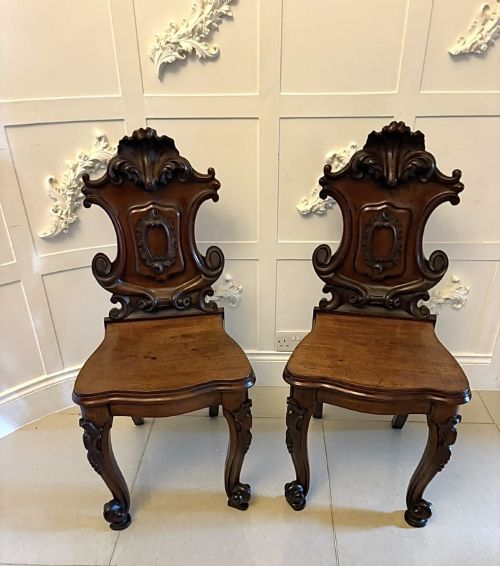
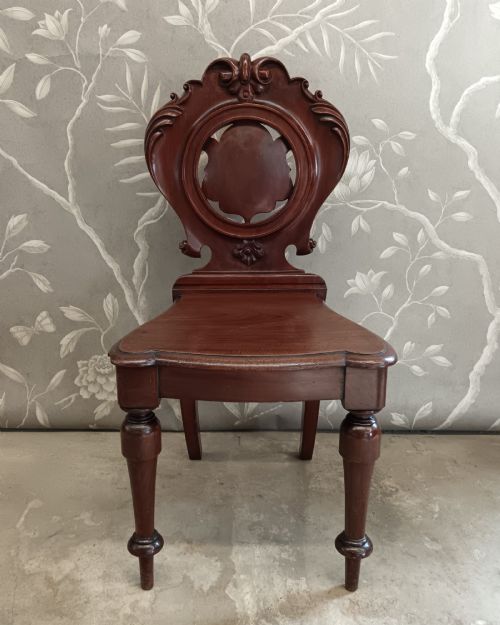
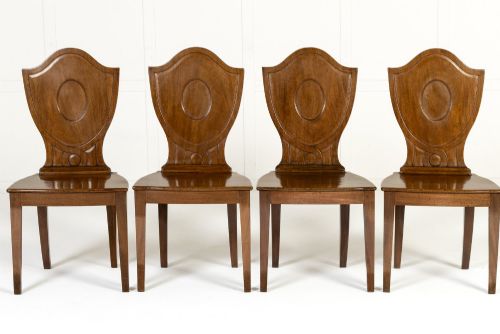
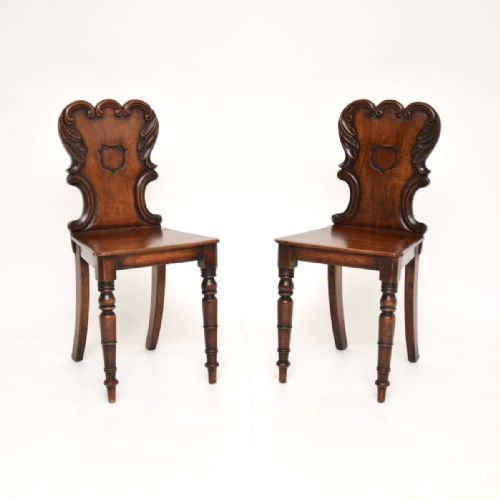

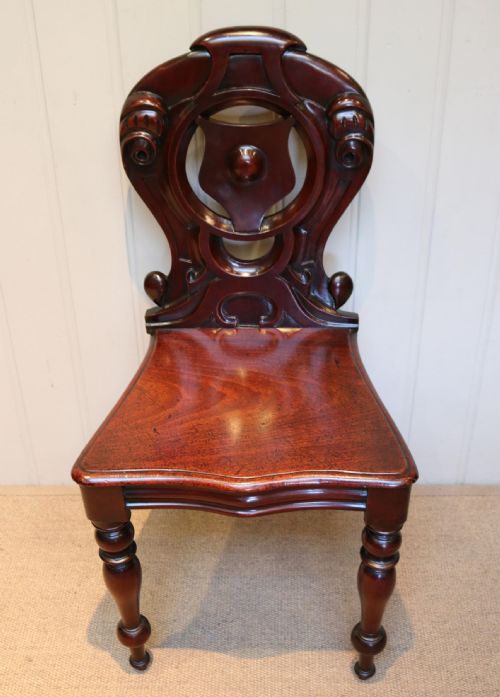


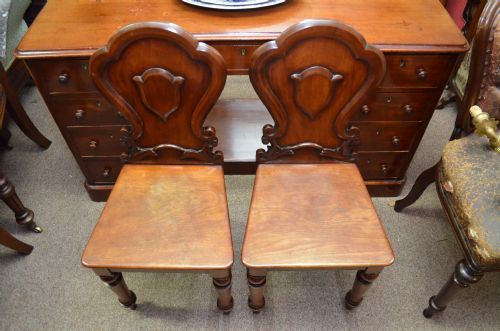
Traditional Mahogany Entryway Chairs
Traditional mahogany entryway chairs offer sturdy formality for a hall, combining dense timber with historic carving.
Traditional Mahogany Entryway Chairs
Traditional mahogany entryway chairs primarily consist of rigid hall chairs and benches designed for formal spaces. These pieces span periods from the Georgian and Regency eras through the Victorian age, including specific styles like William IV and Chinese Export.
Buyers frequently encounter pairs and sets originating from nineteenth-century English and Scottish workshops. The selection centres heavily on carved wooden seats intended for display and transient seating rather than prolonged lounging.
How traditional mahogany entryway chairs were made
Cabinetmakers utilised dense mahogany and associated hardwoods to construct rigid frames capable of withstanding heavy daily use. Skilled artisans applied deep hand-carving directly into the solid timber to create sculptural crest rails and panelled backs.
Metal components such as brass occasionally reinforced structural joints or secured fittings on specific forms like benches. Construction methods relied on traditional joinery rather than modern adhesives to ensure enduring stability.
Traditional Mahogany Entryway Chairs Retail Price Guide 2026
Typical asking prices for traditional mahogany entryway chairs among the pieces listed under this phrase on Sellingantiques today, from the lower quarter to the upper quarter. They describe what is for sale here now, not the wider market.
Listings span the Georgian, Regency, and Victorian periods, alongside Chinese Export and Scottish regional variants.
What varies in quality in traditional mahogany entryway chairs
The depth and crispness of the carved ornamentation separate standard examples from superior pieces. Crisp relief work on the back panel and sculptural shaping of the solid seat indicate a higher standard of craftsmanship.
Timber selection and grain figure also determine the distinction between ordinary utility seating and pieces commissioned for grander interiors. Heavier scantlings and balanced proportions reflect greater ambition in the original workshop.
The Traditional Mahogany Entryway Chairs Glossary
- Mahogany
- A durable tropical hardwood prized for its rich reddish-brown colour and fine grain. Cabinetmakers favoured this timber for its stability and capacity to hold intricate carved detail.
- Hall chair
- A rigid wooden seat traditionally placed in a grand entranceway or corridor. These pieces usually lack upholstery and feature high backs displaying family crests or decorative carving.
- Regency
- An English design period spanning the early nineteenth century characterised by classical motifs. Furniture from this era often draws inspiration from ancient Greek and Roman forms.
- William IV
- A transitional design style bridging the late Regency and early Victorian periods. Pieces typically exhibit robust proportions and bold scrolling woodwork.
Traditional Mahogany Entryway Chairs: Frequently Asked Questions
Where did people put hall chairs?
These seats stood strictly in entrance halls, corridors, and landings rather than domestic living spaces. Guests used them briefly while waiting to be announced.
Their rigid wooden construction discouraged prolonged sitting, serving instead as architectural elements within formal interiors.
How do I identify a Victorian chair?
Victorian examples display heavier proportions and often incorporate deeper machine-assisted or hand carving. The stylistic vocabulary draws freely from earlier Gothic, Rococo, and Renaissance revivals.
Makers working during this era produced everything from plain utility models to heavily ornamented exhibition pieces.
Are mahogany chairs heavy?
Solid hardwood construction makes these seats remarkably dense and weighty. This heft prevented the furniture from tipping when visitors sat down in heavy outerwear.
Moving them requires care to protect both the floor and the projecting carved crest rails.
What is a window seat?
Window seats function as long benches designed to fit within deep architectural window recesses. They share the sturdy mahogany construction and carved details of standard hall chairs.
These forms provided fixed seating overlooking the grounds of a country house or townhouse.