


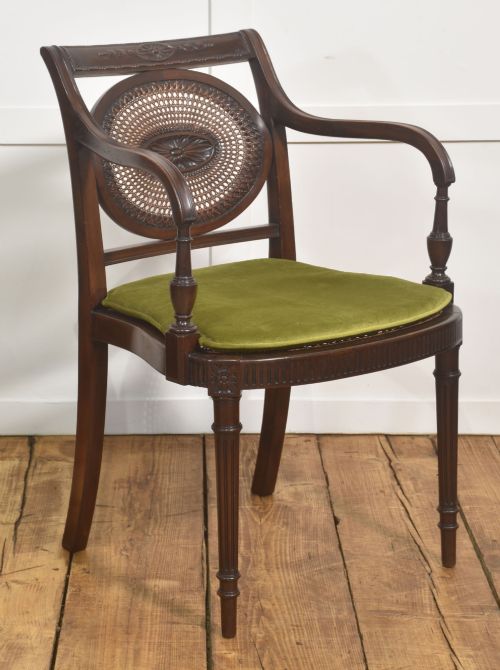

Traditional Mahogany Desk Seat
A traditional mahogany desk seat delivers solid craftsmanship and rich timber tones to a study.
Traditional Mahogany Desk Seat
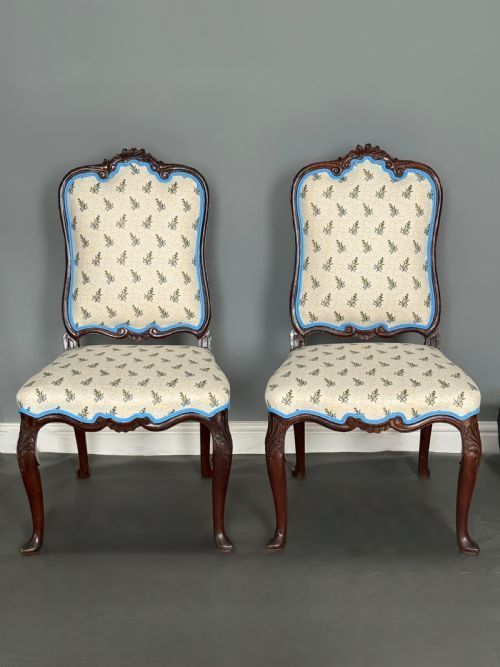
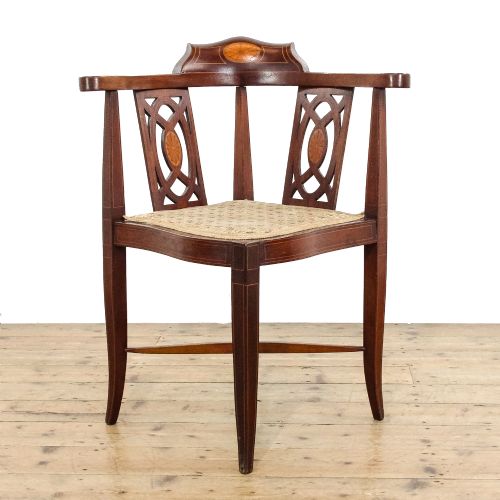
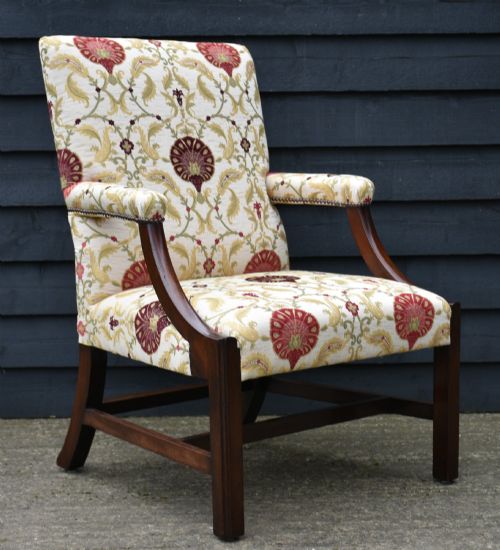
A traditional mahogany desk seat encompasses sturdy library armchairs, Gainsborough chairs, and elbow seats designed for writing spaces and studies. These pieces span the Georgian, Regency, and Victorian periods, alongside later Edwardian revivals.
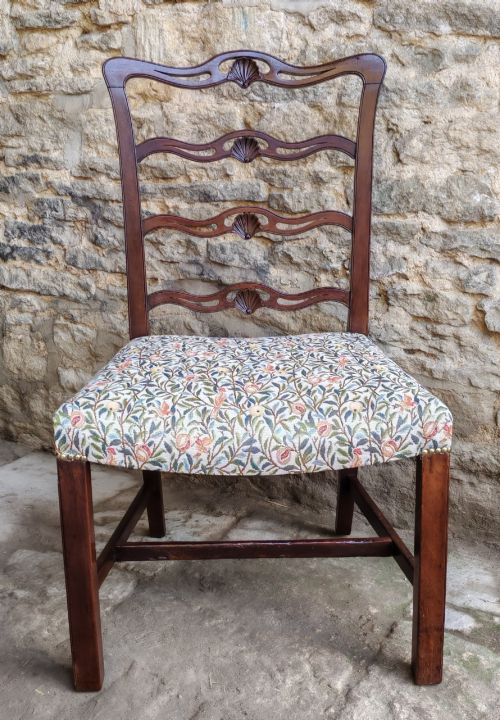
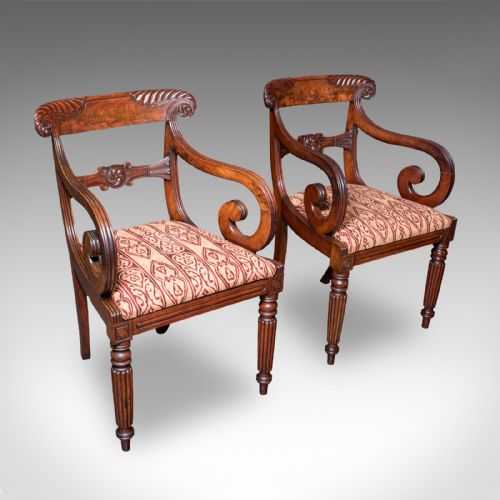
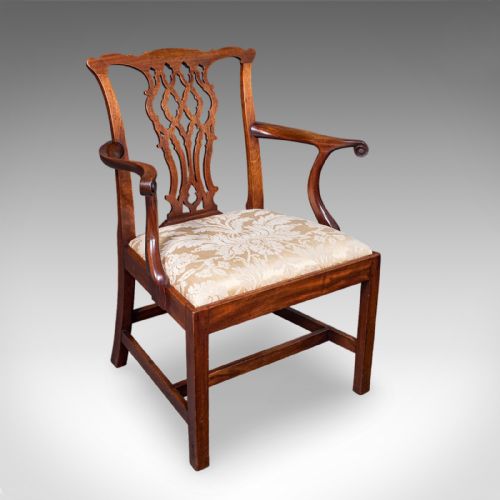
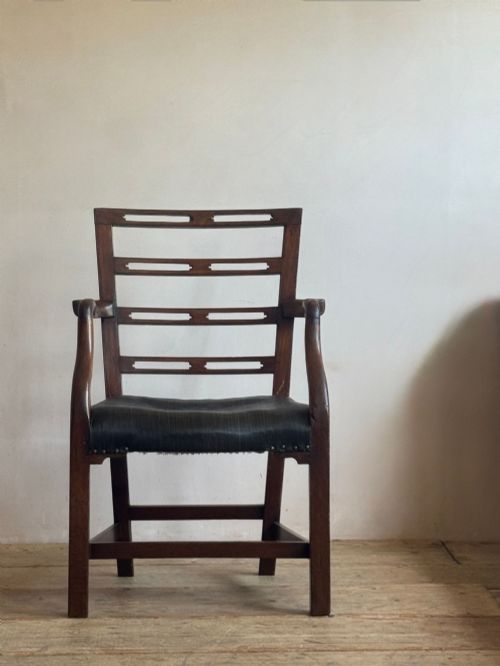
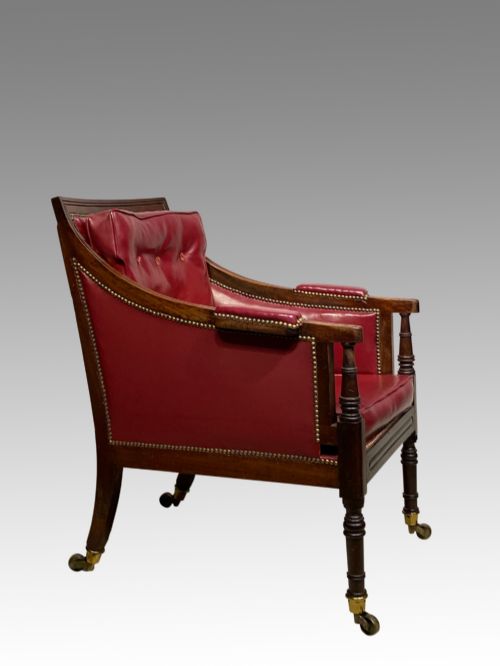
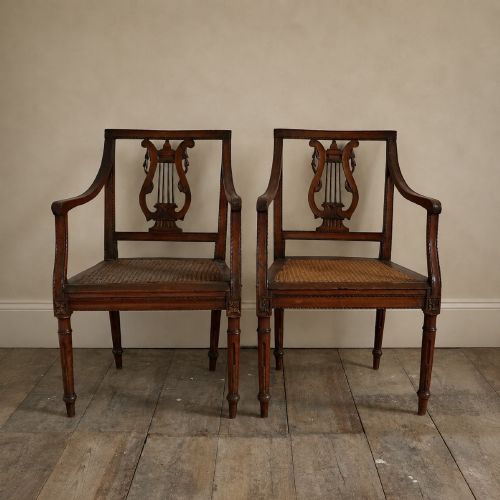
Armchairs, carver chairs, and side chairs dominate the selection, often featuring upholstered pads, leather inserts, or cane panels. Buyers frequently encounter open armchairs with carved rails or library bergères suited to period writing tables.
Timbers and upholstery methods
Craftsmen built these seats using dense mahogany timber, sometimes selecting Cuban mahogany for deeper grain patterns, complemented by brass castors or studded details. Structural joinery relied on traditional mortise and tenon methods to support frequent movement at a desk.
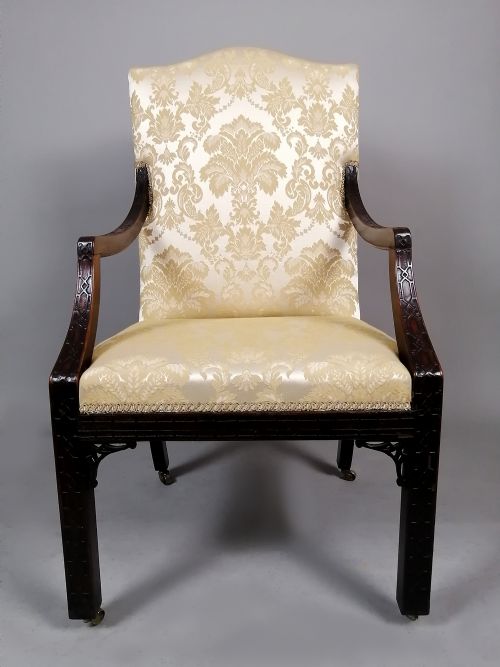
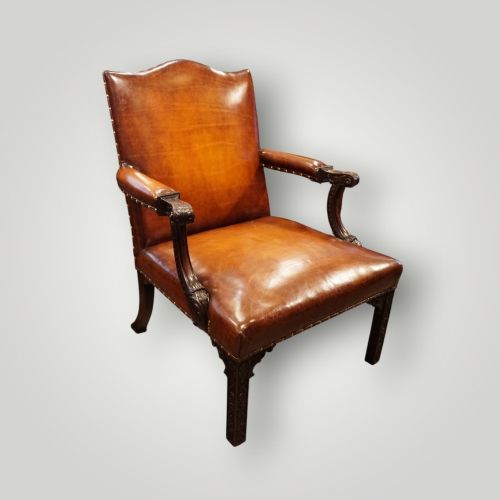
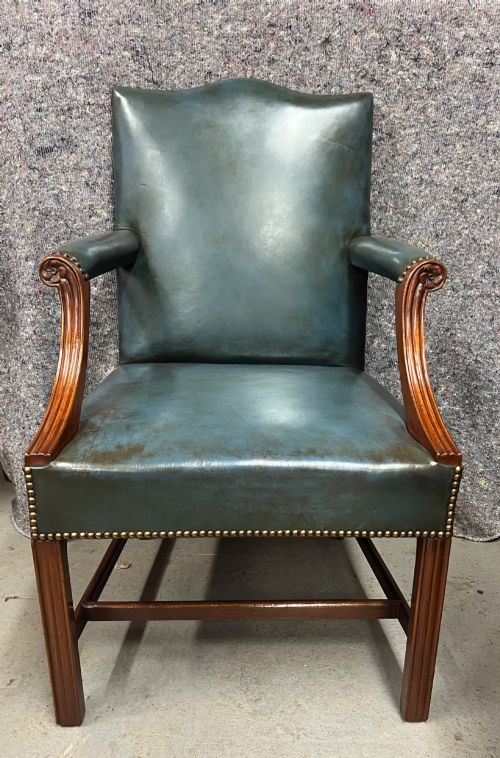
Upholstery materials range from hand-dyed English hide leather to green velvet, patterned fabric, tapestry, and woven cane. Artisans secured these coverings with brass studs or decorative trim over padded frames.
Listings feature mahogany, brass, leather, fabric, velvet, cane, and tapestry across Georgian, Regency, Victorian, and Edwardian periods.
Distinguishing craftsmanship and material depth
Superior examples display crisp hand-carved details such as Chinese Chippendale blind fretwork or reeded arm supports, executed with precise depth. Lesser versions rely on simpler turnings and standard timber selections without distinctive carving.
The refinement of the timber grain and the integrity of the original leather or cane seating separate standard production pieces from master-carved library armchairs. Attention to proportion and structural balance dictates the overall finish.
The Traditional Mahogany Desk Seat Glossary
- Gainsborough chair
- A wide, low-seated armchair with padded armrests and an open frame, designed during the mid-eighteenth century for reading and writing desks.
- Bergère
- An enclosed armchair with stuffed upholstery on a cane or solid panel frame, often fitted with a loose seat cushion.
- Ladder-back
- A chair back featuring horizontal slats resembling the rungs of a ladder, typical of vernacular and regional cabinetmaking.
- Klismos
- An ancient Greek chair style revived in later periods, characterised by concave curved legs and a sweeping, curved backrest.
Traditional Mahogany Desk Seat: Frequently Asked Questions
What is a traditional mahogany desk seat?
A traditional mahogany desk seat is a sturdy armchair or elbow chair constructed from mahogany wood, specifically designed to accompany a writing desk or library table.
These pieces typically date from the Georgian, Regency, or Victorian eras and often feature leather, fabric, or cane inserts for comfort during extended writing tasks.
How do I date a mahogany desk chair?
Dating relies on examining the timber grain, construction joints, carving styles, and hardware such as brass castors or upholstery tacks. Georgian and Regency pieces show hand-cut joinery and period-specific motifs like blind fretwork.
Later Edwardian and revival pieces often replicate these earlier styles but utilise machine-cut elements and different secondary woods beneath the mahogany.
Are these chairs comfortable for daily use?
Many of these chairs were built for prolonged sitting in libraries and studies, incorporating padded armrests and supportive upholstered or leather seats. Library armchairs and Gainsborough seats offer generous proportions suited to working at a desk.
Original padding may feel firmer than modern foam, reflecting the traditional horsehair and webbing construction used by period craftsmen.
What maintenance do leather and cane seats need?
Leather upholstery benefits from occasional conditioning with specialist leather balms to prevent drying and cracking over time. Cane seats require gentle dusting and should be kept away from direct heat sources to maintain the natural elasticity of the woven plant fibres.