

Traditional Mahogany Console
Traditional mahogany console tables bring solid timber presence and formal proportions to a hallway or reception room.
Traditional Mahogany Console
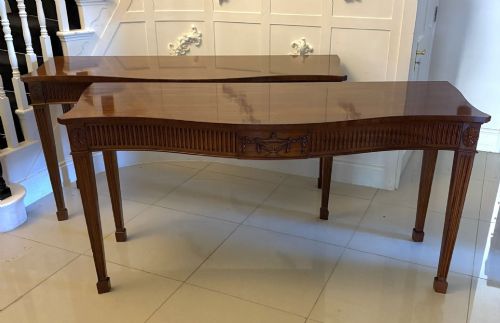
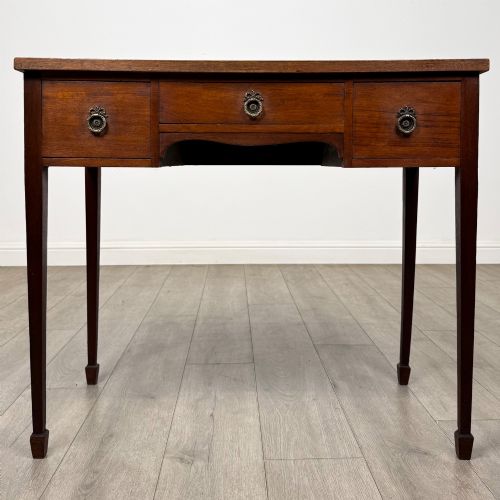
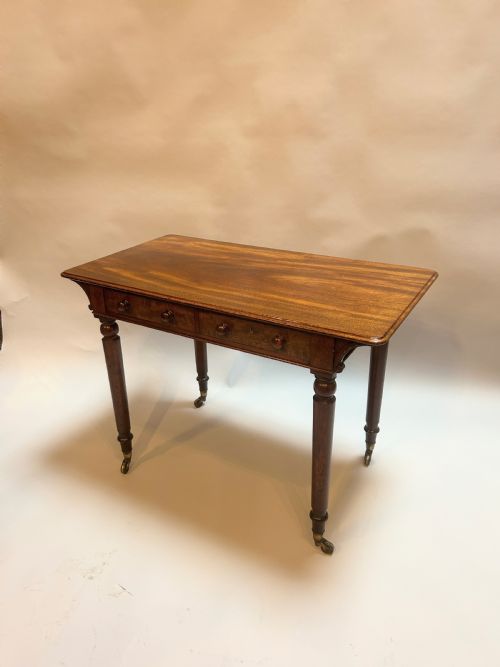
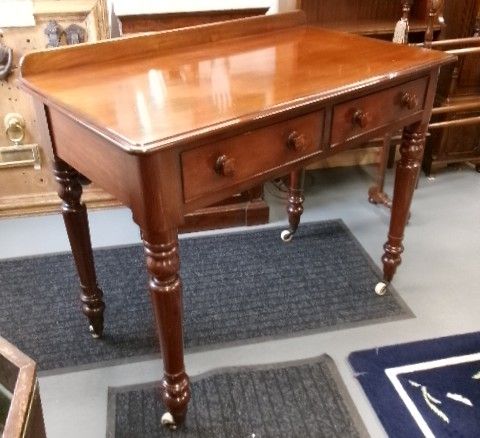
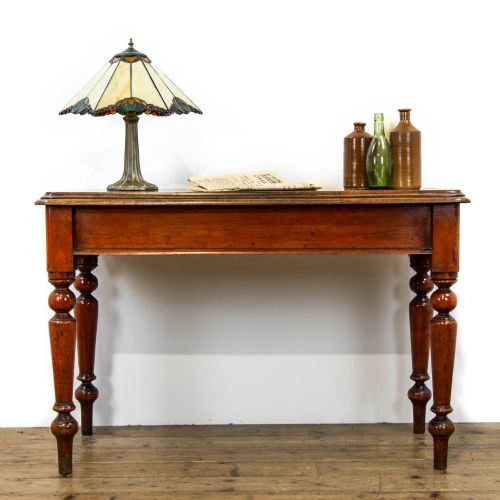
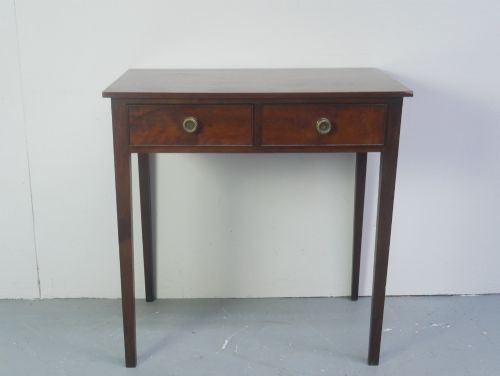
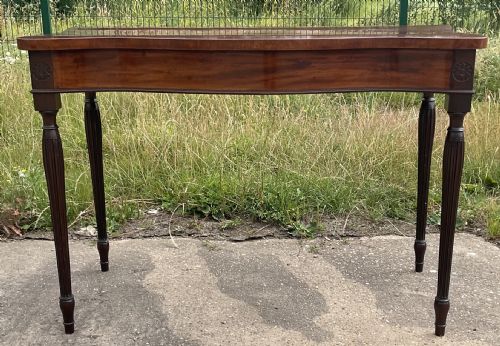
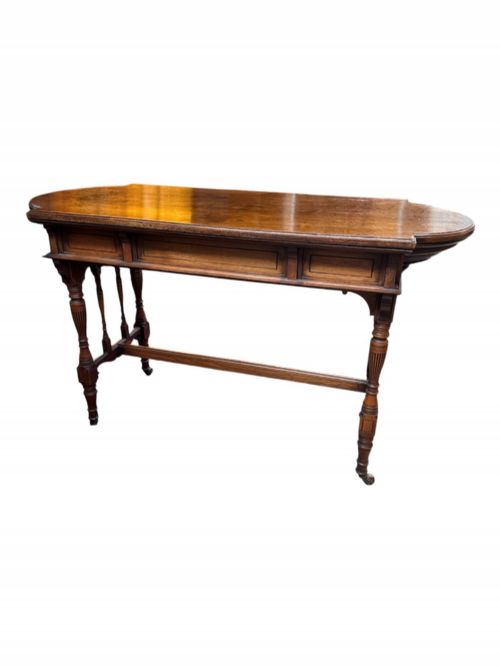
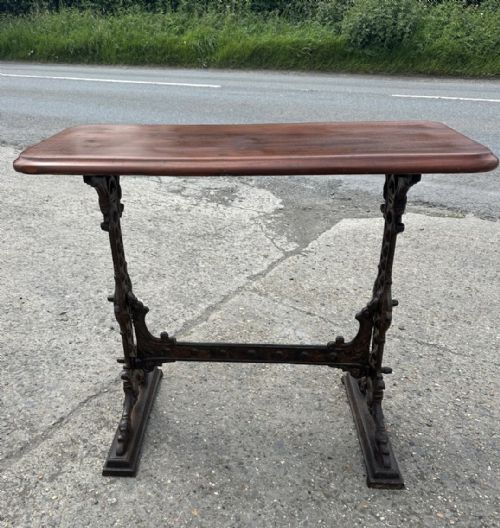
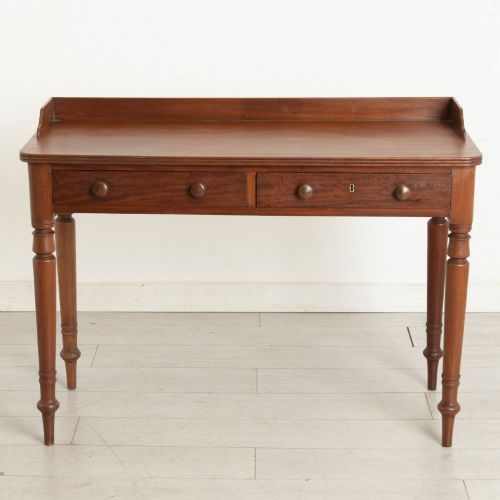
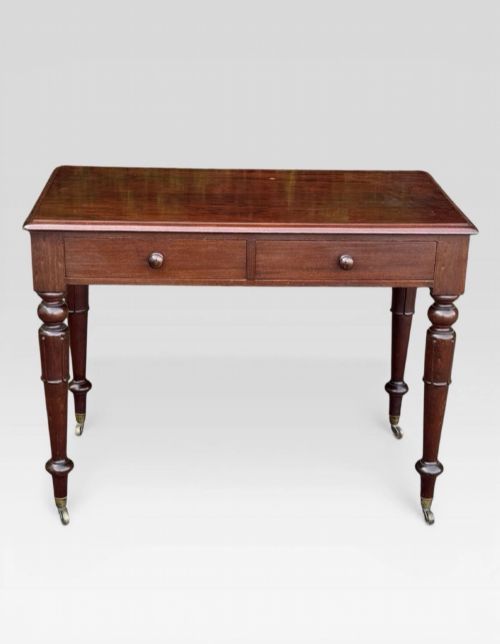
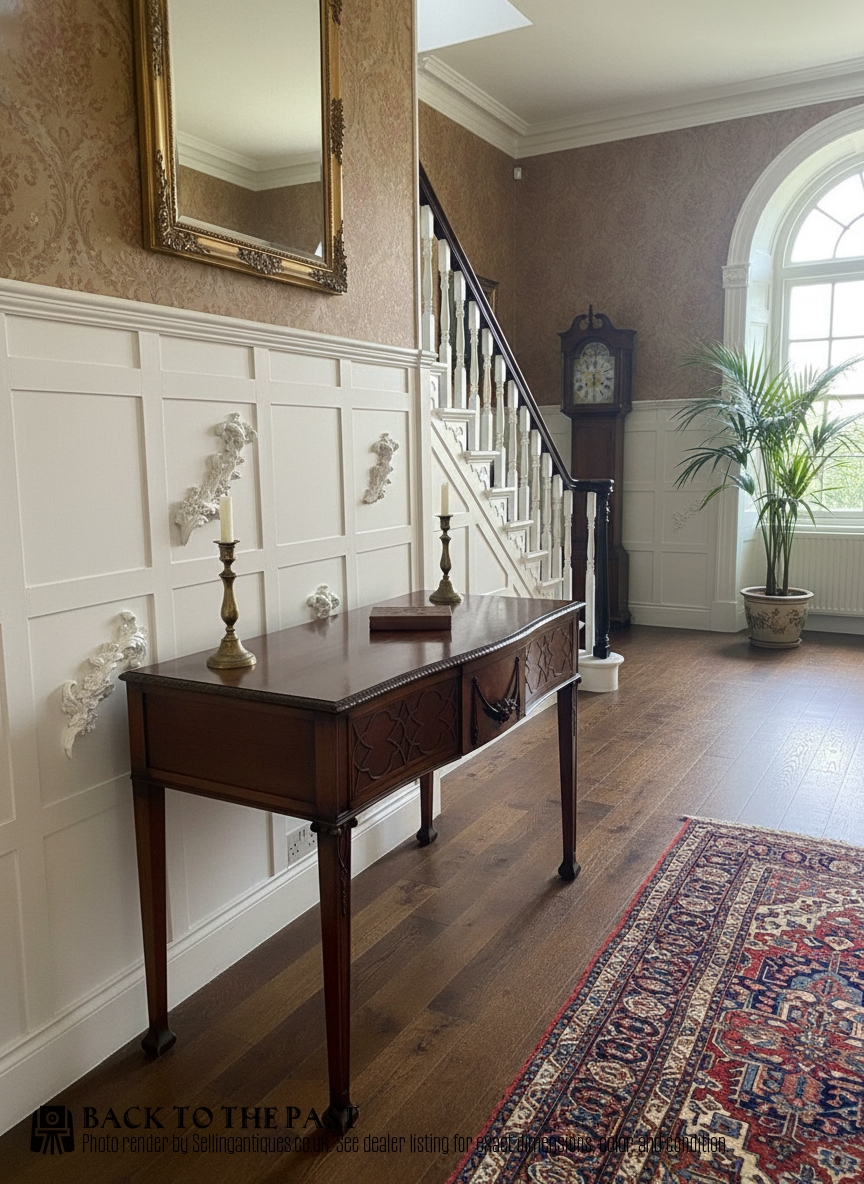
A traditional mahogany console stands against a wall as a side table, serving table, or writing desk, fulfilling a formal role in domestic rooms. These pieces appear across Georgian, Victorian, and Edwardian periods, taking forms from neat side tables to serpentine servers.
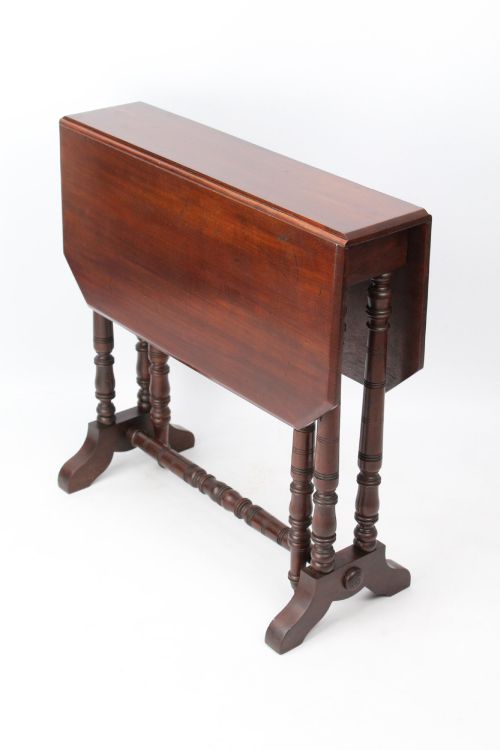
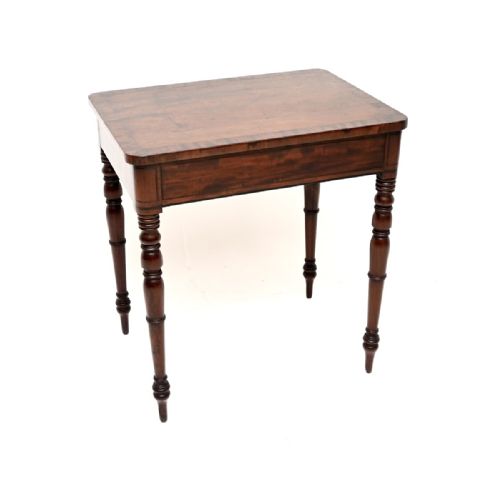
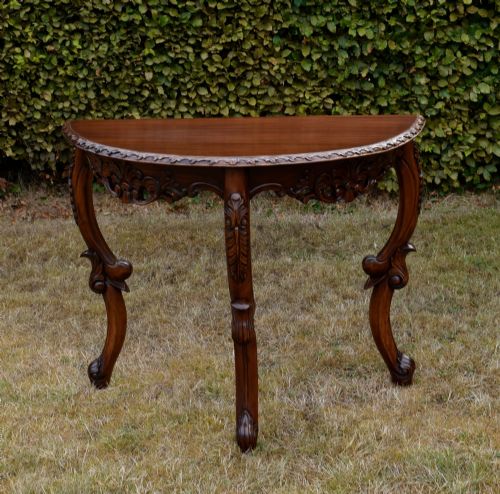
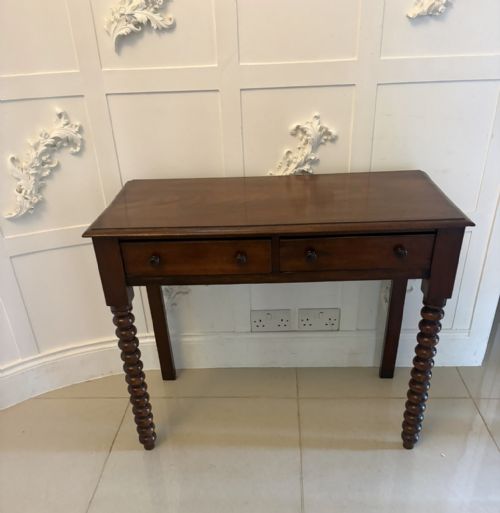
The version most commonly met on this page is the Victorian or Georgian side and console table, often featuring turned legs or carved details in solid mahogany. Makers constructed these items for regular household use in hallways, libraries, and drawing rooms.
How they were made
Cabinet makers utilised solid mahogany and figured mahogany veneers over secondary timbers, shaping tops with straight or serpentine fronts. Workshops incorporated brass hardware, leather writing surfaces, and ceramic components depending on the specific table type.
Construction techniques include mortise and tenon joints for frames, alongside hand-carved neoclassical motifs, barley twist legs, and inlaid decorative elements. Carpenters built these tables to endure daily service while displaying the rich grain of the timber.
What varies in quality
The standard of a traditional mahogany console rests in the depth of the timber figuring and the crispness of any hand-carved detail. Superior pieces exhibit thoughtful proportions and substantial timber thickness rather than thin surface veneers.
Refinement in secondary timbers and the integrity of original joinery distinguish workshop standards across different eras. Better examples maintain balanced proportions and clean structural lines without heavy alterations.
Gillows·J A Mein Edinburgh Cabinet Maker
The Traditional Mahogany Console Glossary
- Console table
- A table designed to stand against a wall, frequently secured with brackets or freestanding on four legs.
- Serpentine front
- A furniture front curved in a wave shape, convex in the centre and concave at the sides.
- Satinwood
- A durable, yellowish timber often used for contrasting stringing and inlay work on cabinet furniture.
- Lowboy
- A small eighteenth century side table with one or more rows of drawers beneath the top.
- Pembroke table
- A small rectangular table with hinged drop leaves on either side.
Traditional Mahogany Console: Frequently Asked Questions
Where should I place a traditional mahogany console?
These tables suit hallways, living rooms, and dining spaces where surface area is required against a wall. Their shallow depth allows them to sit comfortably in narrow circulation areas.
Position a mirror or lamp above the table to complete the arrangement, ensuring the piece remains clear of heavy foot traffic.
How do I identify a Georgian console from a later revival piece?
Examine the timber construction methods, drawer linings, and tool marks on the underside and interior surfaces. Georgian pieces generally show hand-cut joinery and period-specific timber ageing.
Revival pieces from the Edwardian era or the nineteen-twenties often employ machine-sawn components while imitating earlier neoclassical or serpentine styles.
Can I use a mahogany console as a writing desk?
Many console and side tables from the Victorian and Georgian periods were built specifically with writing in mind, featuring shallow drawers for stationery. Check the height from the floor to the underside of the rails to ensure comfortable knee clearance.
Writing tables often include leather or cloth inserts on the top surface for a proper working texture.
What maintenance does solid mahogany require?
Mahogany benefits from occasional treatment with appropriate furniture wax to nourish the timber and preserve the polished finish. Avoid placing tables in direct sunlight or near heat sources to prevent the wood from drying out.
Use coasters and mats to protect the polished top from moisture and heat damage during daily use.