




Traditional Magazine Rack
These traditional magazine rack designs keep your journals and newspapers tidy with period style, ranging from sturdy Edwardian oak to refined Regency rosewood.
Traditional Magazine Rack
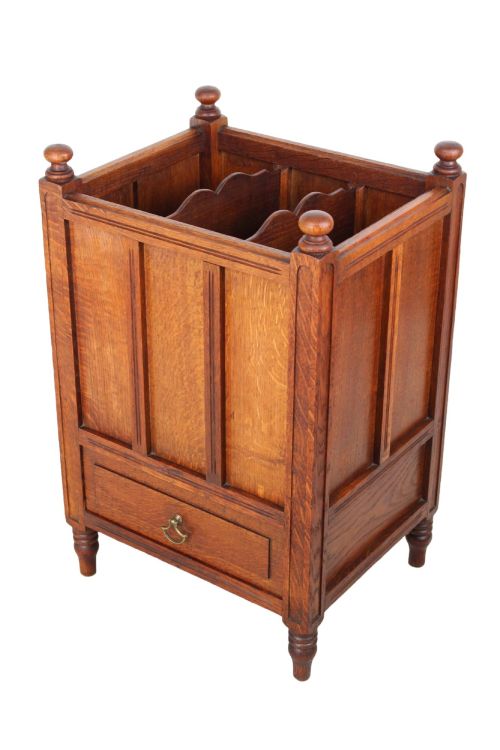
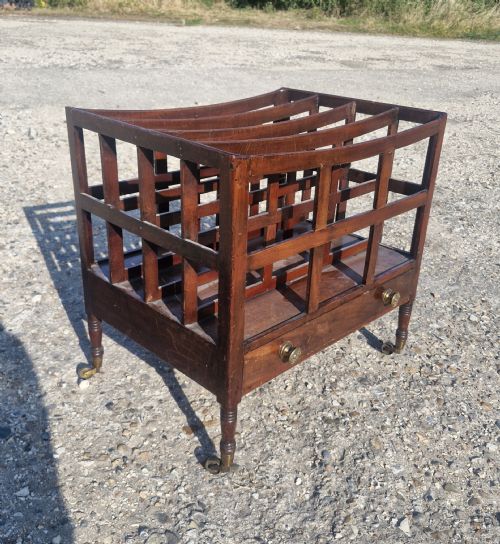
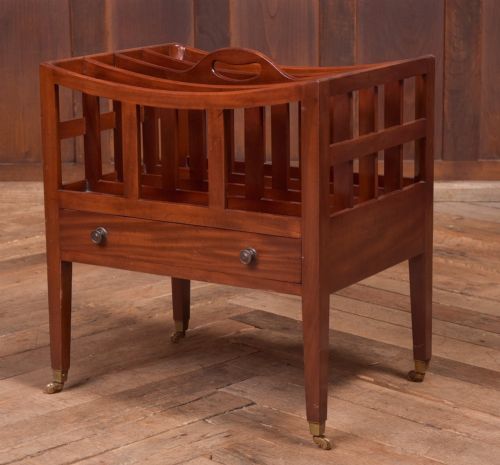
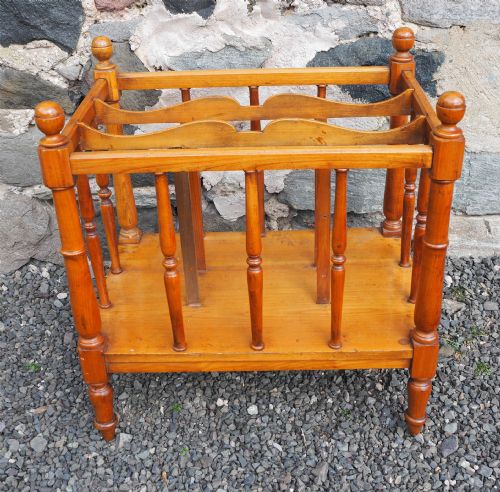
A traditional magazine rack serves as a practical repository for periodicals, sheets of music, and papers in a study or sitting room. When exploring this selection, buyers frequently encounter the versatile Canterbury form alongside dedicated magazine holders and music stands.
The pieces available span from the early nineteenth century through to the 1920s, encompassing Regency, Victorian, and Edwardian aesthetic tastes. Mahogany and rosewood examples dominate, often featuring structured compartments or drawers for smaller items.
Makers historically adapted these stands to suit contemporary domestic habits, resulting in variations like revolving bookcases or tiered stands. Each piece reflects the furniture styles of its specific period, from George III elegance to Arts and Crafts simplicity.
Materials and construction
Cabinetmakers utilised dense timbers such as mahogany, rosewood, oak, and fruitwood to build durable frames capable of supporting heavy folios and journals. Flame mahogany veneer and satinwood inlay frequently add decorative contrast to the primary wood surfaces.
Metal elements such as brass appear on stands and revolving bookcases, providing both structural support and functional mobility. Joinery techniques varied by period, ensuring the upright dividers and slatted sides remained rigid under daily domestic use.
Traditional Magazine Rack Retail Price Guide 2026
Typical asking prices for traditional magazine rack among the pieces listed under this phrase on Sellingantiques today, from the lower quarter to the upper quarter. They describe what is for sale here now, not the wider market.
Listings span from George III and Regency periods through to 1920, utilising mahogany, rosewood, oak, fruitwood, and brass.
Distinguishing quality in period stands
The choice of timber underpins the distinction between standard production and finer cabinetmaking, with richly figured rosewood or flame mahogany veneer indicating higher status commissions. Subtle details such as satinwood inlay and integrated drawers elevate the craftsmanship of a Canterbury.
Structural integrity and the retention of original brass fittings dictate the preservation state of each piece. Superior examples maintain crisp lines in their turned spindles and dividers without looseness in the joints.
The Traditional Magazine Rack Glossary
- Canterbury
- A low, stand-up piece of furniture with divisions for holding loose papers, music, or magazines, often fitted with a small drawer below. Originating in the late eighteenth century, it remains a staple form.
- Flame mahogany veneer
- A thin slice of wood cut from where a branch meets the trunk, displaying a fiery pattern. Cabinetmakers applied this to prominent surfaces for visual impact.
- Satinwood inlay
- Small pieces of pale, lustrous exotic wood inserted into a contrasting darker timber background to create geometric or floral patterns. This technique demonstrates high decorative skill.
- Regency style
- Furniture produced during the early nineteenth century characterised by classical restraint, architectural lines, and dark woods. Pieces from this era often incorporate delicate brass mounts.
Traditional Magazine Rack: Frequently Asked Questions
What is a Canterbury?
A Canterbury is a partitioned stand designed to hold sheet music, newspapers, and magazines close to a seating area. Many traditional versions also include a low drawer for smaller stationery.
First appearing in the late eighteenth century, the form evolved through the Regency and Victorian eras into various wooden configurations with carrying handles or upright spindles.
Where should I place a Canterbury?
These pieces suit living rooms, studies, and hallways where periodicals and books accumulate. Their compact footprints allow them to sit neatly beside armchairs or sofas.
Keeping them away from direct heat sources prevents the solid timbers and wood veneers from drying out or splitting over time.
Are these racks suitable for modern magazines?
Most traditional stands accommodate standard contemporary periodicals within their wooden partitions and compartments. Oversized publications may require specific wider compartments found in larger nineteenth-century examples.
The sturdy construction of oak and mahogany variants easily supports modern paper weights without structural strain.