




Traditional Magazine Holder
A traditional magazine holder brings order to papers and periodicals through classic timber and brass work.
Traditional Magazine Holder
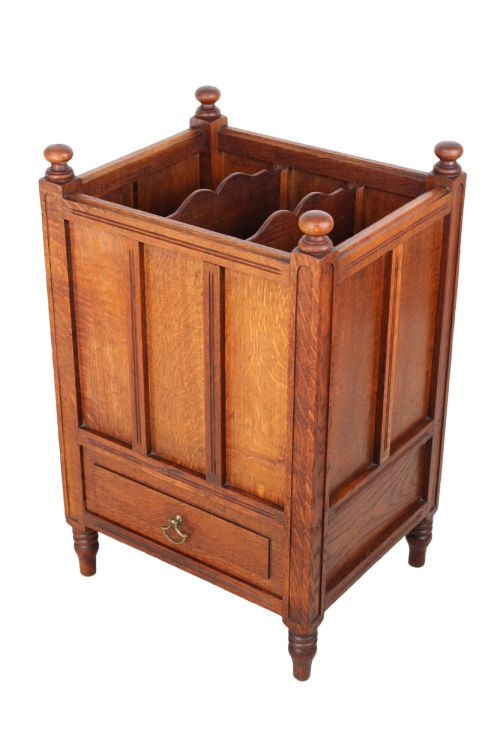
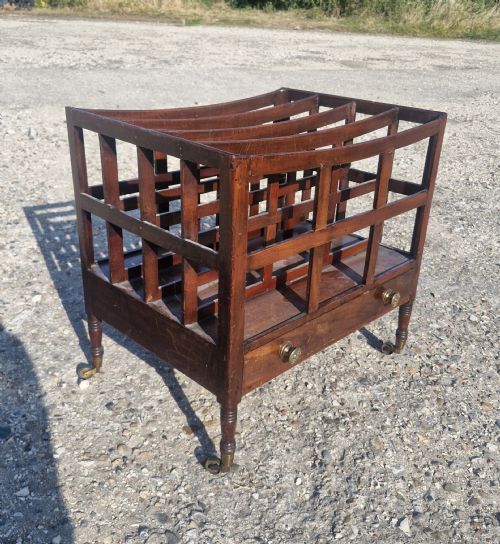
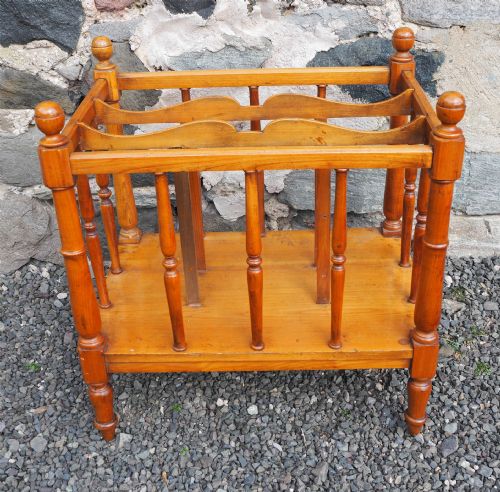
A traditional magazine holder serves as a tidy stand for periodicals, newspapers, and sheet music within a room. When searching for a traditional magazine holder, buyers encounter pieces that span the nineteenth and early twentieth centuries, including Edwardian, Victorian, and Regency examples.
The primary forms appearing on this page include canterburys, tiered racks, and revolving bookcases. These objects utilise timbers such as mahogany, oak, rosewood, and fruitwood, often incorporating drawers or brass stands.
How they were made
Cabinetmakers constructed these pieces using solid hardwoods like mahogany and oak, frequently enhanced by rosewood, fruitwood, and satinwood inlay. Flame mahogany veneer adds decorative grain patterns to flat surfaces on select examples.
Metal components such as brass feature heavily in structural supports, stands, and revolving mechanisms. Joinery techniques connect dividers and tiers designed to hold folded papers upright.
Traditional Magazine Holder Retail Price Guide 2026
Typical asking prices for traditional magazine holder among the pieces listed under this phrase on Sellingantiques today, from the lower quarter to the upper quarter. They describe what is for sale here now, not the wider market.
Some models revolve on brass stands, turning newspaper selection into an unexpectedly dynamic experience.
What varies in quality
The distinction between standard and superior pieces rests upon the selection of timber and the crispness of decorative details like satinwood inlay. Elaborate additions such as fitted drawers and robust brass mounts elevate the standing of a piece.
Proportion and scale dictate the visual weight of the item, ranging from neat three-tier structures to oversized George III designs. Finer examples maintain structural integrity across multiple partitions without losing grace.
The Traditional Magazine Holder Glossary
- Canterbury
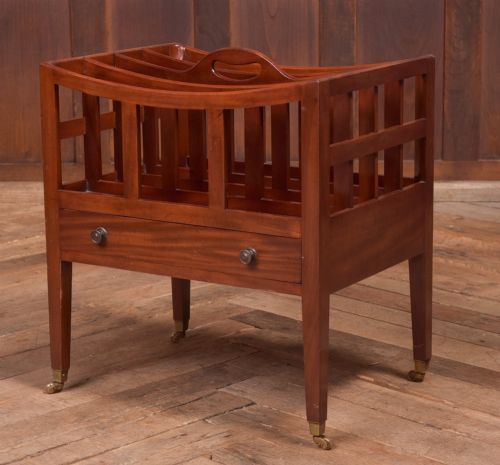
- A low, open-partitioned stand traditionally used for holding music sheets or periodicals. These often feature carrying handles and small legs with castors.
- Regency
- A period of British design spanning the early nineteenth century, known for classical restraint and dark timbers such as rosewood and mahogany.
- Satinwood inlay
- A contrasting light wood inserted into darker timber surfaces to create decorative borders or motifs. This technique highlights the skill of the cabinetmaker.
- Flame mahogany veneer
- A thin slice of wood cut from the fork of a mahogany tree to produce a fiery, rippling grain pattern. Cabinetmakers applied this to prominent exterior panels.
Traditional Magazine Holder: Frequently Asked Questions
What is a canterbury?
A canterbury is a low stand with upright partitions designed to hold sheets of music, newspapers, or periodicals. These pieces frequently include a small drawer beneath the main tier.
They originated in the late eighteenth century and continued in popularity through the Victorian and Edwardian eras as versatile room furnishings.
How were these stands used?
These holders kept daily newspapers, weekly magazines, and sheet music organised and accessible beside seating areas. Their compartmented design prevented papers from slumping or scattering across tables.
Many incorporate carrying handles or castors, allowing users to move the stand easily around a parlour or drawing room.
How do I identify a Regency piece?
Regency items date from the early nineteenth century and typically employ dark, rich timbers like rosewood and mahogany. They often display clean classical lines and restrained ornamentation.
Later revivals from the twentieth century imitated these earlier proportions, so wood patina and construction joints help confirm true period age.
What woods should I expect?
Mahogany and oak form the bulk of the listings, supplemented by rosewood, fruitwood, and satinwood inlay. Brass frequently appears as a secondary material for stands and revolving mechanisms.
Each timber offers a distinct colour and grain, from the deep red of polished mahogany to the paler warmth of Edwardian oak.