
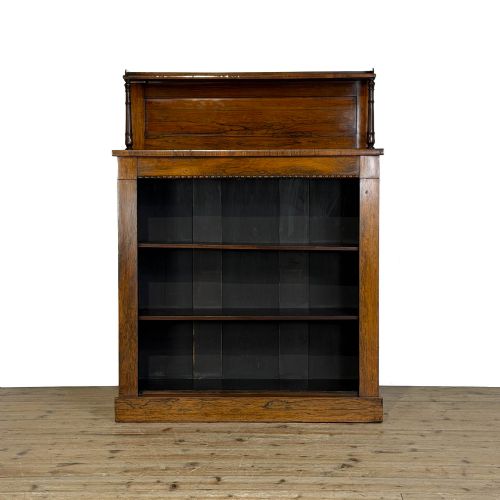
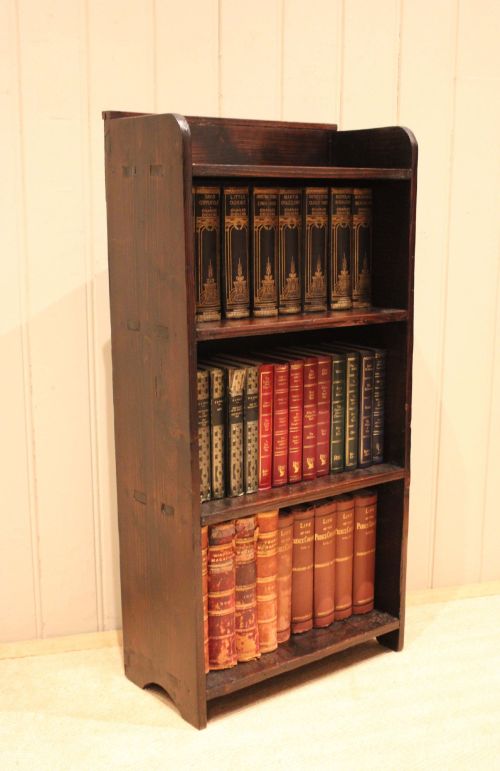
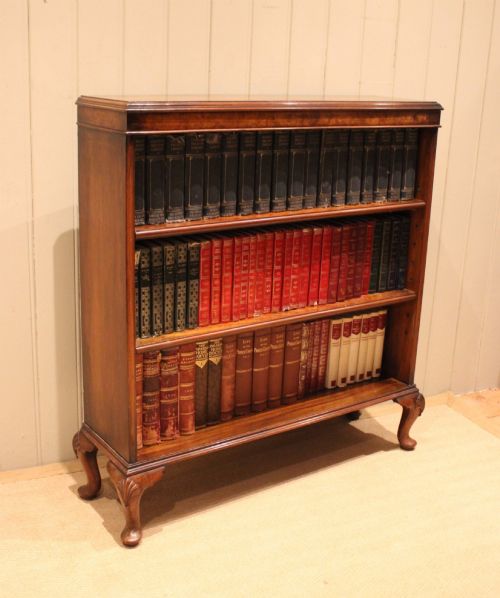
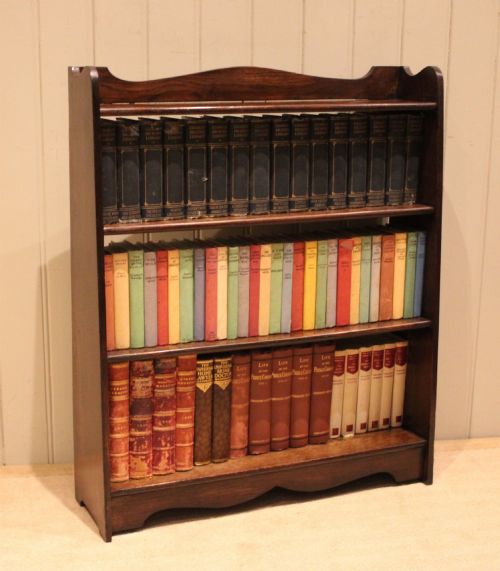
Traditional Low Bookcase
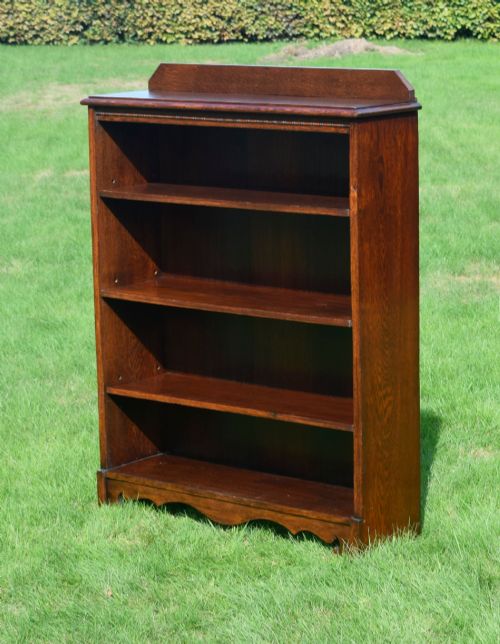
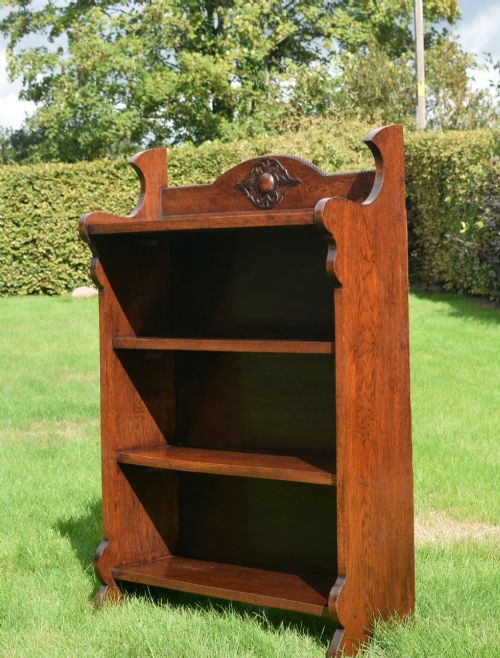
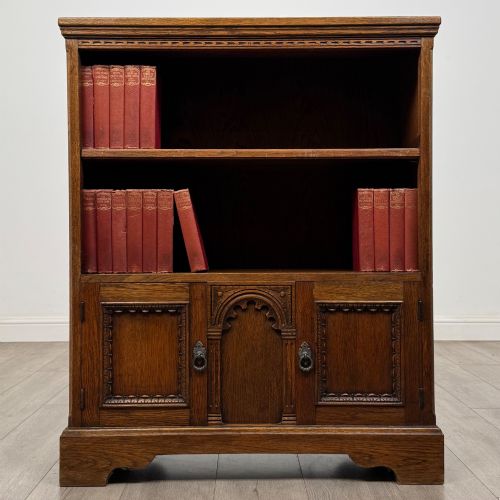
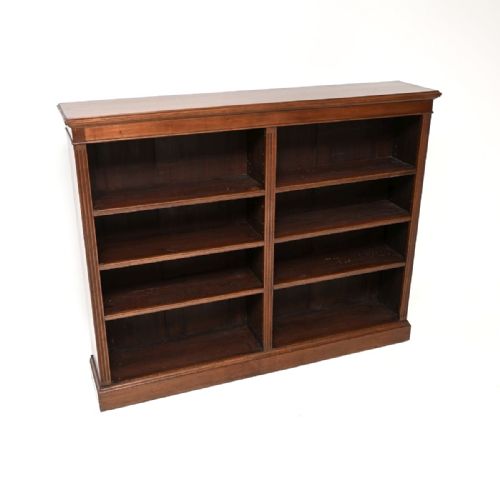
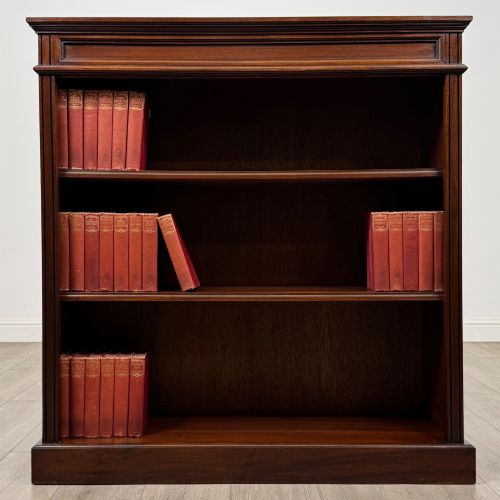
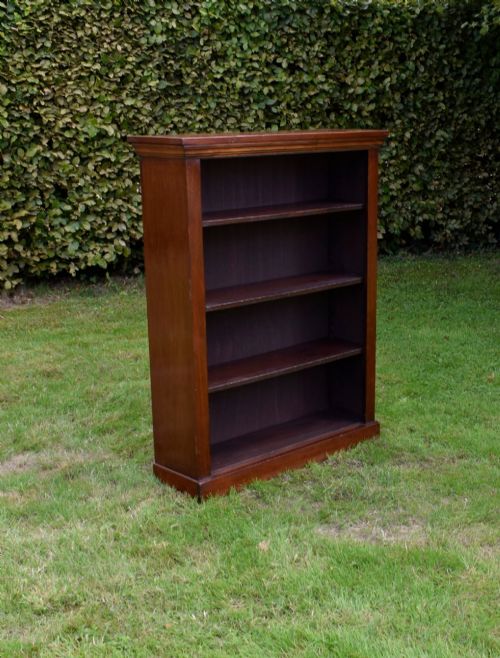
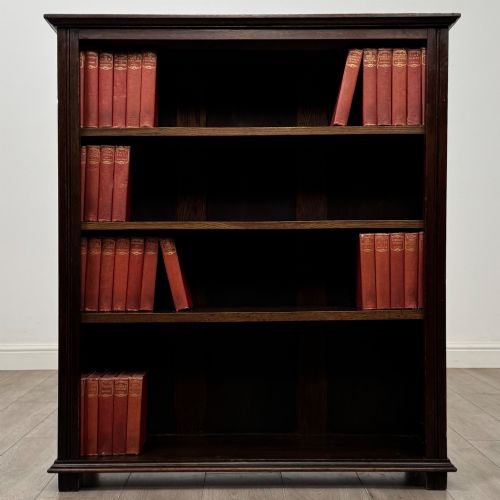
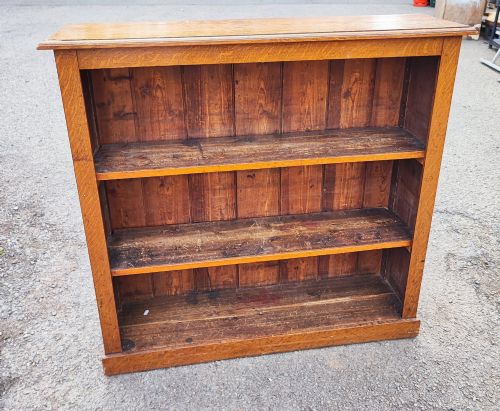
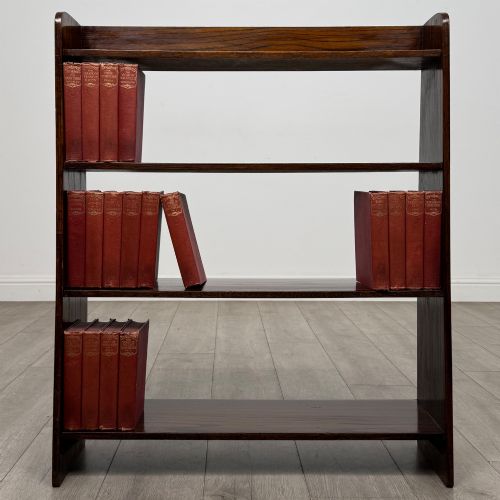
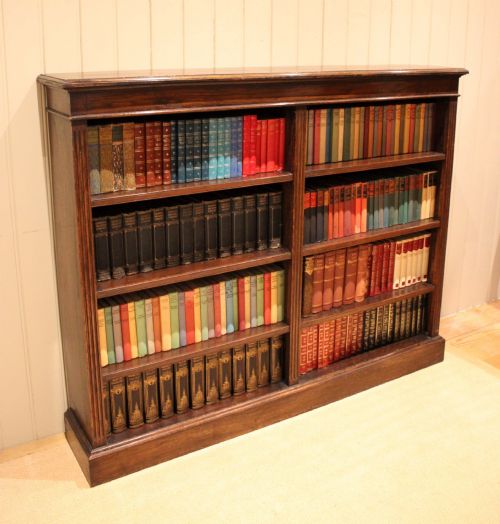
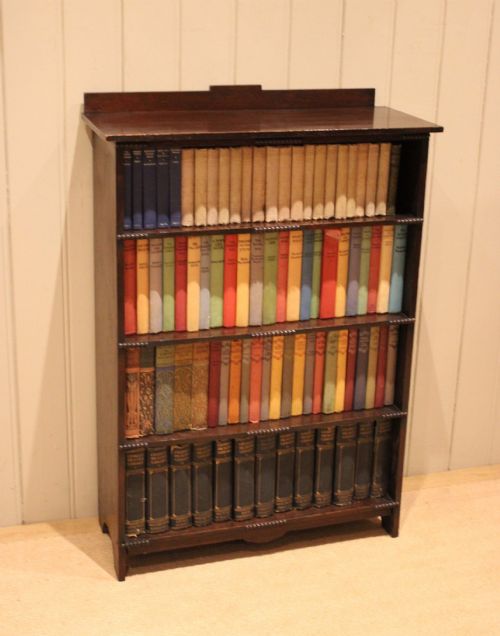
A traditional low bookcase brings open shelves and compact proportions to a room, offering an accessible home for everyday volumes.
Traditional Low Bookcase
A traditional low bookcase sits beneath standard window heights, presenting open shelves that keep books within arm's reach. The pieces found here span the Victorian, Edwardian and early twentieth century periods, running from eighteen sixty through to nineteen thirty.
Most examples take the form of open front shelving units rather than enclosed cupboards. Oak and mahogany appear most frequently amongst the stock, alongside walnut, pine and rosewood.
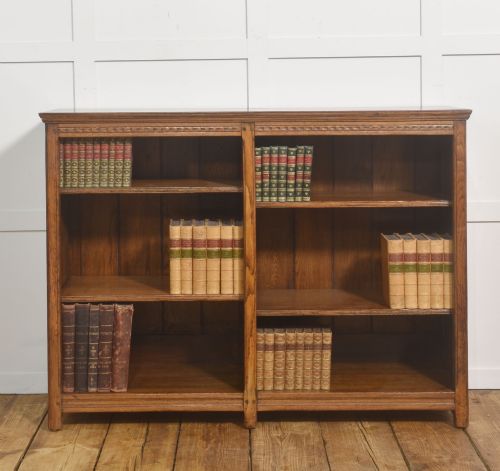
Formats range from narrow and small configurations to larger breakfront library pieces and stepped designs. Makers worked within styles such as Jacobean Revival, Queen Anne Revival, Arts and Crafts and Regency style.
Materials and construction
Cabinet makers utilised solid timbers including oak, mahogany, walnut and pine, often selecting figured veneers such as burr walnut or rosewood for decorative impact. Brass hardware occasionally appears on associated fittings or adjustable shelf mechanisms.
Construction methods relied on sturdy timber framing to support heavy rows of books without sagging. Many pieces incorporate adjustable shelves, allowing owners to alter shelf heights to suit varying folio sizes.
Oak and mahogany dominate the material selection, supported by pine, walnut and rosewood across various styles.
Judging quality and proportion
Quality shows in the choice of timber and the precision of the joinery rather than ornamentation alone. Superior examples display carefully matched wood grain across the visible surfaces and well-fitted adjustable shelf tracks.
Proportion defines the successful piece, where the depth of the shelves balances the lower height. Finer items exhibit restrained details such as beaded edges, carved accents or balanced breakfront layouts.
The Traditional Low Bookcase Glossary
- Breakfront
- A bookcase design where the central section projects forward from the flanking outer bays. This architectural arrangement creates depth and shadow across the front elevation.
- Open bookcase
- A shelving unit without doors, designed for immediate access to books. These pieces expose the book bindings and the interior timber backing.
- Adjustable shelves
- Shelves that can be moved up or down via slots, pegs or ratchets. This system accommodates books of different heights.
- Waterfall bookcase
- A shelving unit where each successive shelf steps back from the one below. The profile resembles a series of cascading tiers.
- Burr walnut
- Timber sliced from the gnarled growths of a walnut tree, yielding a swirling pattern. Cabinet makers used these highly figured veneers on principal display surfaces.
Traditional Low Bookcase: Frequently Asked Questions
Where should I put a low bookcase?
A low bookcase fits well beneath windows or along hallways where taller furniture would block light or movement.
Its reduced height also provides a convenient surface for lamps, ceramics or small display objects above the book storage.
Are the shelves adjustable?
Many of the listed pieces include adjustable shelving to accommodate books of varying heights.
Look for internal vertical tracks or peg holes that indicate this flexibility.
How do I care for oak and mahogany?
Keep wooden bookcases away from direct heat sources and strong sunlight to prevent the timber from drying out or fading.
Routine dusting with a dry cloth keeps the polished surface in good condition.