
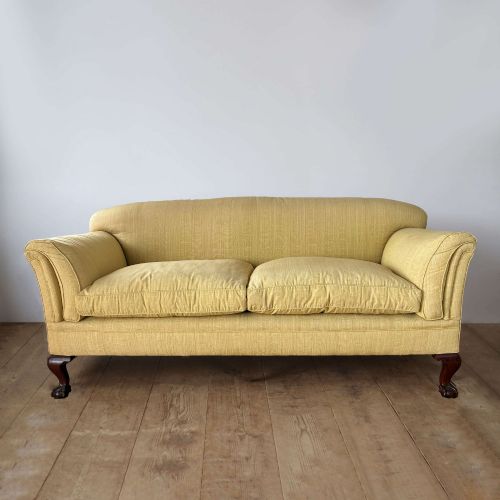
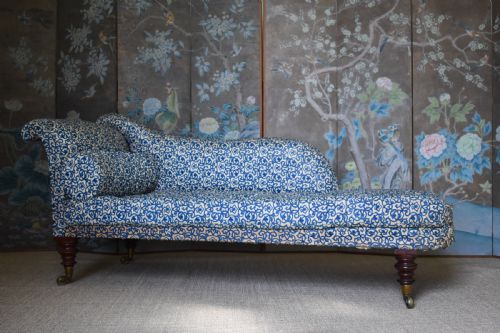
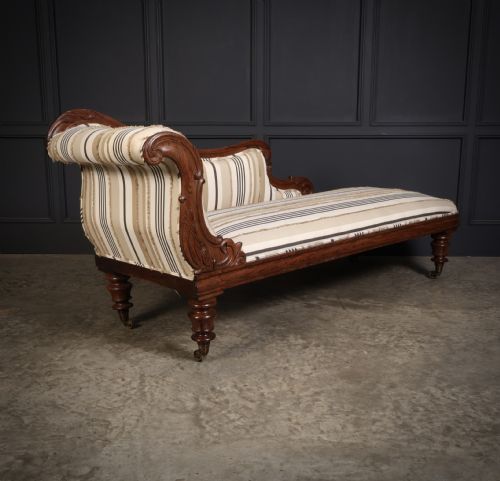


Traditional Lounge Sofa
A traditional lounge sofa offers deep comfort and historic character, spanning periods from the Regency era through to the early twentieth century.
Traditional Lounge Sofa
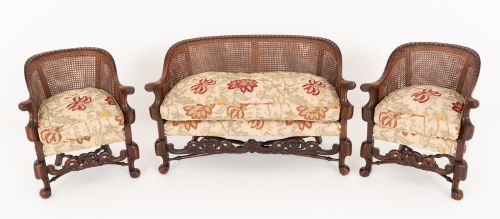
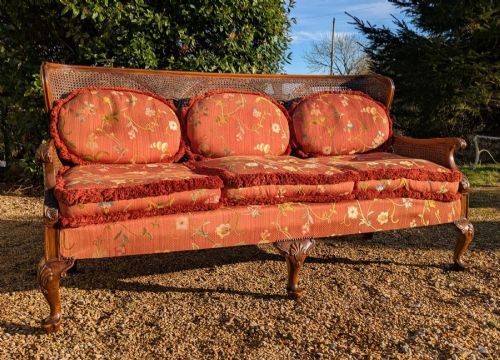
A traditional lounge sofa encompasses a variety of historical seating forms designed for relaxation, including chaises longues, daybeds, settees, and large chesterfields. These pieces range from nineteenth-century mahogany frames to early twentieth-century upholstered suites.
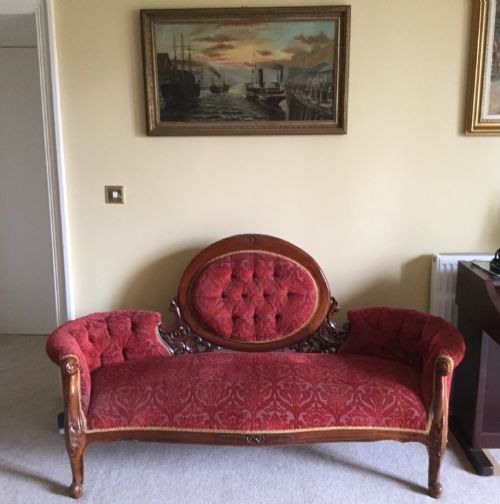
Buyers encounter numerous regional and stylistic variations, from English country house seating to French provincial designs and formal Victorian double spoon-back sofas. Walnut, rosewood, and mahogany show frames frequently support rich fabric, velvet, brocade, and leather upholstery.
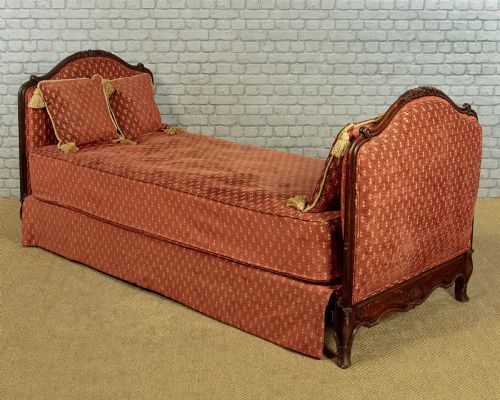
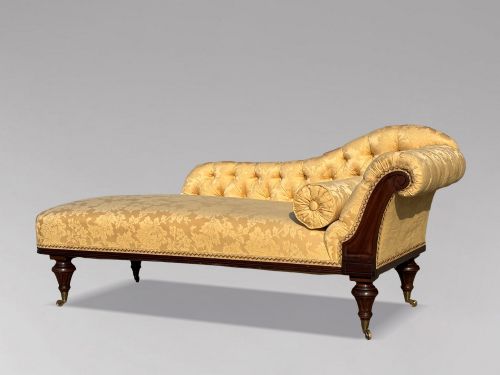
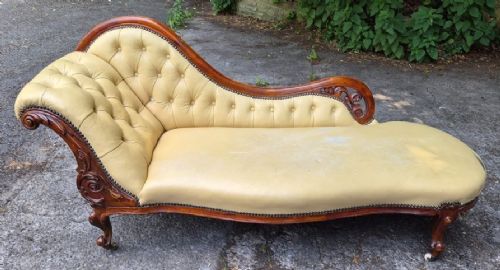
The selection includes daybeds and chaise longues configured for reclining, alongside deep-seated armchairs and multi-piece salon suites. Pieces originate from distinct periods such as the William IV, Regency, Victorian, and Edwardian eras.
Materials and construction
Makers utilised solid hardwoods such as mahogany, walnut, and rosewood to construct robust show frames, often incorporating intricate hand-carved details or exposed polished timber accents.
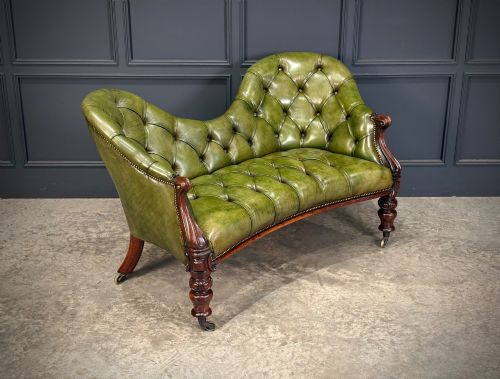
Upholstery techniques relied on traditional sprung bases, horsehair stuffing, and feather cushions, secured with hand-buttoning, velvet, brocade, damask, or hand-dyed leather.
Structural hardware frequently involved brass castors on legs, while specialist details included concealed storage compartments and ball and claw feet.
Listings feature mahogany, walnut, rosewood, and hardwood frames paired with leather, velvet, brocade, and damask upholstery across nineteenth and early twentieth-century periods.
Factors influencing quality
The integrity of the underlying hardwood frame and the preservation of original timber carving distinguish superior examples from standard production.
The grade and authenticity of the upholstery materials, such as deep pile brocade, silk damask, or hand-dyed leather, dictate the tactile and visual depth of the piece.
The survival of maker stamps, traditional sprung foundations, and uncompromised internal stuffing preserve the historic value and structural resilience of older seating.
Howard and Sons·Jas Shoolbred·Gillows·Hampton and Sons
The Traditional Lounge Sofa Glossary
- Chesterfield
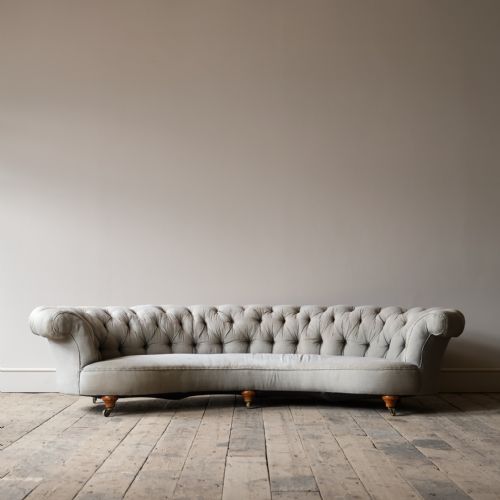
- A large padded sofa traditionally characterised by deep button tufting and rolled arms of equal height to the back. Leather and velvet are common coverings.
- Bergere
- An enclosed upholstered armchair or sofa with exposed wooden framing and cane or upholstered side panels. The seat usually incorporates a loose cushion.
- Show Frame
- A structural wooden framework left exposed around the upholstered portions of a seat. It displays the timber grain and carved ornamentation.
- Settee
- A small upholstered bench or sofa with a back and arms, designed to seat multiple people comfortably. They appear frequently in nineteenth-century drawing rooms.
Traditional Lounge Sofa: Frequently Asked Questions
How do I identify a Victorian sofa?
Victorian pieces often display dark mahogany or rosewood frames with dense carving, buttoned leather, or heavy velvet upholstery. Look for robust proportions and distinct nineteenth-century silhouettes like the double spoon-back.
Construction methods from this era rely on hand-tied sprung bases and heavy timbers. Comparing the joinery and upholstery style to dated examples helps confirm the period.
What is a Howard and Sons sofa?
Howard and Sons was a prominent nineteenth-century London cabinet maker and upholsterer known for exceptionally comfortable, deep-seated lounge furniture. Their pieces often feature marked castors and high-quality sprung upholstery.
Collectors prize these items for their durable craftsmanship and classic English country house aesthetic. Surviving examples frequently bear maker stamps on the legs or webbing.
How do I care for antique leather?
Antique leather requires gentle cleaning with specialised saddle soap and periodic conditioning to prevent the hide from drying out and cracking. Avoid placing leather furniture in direct sunlight or near heat sources.
Hand-dyed leathers, particularly on older club sofas, develop a natural patina over decades of use. Maintaining appropriate humidity levels preserves the suppleness of the material.
Where were chaise longues used?
Chaise longues traditionally occupied private drawing rooms, boudoirs, and grand reception salons as places for daytime resting and reading. Their elongated form suited formal yet comfortable domestic spaces.
Today, these pieces function effectively as statement seating in large living rooms or bedrooms. Their asymmetrical shape allows them to sit well against open walls or acting as room dividers.