

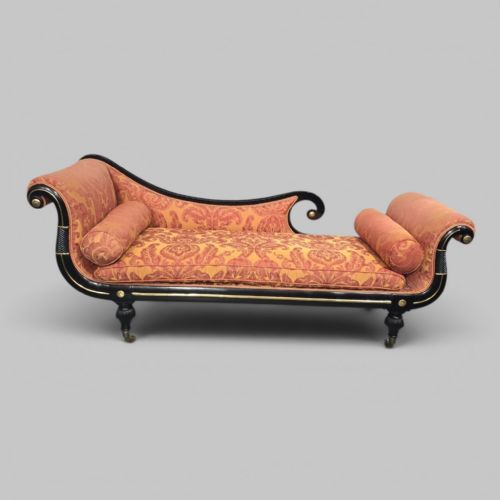


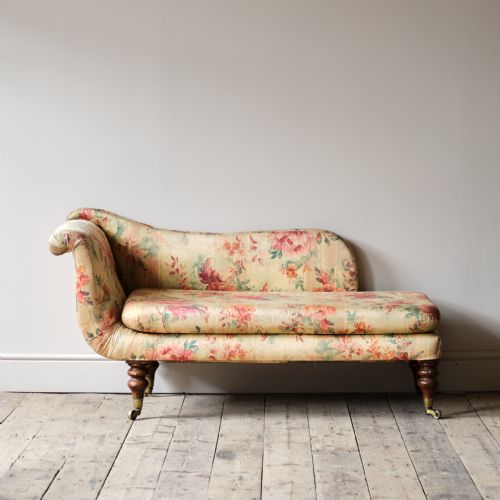


Regency Scroll Arm Chaise
A regency scroll arm chaise is an elegant seating form designed for reclining, combining classical lines with rich timbers for sophisticated rooms.
Regency Scroll Arm Chaise
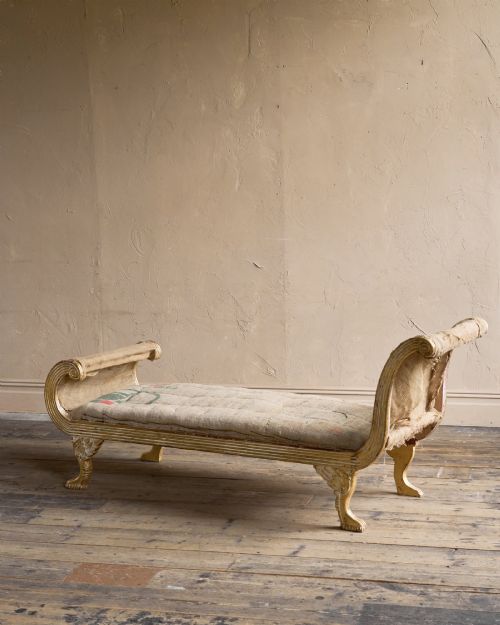
When you search for a regency scroll arm chaise, you are looking at sophisticated nineteenth century daybeds and settees defined by sweeping scroll ends and classical silhouettes. These forms evolved from ancient prototypes into the ultimate lounging furniture for fashionable Regency and William IV interiors.
The pieces on this page span the nineteenth century, including the Regency period, Grand Regency style, and William IV eras. You will most frequently meet mahogany and rosewood examples, alongside ebonised wood frames and occasional walnut variations.
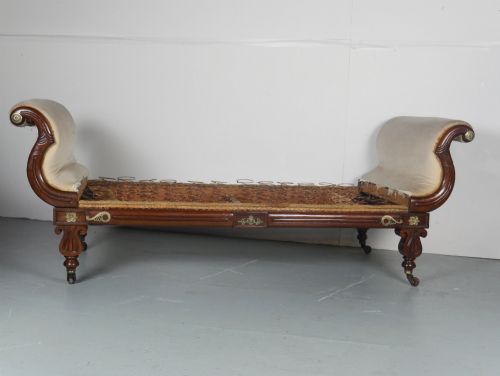
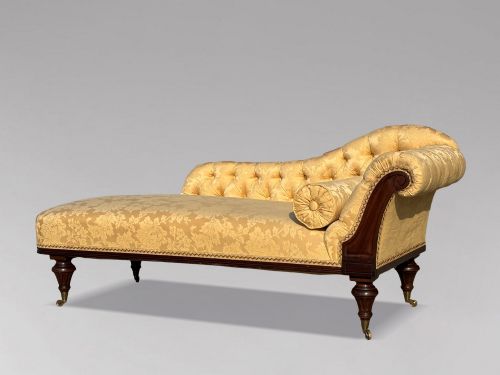
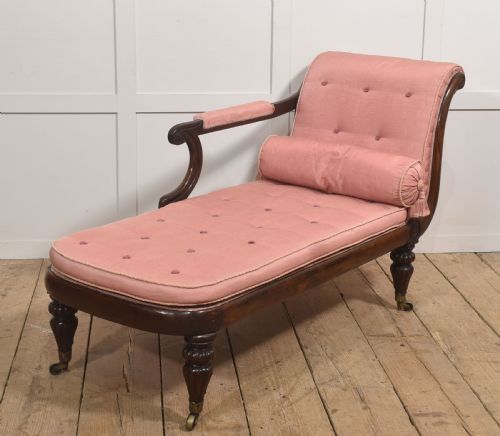
Makers and workshops of the period produced various configurations, from single-ended chaise longues and Récamier designs to double-ended settees and day beds. These seating forms often function as sofas or daybeds, combining display and repose in a single grand item.
Construction and materials
Cabinetmakers constructed the primary frames of a regency scroll arm chaise using dense timbers such as mahogany and rosewood, sometimes utilising ebonised wood for striking contrast. These solid woods allowed artisans to carve the characteristic sweeping scroll arms and structural supports with precision.
Upholstery played a vital role in finishing the piece, utilising fabrics like damask and various upholstery textiles secured over internal stuffing. Brass details often accented the timber frames, adding metallic highlights to the dark wood surfaces.
Regency Scroll Arm Chaise Retail Price Guide 2026
Typical asking prices for regency scroll arm chaise among the pieces listed under this phrase on Sellingantiques today, from the lower quarter to the upper quarter. They describe what is for sale here now, not the wider market.
Listings feature nineteenth century pieces spanning the Regency period, Grand Regency style, and William IV era.
Assessing quality in a regency scroll arm chaise
Quality in a regency scroll arm chaise rests in the sculptural integrity of the carved timber and the grace of the scroll ends. Finer examples display crisply executed woodwork, particularly where the scroll meets the rail, showing the hand of a skilled cabinetmaker rather than mass production.
The choice and figuring of the timber significantly elevate a piece, with richly grained mahogany or rosewood commanding greater attention. Additionally, the proportion and balance of the frame, whether single-ended or double-ended, dictate the visual harmony of the finished daybed.
Willian Trotter·Gillows
The Regency Scroll Arm Chaise Glossary
- Chaise longue
- A long chair for reclining, essentially a chair combined with a platform to support the legs. This form dominates the nineteenth century seating arrangements.
- Scroll end
- A sweeping, spiral-shaped terminal on the arm or back of a sofa or settee. It mimics ancient classical Greek and Roman furniture designs.
- Récamier
- A type of daybed or chaise longue with two raised ends, named after the French society figure Madame Récamier. It appears in refined nineteenth century interiors.
- Double ended settee
- A sofa or settee featuring matching scrolled ends at both sides, allowing a person to recline facing either direction. These pieces offer balanced symmetry in a room.
- Ebonised wood
- Timber treated with a chemical stain or finish to imitate expensive ebony. This dark surface finish gained popularity during the nineteenth century.
Regency Scroll Arm Chaise: Frequently Asked Questions
What is a regency scroll arm chaise?
A regency scroll arm chaise is a nineteenth century reclining seat featuring architectural scroll ends and a timber frame.
These pieces served as fashionable daybeds for sitting rooms and parlours during the Regency and William IV periods.
How do I use a chaise longue?
You use a chaise longue for daytime reclining, reading, or relaxing in a formal drawing room or bedroom setting.
They function as both a statement sofa and an ergonomic daybed for partial recline.
What is the difference between Regency and William IV?
Regency pieces typically date from the early nineteenth century and feature refined classical lines and delicate proportions.
William IV furniture, dating towards the mid nineteenth century, tends to be heavier with bolder carvings and robust timber sections.
What timbers were used for these daybeds?
Cabinetmakers primarily utilised dense tropical hardwoods such as mahogany and rosewood for their rich colour and grain.
Some examples feature ebonised wood finishes or walnut frames to achieve distinct visual styles.