

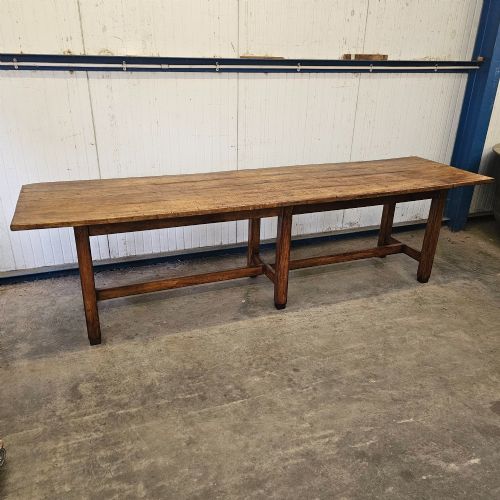
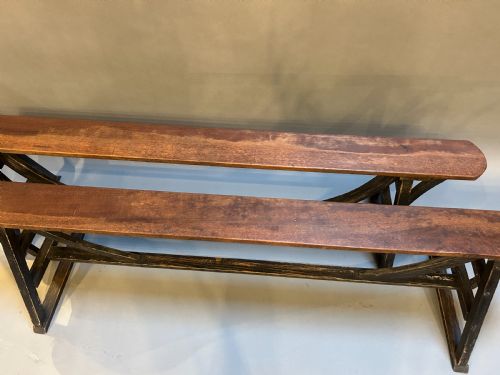

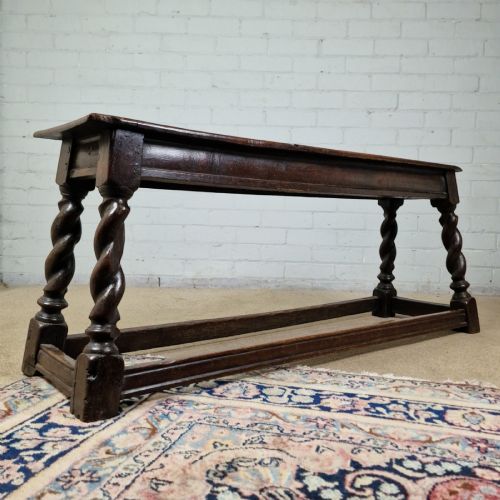
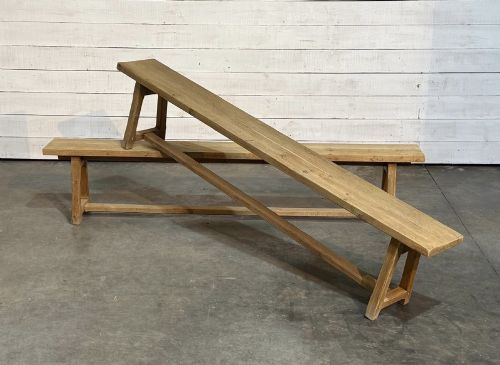



Traditional Long Bench
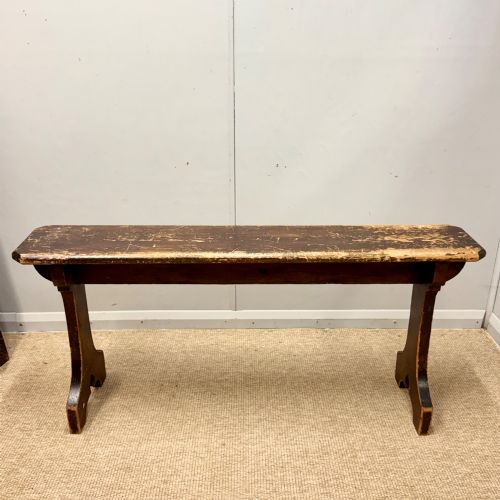
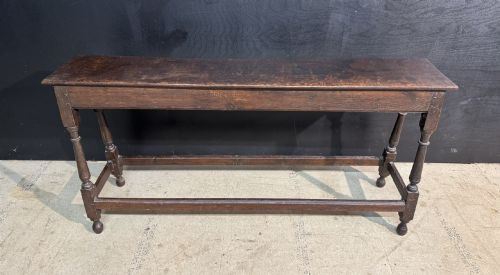
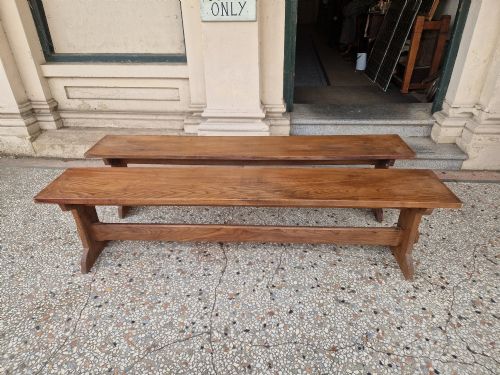
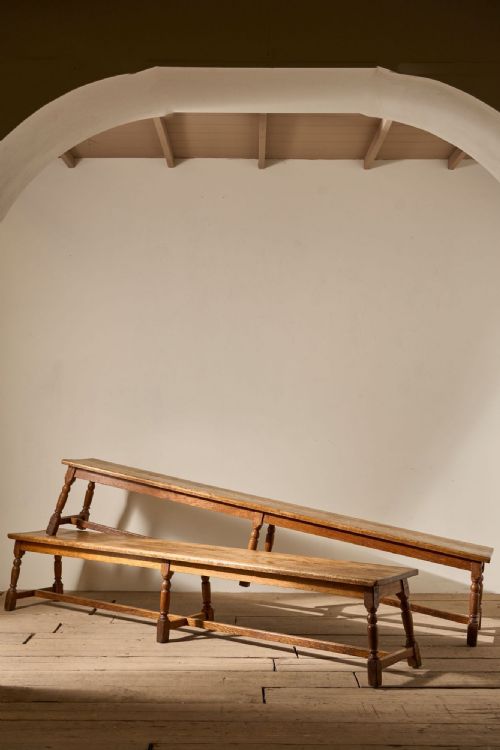
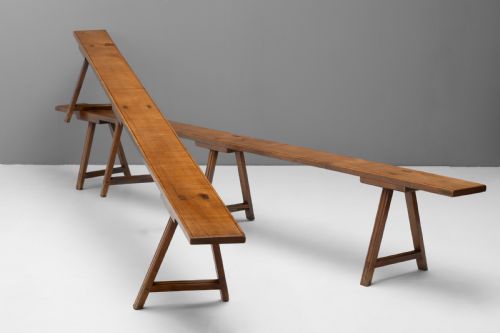
A traditional long bench anchors a hallway or dining table with honest utility, offering substantial seating shaped by decades of everyday use.
Traditional Long Bench
Buyers browsing this selection will most frequently encounter nineteenth-century pine, oak, and cherry examples alongside early twentieth-century pairs. The origins span English country workshops, French provincial settings, and Welsh taverns, reflecting regional demands for sturdy, elongated seating.
Beyond standard seating, the inventory includes dual-purpose designs configured as boot stores, hall benches, and piano duet stools with hinged compartments. These variations demonstrate how long seating adapted to domestic storage needs across the Georgian, Victorian, and Edwardian eras.
How they were made
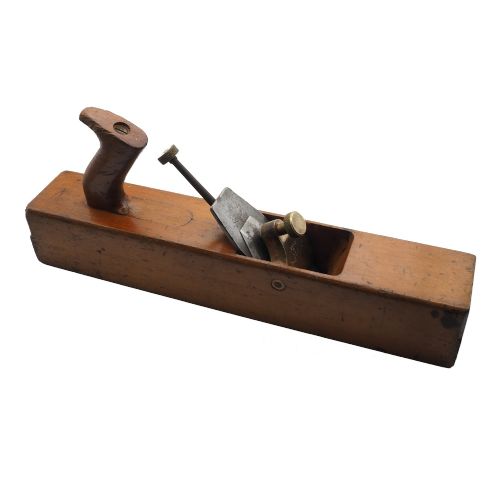
Makers constructed these benches using robust native timbers such as oak, pine, cherry, and elm, selecting each wood for its structural resilience. Carpenters relied on traditional joinery methods, including pegged mortise and tenon joints, to ensure long benches could withstand heavy daily weight without loosening.
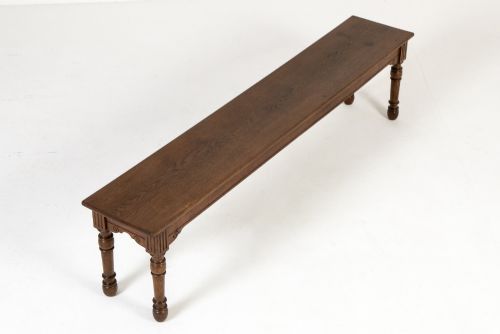
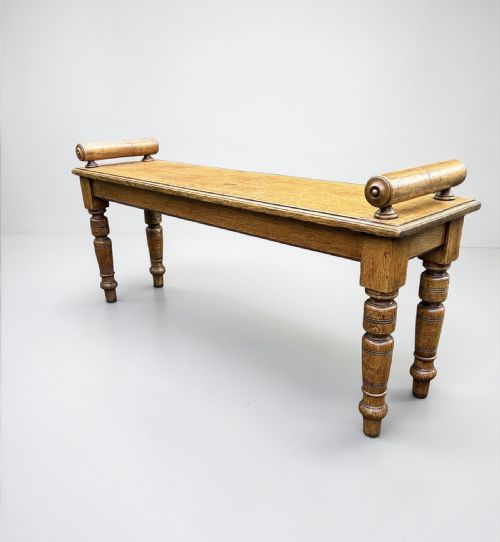
Upholstered variants incorporate secondary materials like leather, wool, kilim, and linen, secured over padding to create comfortable window seats and footstools. Finer specimens display turned or fluted legs, carved details, and occasional ebonised or gilded finishes that elevate domestic seating into decorative furniture.
Traditional Long Bench Retail Price Guide 2026
Typical asking prices for traditional long bench among the pieces listed under this phrase on Sellingantiques today, from the lower quarter to the upper quarter. They describe what is for sale here now, not the wider market.
Listings feature eighteenth-century oak, nineteenth-century mahogany, pine, and cherry benches alongside twentieth-century pairs.
What varies in quality
The calibre of a traditional long bench depends largely on the integrity of its timber selection and the retention of its original surface patination. Superior pieces display honest wear accrued through age while maintaining tight, uncompromised joinery that requires no modern structural intervention.
Design sophistication also divides utilitarian seating from high-style examples, separating plain deal school boards from carved oak joint stools or mahogany frames with fluted legs. The presence of matching pairs and integrated storage compartments further distinguishes exceptional workshop output from standard domestic furniture.
The Traditional Long Bench Glossary
- Joint stool
- A sturdy wooden stool constructed with mortise and tenon joinery rather than turned legs inserted into a seat. These early pieces often served as prototypes for longer bench seating.
- Window seat
- An elongated upholstered stool or bench designed specifically to fit within the architectural recess of a domestic window. These frequently feature mahogany frames and decorative textile coverings.
- Refectory bench
- A long, narrow wooden seat traditionally paired with a communal dining table in halls and taverns. They are typically built from heavy oak or pine to endure continuous public use.
- Hall bench
- A tall or backless seating form positioned in an entranceway, occasionally incorporating storage for boots and textiles beneath the seat. They are commonly constructed from oak or walnut.
- Patina
- The surface sheen and colour developed by wood over centuries through handling, waxing, and exposure to light. This visual depth indicates age and continuous use.
Traditional Long Bench: Frequently Asked Questions
Where should a long bench go?
A long bench fits naturally along a dining table, lining a wide hallway, or positioned beneath a window as a seat. These placements maximise floor space while providing extended seating for multiple people.
In living areas, shorter upholstered versions also function well as oversized footstools or coffee table alternatives. Their elongated proportions help balance large wall spaces in period rooms.
How do I clean wooden benches?
Dust wooden benches regularly with a dry cloth and feed the timber periodically with a traditional beeswax polish to nourish the grain. Avoid modern silicone sprays that build up and attract dirt over time.
Protect finished surfaces from direct heat and moisture by using coasters or pads. Gentle maintenance preserves the historic patination accumulated over generations.
How do I identify older oak?
Older oak exhibits prominent medullary rays, visible as silver flecks across the grain, resulting from quarter-sawing techniques used by historic carpenters. The timber feels dense and heavy, often showing minor shrinkage cracks and manual tool marks.
Colouration on eighteenth-century oak naturally deepens to a warm, rich brown beneath decades of wax and handling. Modern reproductions rarely replicate this depth of surface texture.
Can pairs be used apart?
Matched pairs can be separated into different rooms, though keeping them together preserves their decorative value for symmetrical interior arrangements. Splitting a pair works well if you need uniform seating in two distinct areas, such as matching hallways or opposing window bays.
Matching benches also function effectively placed side by side to create an extra-long seating run.