
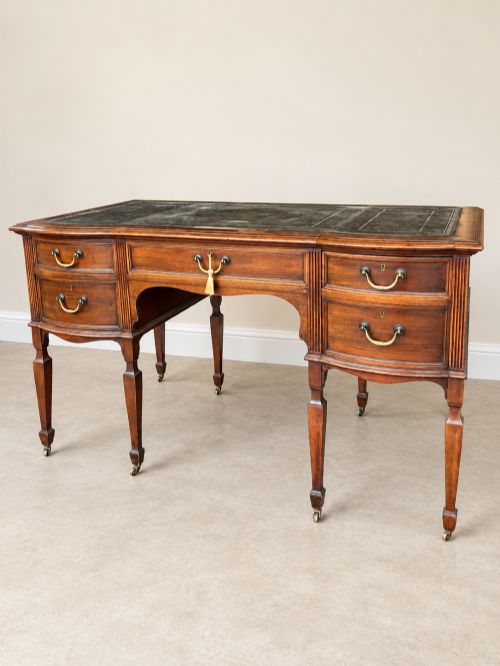
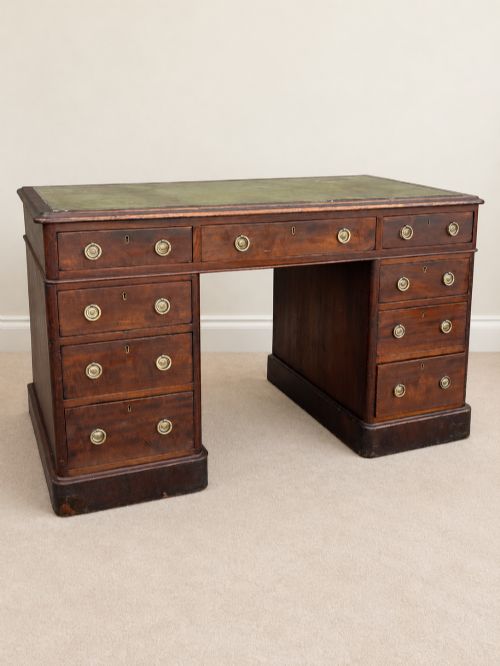
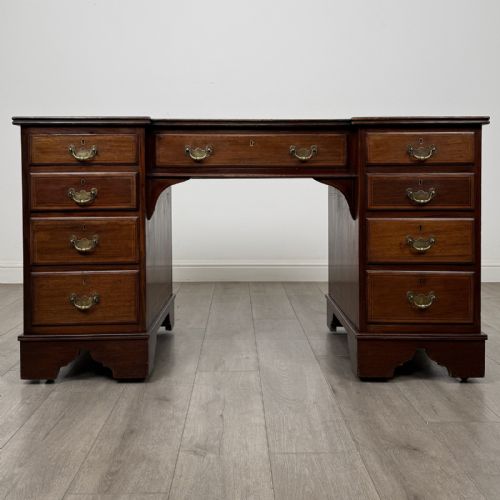
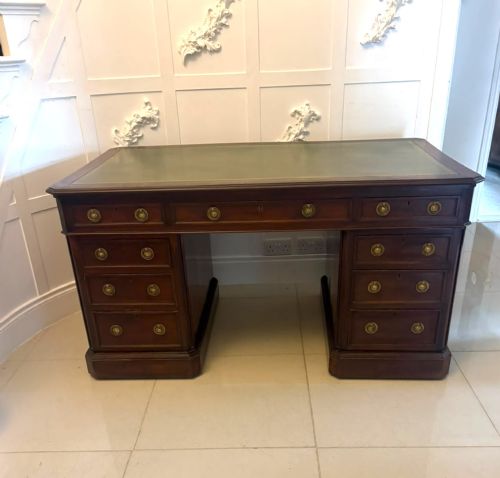


Traditional Leather Writing Table
A traditional leather writing table brings structured workspace and period presence into a room through time-tested timber and fitted leather surfaces.
Traditional Leather Writing Table
A traditional leather writing table meets a buyer searching for practical writing surfaces paired with historical character. These pieces primarily span the Victorian, Edwardian and Georgian eras, reflecting centuries of cabinet-making purpose.
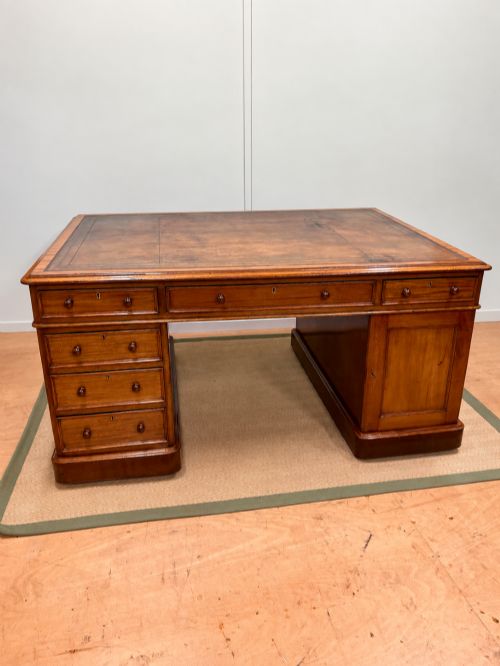
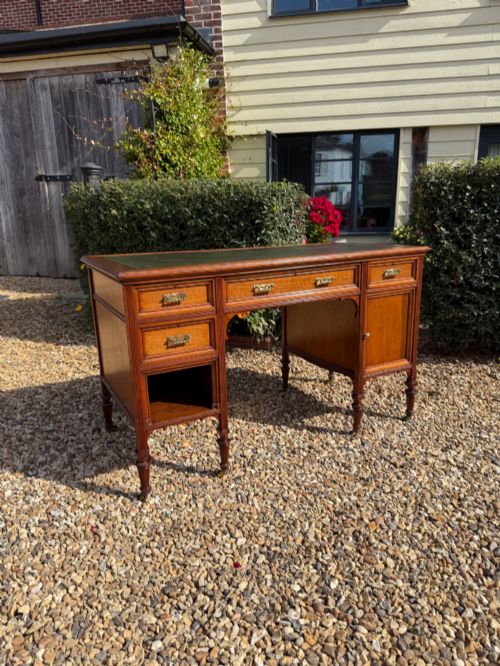
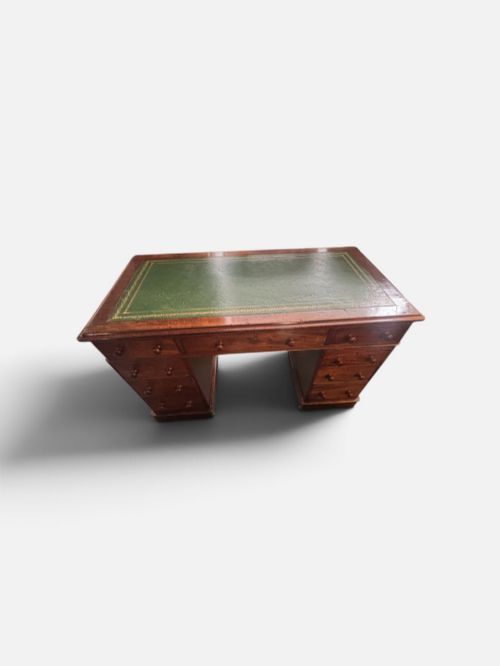
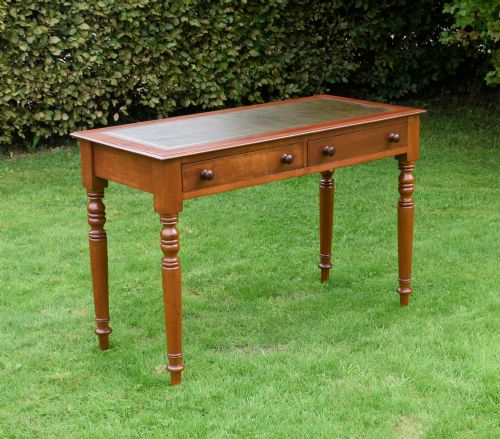
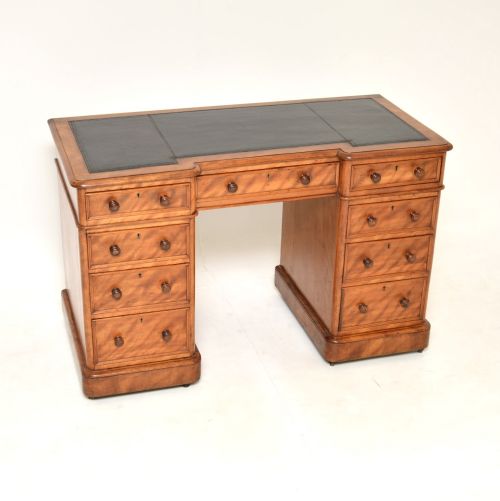
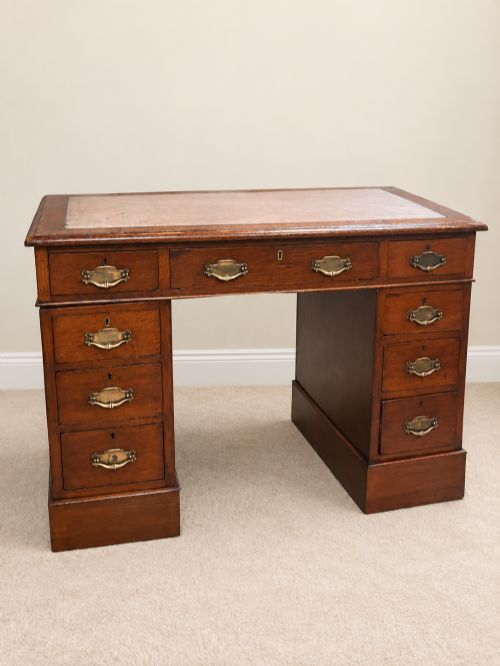
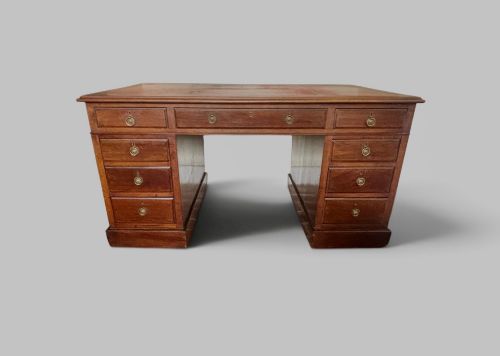
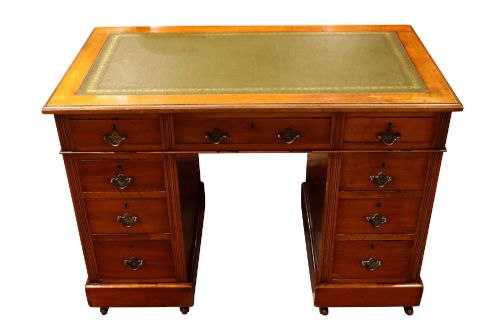
The most common formats on this page are pedestal desks and partners writing tables offering multiple drawers and finished work areas. Makers shaped these items in mahogany, walnut and oak, often featuring inset tooled leather tops intended for daily correspondence and administration.
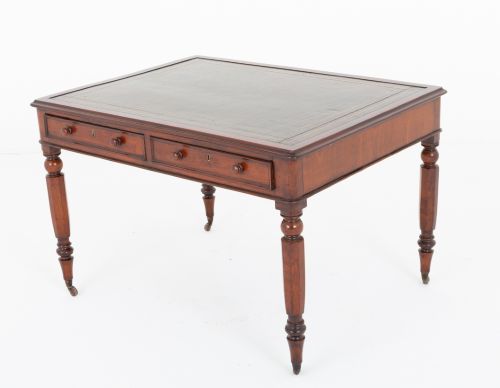
Examples range from compact kneehole desks to large freestanding library tables designed for central placement in a study. Stylistic revivals also appear, bringing Queen Anne and Chippendale influences into nineteenth and twentieth-century workshops.
Materials and Construction
Cabinet-makers built these traditional leather writing tables using dense hardwoods including mahogany, walnut, burr walnut and oak. These timbers provided the structural strength required for heavy pedestal bases and extensive banks of drawers.
Worksurfaces incorporate inset leather panels, frequently bordered with decorative gold tooling, which offered a smooth and durable medium for writing. Brass handles, key escutcheons and occasional satinwood inlay complete the primary construction methods recorded in the evidence.
Current listings span the Victorian, Edwardian, Georgian, and Regency periods, utilising mahogany, walnut, burr walnut, and oak.
Craftsmanship and Proportion
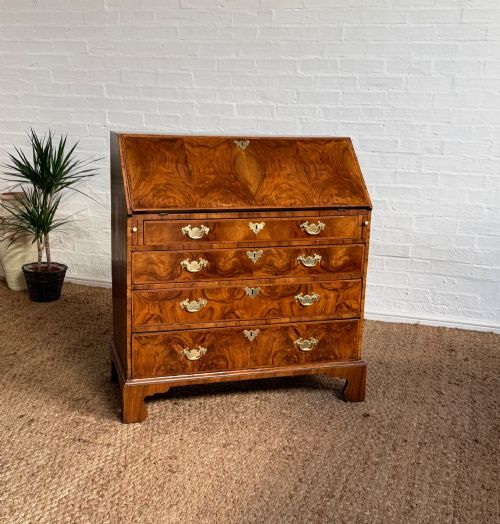
The distinction between standard and superior traditional leather writing tables lies in timber selection and timber matching. Finer pieces employ figured mahogany or matched burr walnut veneers across drawer fronts and top surfaces, creating deliberate visual symmetry.
Construction depth also separates the range, visible in secondary timbers used for drawer linings, hand-cut dovetail joints, and the retention of original brass hardware. Proportions remain balanced on better examples, whereas simpler commercial variations rely on plainer oak or standard mahogany without decorative stringing.
Trollope & sons·Wylie & Lochhead Glasgow
The Traditional Leather Writing Table Glossary
- Pedestal desk
- A desk comprising a central writing surface supported by two independent banks of drawers or pedestals. These units often feature drawers on both sides for partner use.
- Partners desk
- A large double-sided writing table designed for two people to work opposite each other, featuring drawers and cupboards on both elevations.
- Kneehole desk
- A compact writing desk with a central recess for the user's legs, flanked by smaller pedestals containing stacked drawers.
- Burr walnut
- Timber taken from the gnarled growth of a walnut tree, yielding highly decorative swirling grain patterns used extensively on luxury desk surfaces.
- Tooled leather
- Leather writing surfaces decorated with pressed gold leaf patterns around the perimeter using heated brass finishing tools.
Traditional Leather Writing Table: Frequently Asked Questions
What is a partners desk?
A partners desk is a large writing table designed with drawers and cupboards on both sides so two people can sit opposite one another. These pieces served administrative roles in libraries and private offices.
They generally measure larger than standard single-sided pedestal desks and require central placement within a room to allow access from all angles.
How do I identify a Georgian desk?
Georgian desks date from the eighteenth century and demonstrate restrained classical proportions, often executed in solid mahogany with hand-cut dovetails. They prioritize structural honesty and subtle decorative carving over heavy ornamentation.
Later pieces from the nineteenth and twentieth centuries frequently emulate these earlier Georgian lines through revival styles.
Are writing tables finished on the back?
Free-standing writing tables and partners desks feature finished backs so they can stand away from a wall in the middle of a room. Standard pedestal desks often have plain panelled backs intended to face a wall.
Checking the rear elevation confirms whether a specific table was built for central placement.
What timber was used for these desks?
Cabinet-makers relied primarily on mahogany, walnut, burr walnut and oak for these writing surfaces. Oak appears frequently in nineteenth-century utilitarian and clerk desks, while mahogany and walnut dominate grander library tables.
Inlays of satinwood and brass hardware frequently accent the primary timbers.