
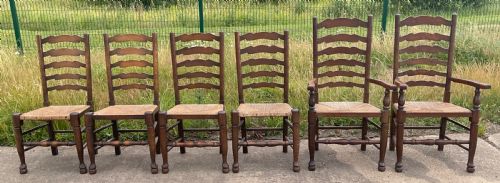
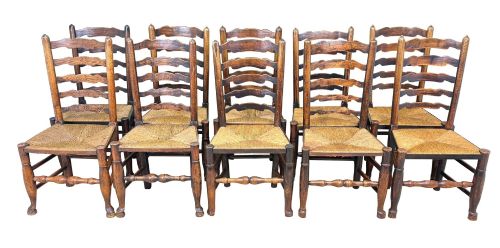
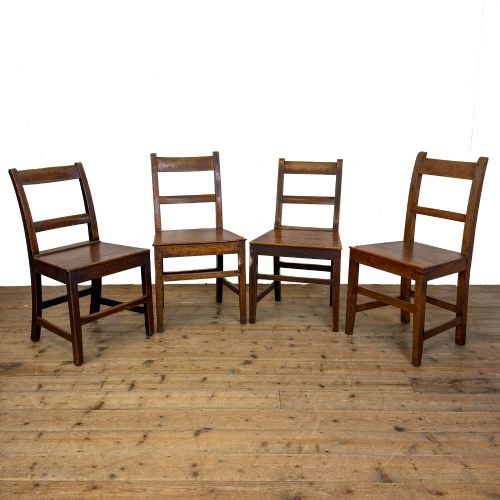
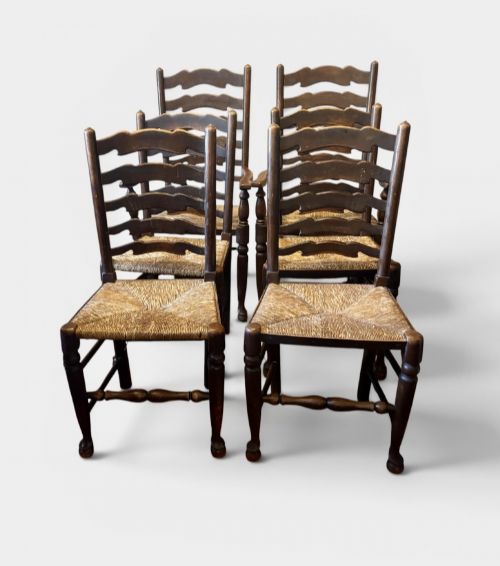


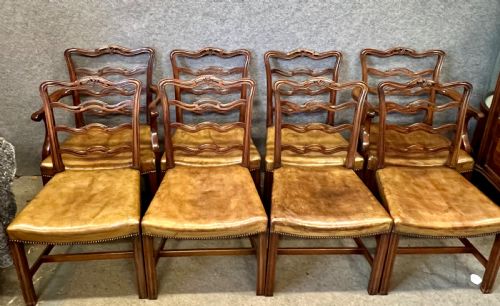


Traditional Ladderback Side Chairs
Traditional ladderback side chairs are robust timber seating designed with horizontal back rails, offering enduring utility and straightforward country style.
Traditional Ladderback Side Chairs
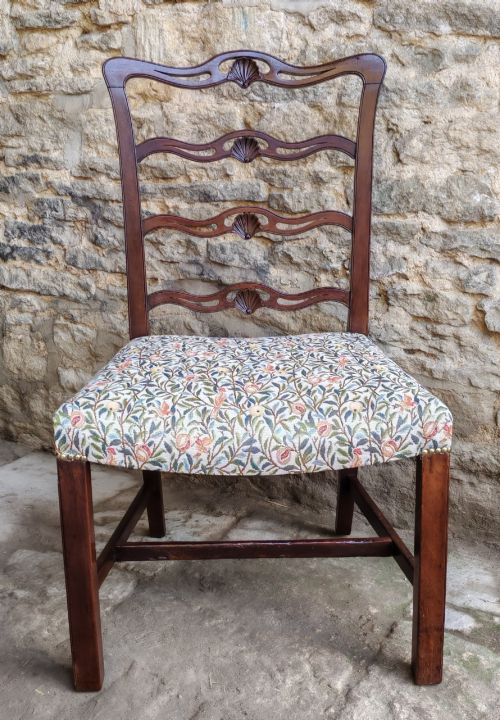
Traditional ladderback side chairs are defined by their horizontal back slats, which rise between upright rear posts to support the sitter. These chairs serve primarily around dining tables or desks, built without arms to slip easily beneath furniture.
The versions met most frequently on this page span from the eighteenth century through the 1930s, encompassing Georgian formal designs alongside rustic country pieces. Timbers range from native hardwoods like oak, ash, and elm to imported mahogany, often encountered in matched sets or larger harlequin groupings.
Makers shaped these seats for farmhouse kitchens, formal dining rooms, and Arts and Crafts interiors alike. Their straightforward construction prioritised practical seating, resulting in durable forms that survive across centuries of daily domestic use.
Materials and Construction
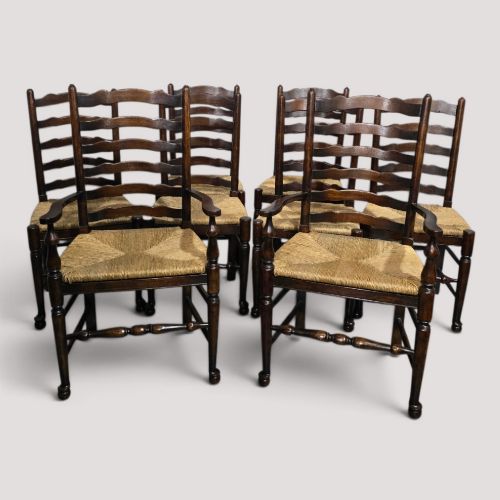
Cabinetmakers and country joiners built traditional ladderback side chairs using solid local timbers such as oak, elm, ash, and beech, alongside finer woods like mahogany for formal dining seats. Turned upright posts and arched horizontal slats required skilled lathe work and precise mortise and tenon joinery.
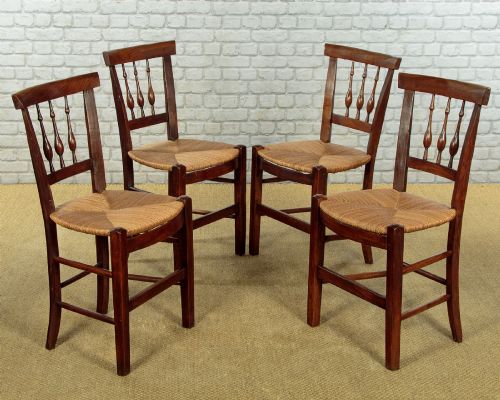
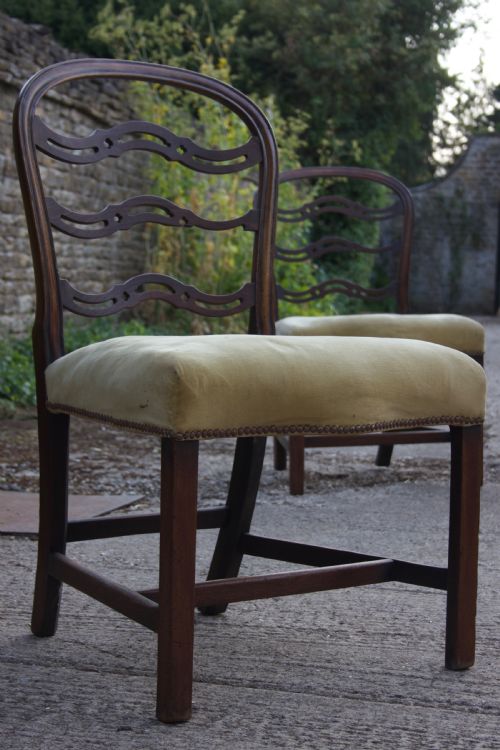
Seats were frequently woven from natural materials including rush or plaited straw, known locally as súgán, providing a resilient and flexible surface. Alternatively, drop-in frames accepted upholstery in fabric or velvet, while some iterations relied entirely on solid timber panels.
Listings feature oak, mahogany, elm, ash, and beech, paired with rush, fabric, and velvet seats across periods from the 18th century to the 1930s.
Determinants of Quality
Quality in these chairs rests upon the selection of timber and the precision of the turning on the upright posts and slats. Heavier, dense hardwoods and well-balanced proportions separate finer urban workshop production from simpler vernacular pieces.
The integrity of the original woven rush seating or the crispness of carved mahogany details dictates the overall standard of survival. Matching sets that retain their uniform colour and patination command greater appreciation than assembled groups altered over time.
Lawrence Neal·Edward Gardener·Heals
The Traditional Ladderback Side Chairs Glossary
- Ladderback
- A chair design featuring a backrest composed of horizontal wooden slats set between two vertical posts. This form dates back centuries and remains common in vernacular furniture.
- Rush
- A marshland plant woven tightly to create durable, flexible chair seats. It provides a traditional textured surface found on many country and Arts and Crafts examples.
- Súgán
- The Irish term for twisted straw or hay rope used for plaited chair seating. It offers a resilient and rustic alternative to woven rush or upholstered pads.
- Harlequin set
- A collection of chairs that share a general style and period but vary slightly in detail, having been gathered together rather than manufactured as one original batch.
- Side chair
- An upright chair without arms, designed primarily for use at a dining table or desk. These pieces occupy minimal space and slide neatly under furniture.
Traditional Ladderback Side Chairs: Frequently Asked Questions
What is a ladderback chair?
A ladderback chair is a traditional seating form characterised by horizontal wooden slats running between the vertical rear uprights.
This architectural arrangement provides sturdy back support while using minimal timber, a design principle employed by generations of vernacular and formal furniture makers.
How do I care for a rush seat?
Rush seats require a dry environment and gentle cleaning with a soft brush to remove dust from the woven fibres.
Moisture can weaken natural straw or rush over time, so liquid spills should be blotted immediately rather than rubbed.
Are these chairs comfortable for dining?
These chairs offer upright support suited for prolonged sitting at dining tables or desks.
Woven rush and upholstered drop-in pads provide natural give, while the sloped slats conform comfortably to the back of the sitter.
How do I tell country chairs from formal ones?
Country chairs typically utilise native woods like oak, elm, or ash, featuring turned posts and rush or wooden seats. Formal versions often employ mahogany, feature carved details like Chippendale-style top rails, and include upholstered drop-in pads.