



Antique Style Ladderback Chairs
Antique style ladderback chairs offer practical seating shaped by centuries of traditional joinery and straightforward design.
Antique Style Ladderback Chairs
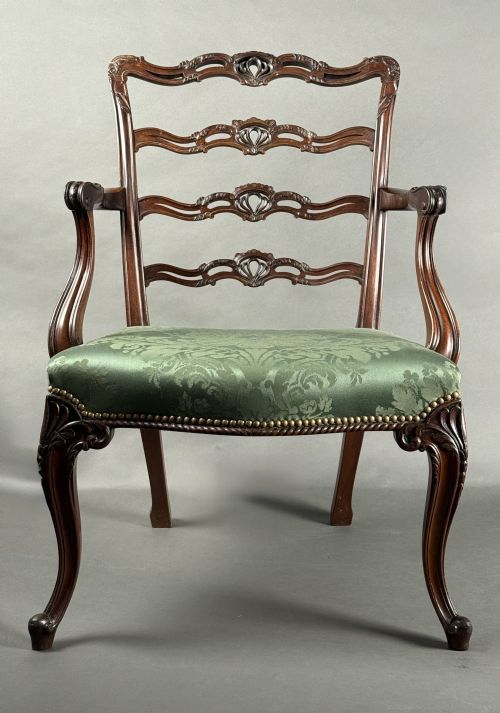
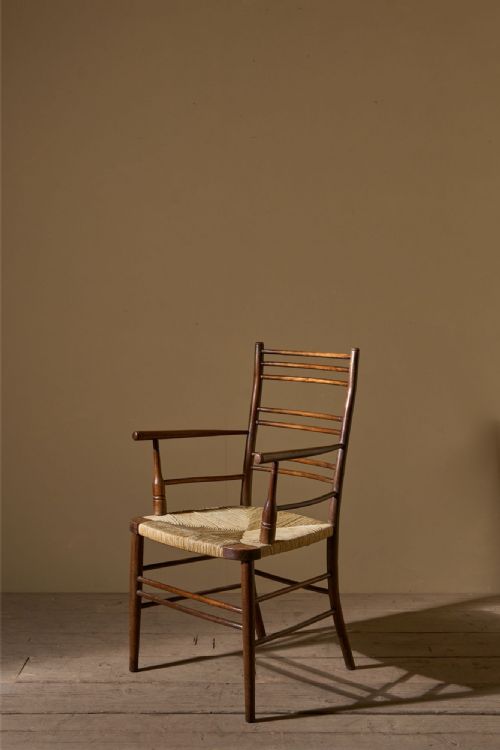
Antique style ladderback chairs encompass dining chairs, armchairs, desk chairs, rocking chairs and settees spanning the eighteenth century through to the nineteen thirties. These pieces appear in forms influenced by Georgian, Chippendale, Hepplewhite, Arts and Crafts and Louis XV styles.
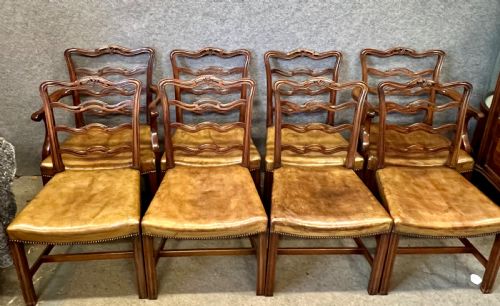
The version most commonly encountered on this page is the dining chair, often found in sets of six, eight, ten or twelve. These dining pieces primarily utilise mahogany or oak frames, paired with rush, fabric, leather or velvet seats.
How they were made
Frames are constructed predominantly from mahogany, oak and teak, shaped into vertical uprights with horizontal slats forming the backrest. Joinery relies on traditional methods to secure the back rails between the main stiles.
Seats incorporate woven rush, alongside upholstered pads covered in fabric, leather, or velvet, fixed directly to the wooden rails. Carving and turnings appear on select styles, particularly within Georgian and Chippendale revival pieces.
What varies in quality
The standard of timber selection and joinery determines the structural integrity of each chair. Dense mahogany and seasoned oak provide greater durability compared to softer woods utilised in vernacular country pieces.
Consistency across larger sets distinguishes superior examples from assembled groups. The precision of the slat shaping and the tightness of rush or upholstery work further separate standard regional pieces from high-style workshop productions.
Edward Gardener·Liberty and Co
The Antique Style Ladderback Chairs Glossary
- Ladderback
- A chair featuring a backrest composed of horizontal slats, or rungs, set between two vertical uprights. This form has roots in vernacular furniture traditions.
- Rush seat
- A seating surface woven from dried marsh grass or rushes wound around a wooden frame. This technique appears frequently on Arts and Crafts and country traditional chairs.
- Stile
- The outer vertical post of a chair back into which the horizontal ladder slats are tenoned. Stiles provide the primary structural support for the upper frame.
- Chippendale Revival
- Furniture manufactured in later periods mimicking the eighteenth-century designs associated with Thomas Chippendale. These pieces adopt characteristic carved splats and robust proportions.
Antique Style Ladderback Chairs: Frequently Asked Questions
How do I care for rush seats?
Rush seating requires dry conditions to prevent the natural fibres from becoming brittle or damp. Vacuuming gently with a soft brush attachment removes dust from the weave.
Applying a light mist of water occasionally can help maintain pliability in older rush, though excessive moisture causes rot.
Are these chairs suitable for daily dining?
Many solid mahogany and oak examples retain the structural strength required for regular daily use. Checking the joinery beneath the seat ensures the frame remains stable under weight.
Lighter country models or rush seats benefit from careful placement and supportive felt pads on uneven flooring.
How do I identify a Georgian style ladderback?
Georgian style pieces usually feature symmetrical mahogany frames with shaped horizontal slats and straight or slightly cabriole legs. Proportions tend to be refined, reflecting formal dining room standards of the period.
Details such as subtle carving on the top rail or Marlborough legs often accompany this traditional aesthetic.
What defines Arts and Crafts ladderbacks?
Arts and Crafts chairs emphasise honest construction, visible joinery and materials like oak and rush. Makers during this movement rejected mass production in favour of hand-finished simplicity.
Stout proportions, low armrests and unadorned slats characterise these functional domestic pieces.