
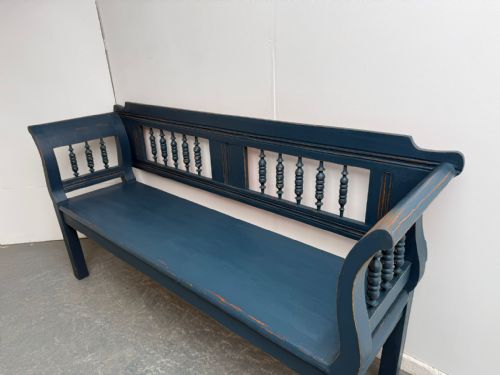

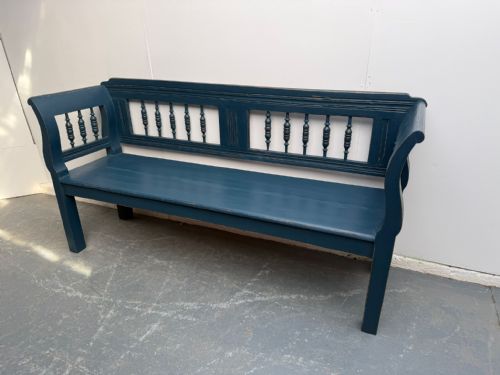


Traditional Kitchen Bench
These traditional kitchen bench pieces bring honest utilitarian craft into domestic spaces, offering sturdy seating built for daily family life.
Traditional Kitchen Bench
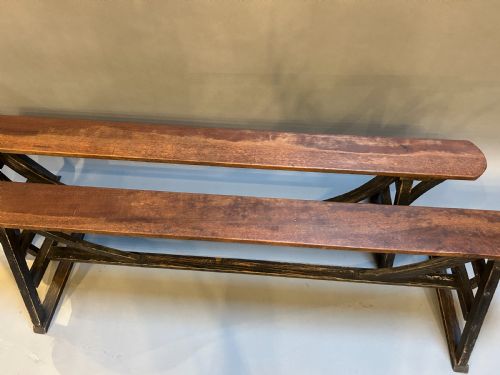
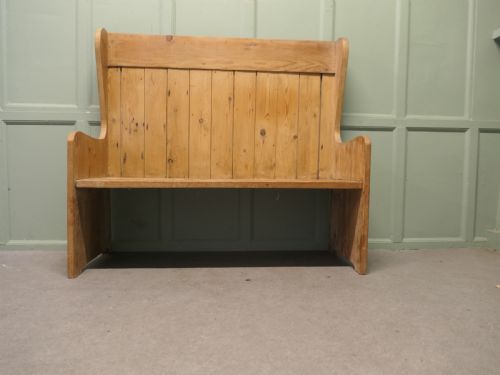
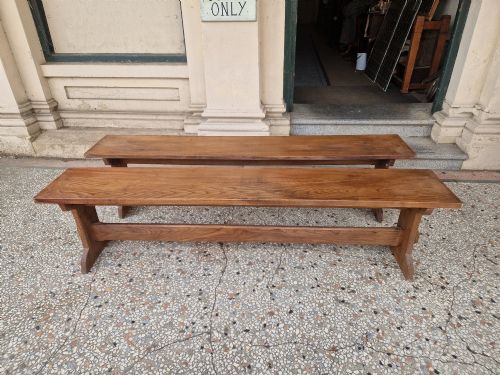
A traditional kitchen bench encompasses a range of robust seating and work surfaces, including high back settles, tavern benches, and long pine or oak boards designed for communal gatherings. You are most likely to meet nineteenth century pine and oak examples, often showing traces of original blue or neutral paint alongside bare timber.
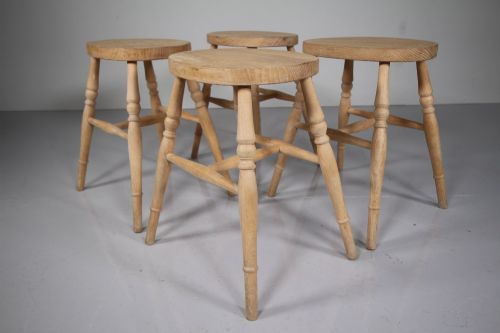
Makers shaped these utilitarian objects for demanding environments, ranging from English dining stools to Hungarian folk art seating and substantial French country house workbenches. The forms serve practical domestic or workshop needs, functioning equally well as dining seating or hallway furniture.
How traditional kitchen bench pieces were constructed
Carpenters relied primarily on solid pine, oak, beech, cherrywood, and elm, selecting timbers suited to heavy daily use and structural integrity. Planks were joined with simple, robust carpentry techniques to withstand the rigours of taverns, farmhouses, and artisan workshops.
Surface treatments range from bare scrubbed wood to original paint finishes in blues and muted tones, applied directly to the timber. Metal components such as iron vises appear on workshop variants, adding functional mechanical elements to the wooden frames.
Listings feature items spanning the nineteenth century, Victorian era, and Edwardian period in pine, oak, beech, and cherrywood.
What separates examples in quality
The degree of original surface preservation distinguishes pieces, particularly where remnants of early paint remain intact on the timber. Depth of patina developed through decades of domestic or workshop use dictates the visual appeal of the wood.
Structural heft and timber selection also differentiate the range, with dense hardwoods like oak and cherrywood offering greater permanence than softer pine alternatives. Proportion and length play a role, as longer boards and substantial three seater formats require superior initial construction to survive intact.
The Traditional Kitchen Bench Glossary
- Settle
- A wooden bench with a high back designed to block draughts, often featuring enclosed storage beneath the seat. These pieces were standard seating by the hearth in period homes and public houses.
- Refectory table
- A long dining table traditionally used in communal dining halls and paired with benches or stools. They feature sturdy stretcher bases to support long plank tops.
- Workbench
- A heavy utilitarian table fitted with vices and tool trays, used by artisans and woodworkers. French and European examples in beech and oak appear frequently alongside domestic seating.
- Trestle table
- A table supported by two or more trestles consisting of a horizontal beam balanced on two paired legs. This form allows maximum legroom for diners seated on long benches.
Traditional Kitchen Bench: Frequently Asked Questions
How do I clean a painted pine bench?
Wipe surfaces gently with a damp cloth, avoiding harsh chemical cleaners that can strip historic paint layers or dry out aged timber.
Allow the wood to dry naturally and apply a neutral wax if the finish requires nourishment.
Can I use an artisan workbench for dining?
Workbenches provide exceptionally sturdy surfaces and ample length for seating multiple guests around a kitchen or dining room.
Their integrated vices and tool wells add distinct character while remaining entirely functional as large tables.
What is the difference between a settle and a tavern bench?
A settle incorporates a high solid back and often side wings designed to keep out cold draughts in unheated rooms.
Tavern benches are typically open-backed or backless forms built for heavy communal seating in public drinking houses.
How do I date a nineteenth century pine bench?
Examine the timber boards for hand-sawn tool marks, construction methods, and the nature of any accumulated surface wear or old paint.
Nail types, joint construction, and timber shrinkage patterns provide reliable physical evidence of age.