




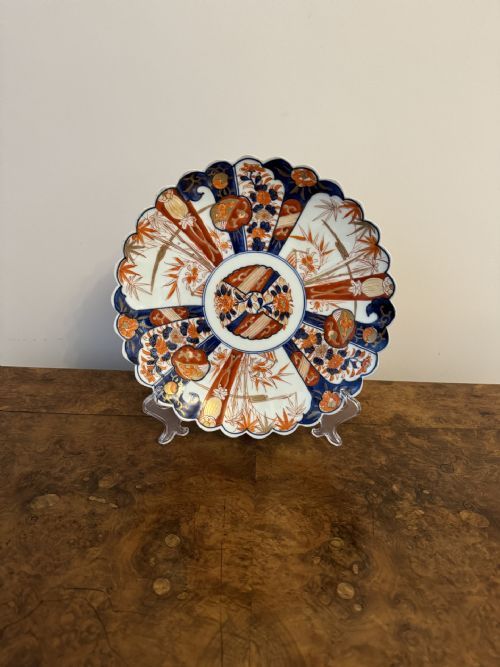
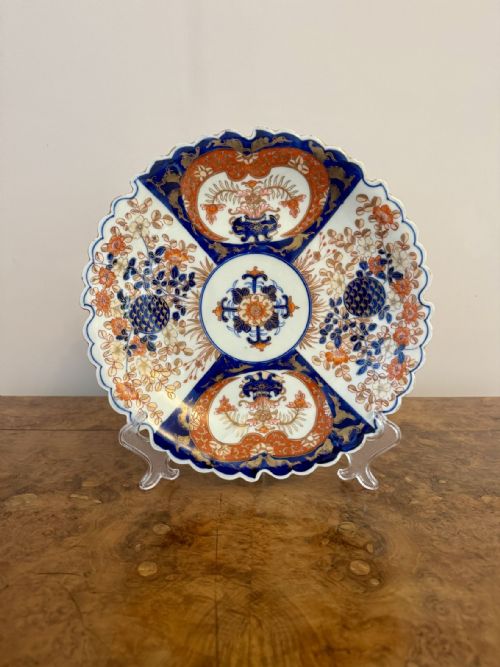
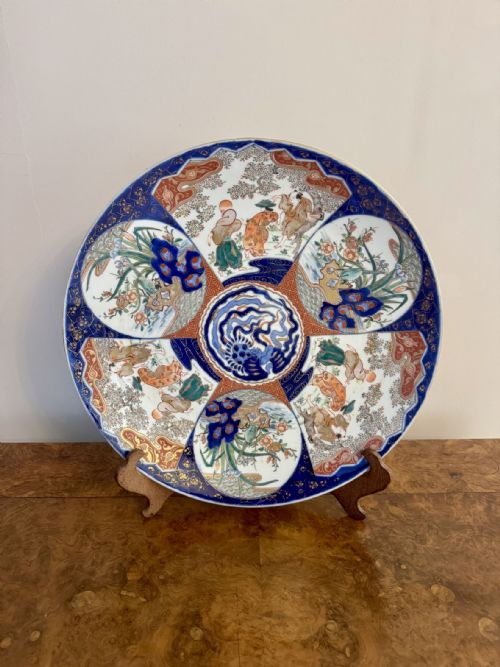


Traditional Imari Plate
A traditional imari plate brings together deep cobalt underglaze blue, bright enamel colours and gold leaf on porcelain.
Traditional Imari Plate
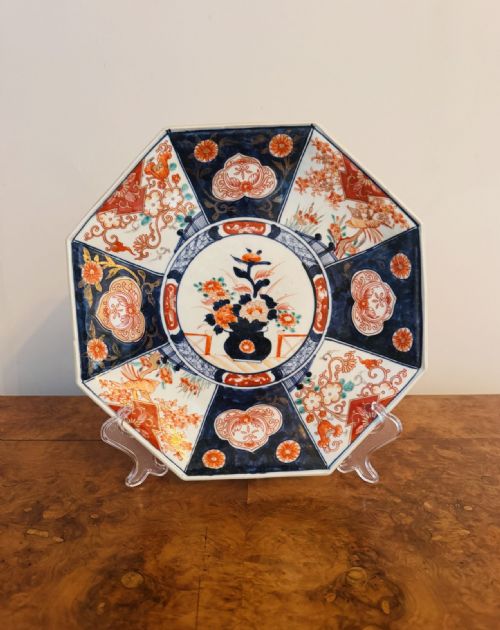
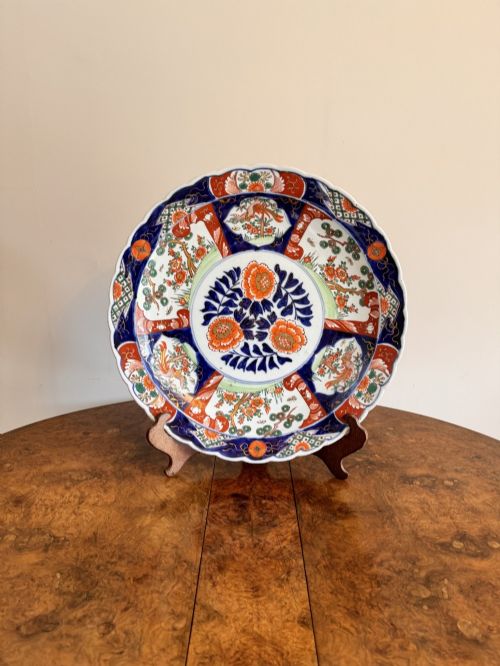
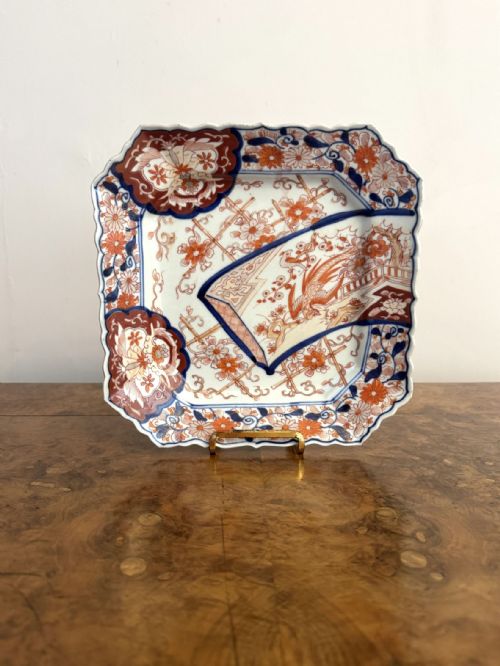
When you search for a traditional imari plate, you encounter decorative ceramics that bridge Eastern and Western tastes across the centuries. The pieces on this page are predominantly Japanese porcelain chargers, dishes and plates originating from the Meiji period, alongside Victorian interpretations and English ironstone copies.
Most examples you meet here date from around 1900, taking the form of large chargers, hexagonal or square shaped plates, and scalloped edge dishes. These ceramic items were designed primarily for display on walls or sideboards rather than everyday dining.
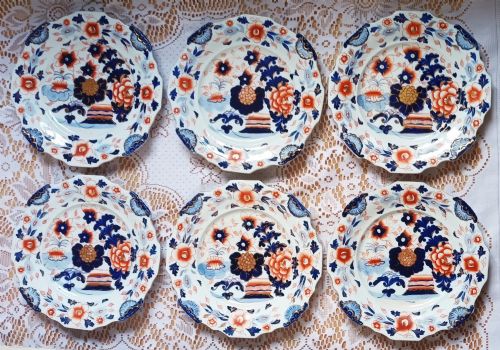
Beyond Japanese production, the selection includes 19th-century English ironstone plates that adopt the distinctive Japan pattern. This mix shows how potters in both Britain and Asia responded to a enduring international demand for rich decorative surfaces.
Materials and production methods
Makers shaped these items from ceramic body pastes, specifically porcelain and ironstone, before applying cobalt underglaze blue and rich overglaze enamels. The distinctive palette relies on deep blues combined with iron red and touches of gold leaf.
Craftsmen fired the ceramic body with the cobalt underglaze first, then added the colourful enamels and gilt highlights in subsequent low-temperature firings. This layered technique produced the characteristic dense surface patterns seen on Japanese imari chargers and English ironstone alternatives alike.
Traditional Imari Plate Retail Price Guide 2026
Typical asking prices for traditional imari plate among the pieces listed under this phrase on Sellingantiques today, from the lower quarter to the upper quarter. They describe what is for sale here now, not the wider market.
Some nineteenth-century English potters enjoyed copying Japanese designs so thoroughly they added pseudo-hieroglyphic marks to the backs just to confuse collectors.
Distinctions in quality and execution
The division between standard wares and superior examples rests on the crispness of the cobalt underglaze painting and the precision of the enamel work. Finer pieces display sharply defined motifs without blurring or running in the kiln.
The distribution and retention of gold leaf also mark out the better plates and chargers. Where the gilding remains bright, thick and neatly applied to the borders and panels, the overall visual impact rises significantly.
The Traditional Imari Plate Glossary
- Cobalt Underglaze
- A blue pigment applied directly to the raw ceramic body before glazing and firing. It withstands high temperatures without fading.
- Charger
- A large decorative plate intended for display on a sideboard or wall rather than for serving food at the table.
- Enamel
- Opaque glass-like paint applied over the fired glaze in secondary low-temperature firings. It provides the vibrant reds and greens characteristic of the palette.
- Ironstone
- A heavy, durable type of earthenware developed in Britain to imitate Chinese and Japanese porcelain. It forms the basis of many nineteenth-century English imari pieces.
- Meiji Period
- The era of Japanese history lasting from 1868 to 1912, which produced many of the decorative plates and chargers found in this category.
Traditional Imari Plate: Frequently Asked Questions
What is a traditional imari plate?
A traditional imari plate is a decorative ceramic dish characterised by a distinct colour palette of cobalt blue, iron red, and gold leaf. These items originated in Japan and were later imitated by European potteries during the nineteenth century.
Most pieces found here date from the Meiji period or the Victorian era and were made primarily for display purposes rather than heavy everyday use.
How were imari chargers used?
Imari chargers were principally used as decorative display items in formal rooms, placed on sideboards or hung on walls to showcase wealth and taste. Their large surface area and rich patterns made them ideal focal points for interiors.
While some smaller dishes saw service at the dining table, the larger chargers remained ornamental objects meant to be admired from a distance.
How do I care for antique ceramic plates?
Antique ceramic plates require gentle handling, preferably dusting with a soft, dry cloth rather than washing with water. Avoiding harsh detergents protects the delicate overglaze enamels and gold leaf from wearing away.
When displaying these items on walls or plate stands, ensure the mount is secure and padded to prevent chipping the scalloped or shaped edges.
How can I tell Japanese imari from English ironstone imari?
Japanese imari pieces are typically made of true white porcelain that feels lighter and shows a slightly translucent quality when held to the light. The potting often includes hand-formed shapes like hexagonal or square profiles.
English imari, often produced in ironstone by makers such as Masons, feels heavier and more robust in the hand. The ceramic body is an opaque earthenware rather than translucent porcelain.