

Traditional Hunting Art
Traditional hunting art encompasses equestrian scenes, hounds, and game, offering a glimpse into historic rural pursuits through period paintings and prints.
Traditional Hunting Art
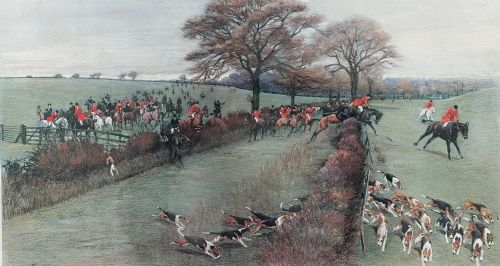
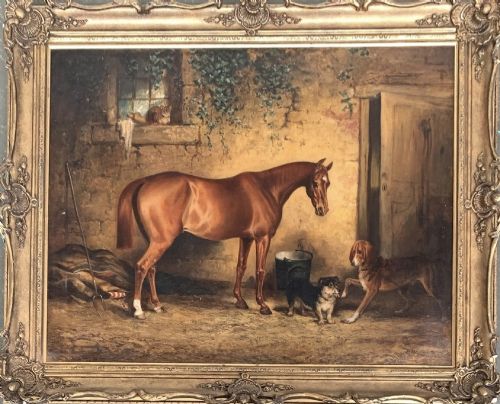
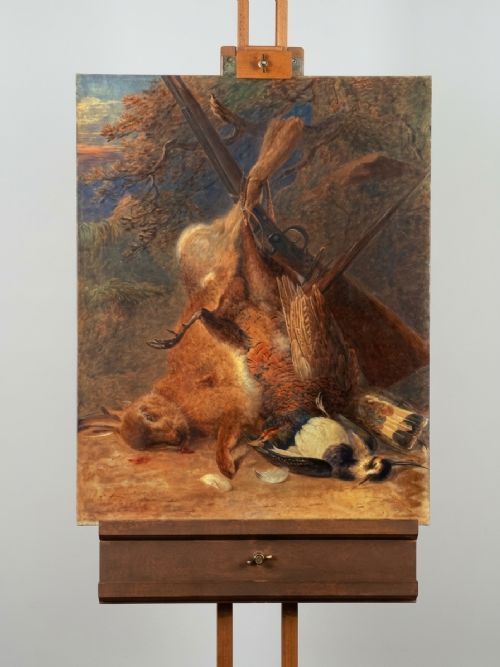
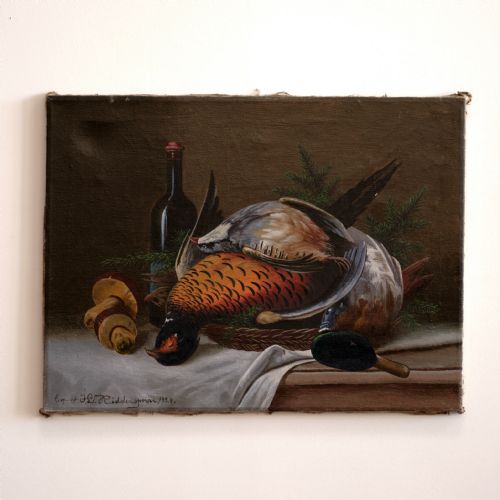
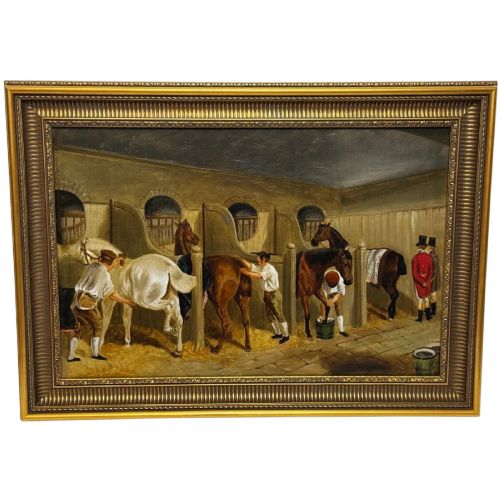
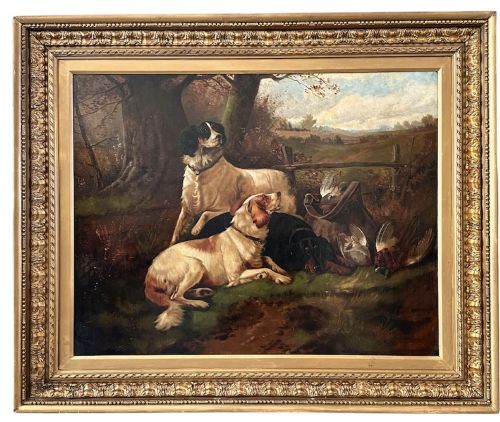
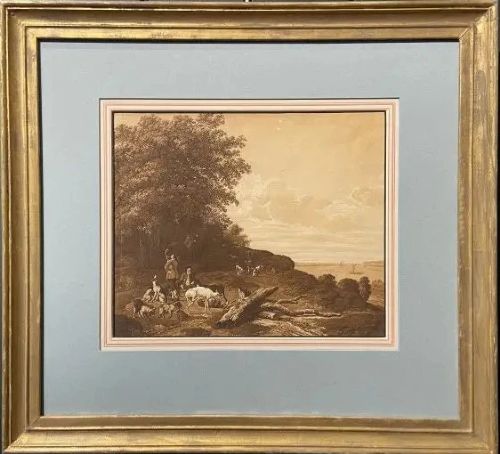
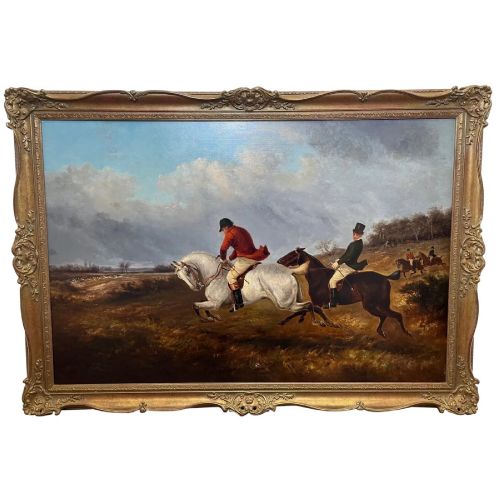
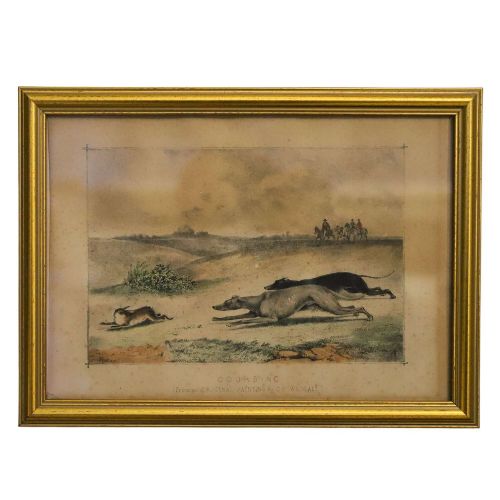
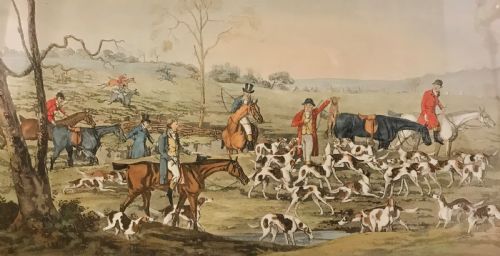
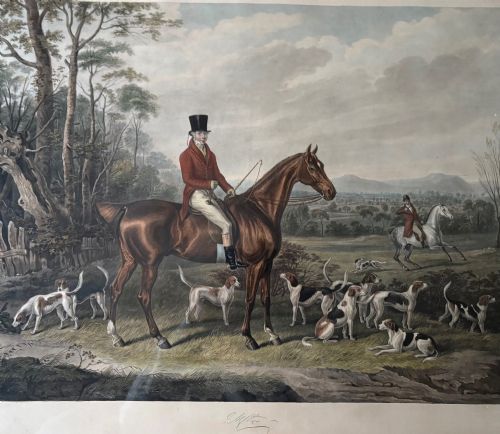
Traditional hunting art captures the pageantry of rural pursuits, focusing primarily on equestrian scenes, hound packs, and game birds across canvas and paper. Buyers encounter oil paintings and framed prints predominantly from the nineteenth and early twentieth centuries.
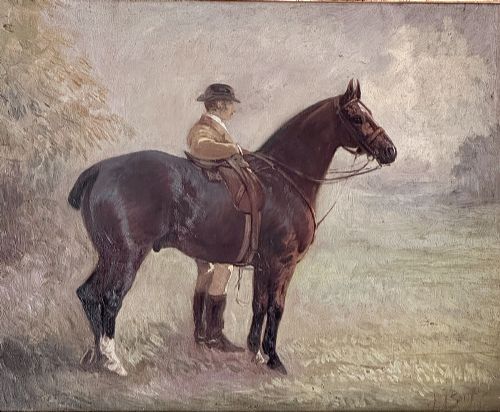
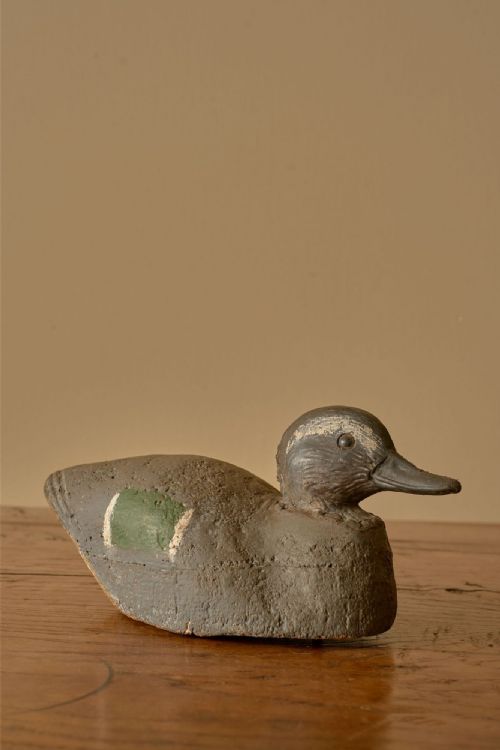
The subjects range from expansive hunt meets in the countryside to intimate portraits of horses and sporting dogs. Works span Victorian sporting scenes, Edwardian framing, and occasional folk art decoys.
Materials and Technique
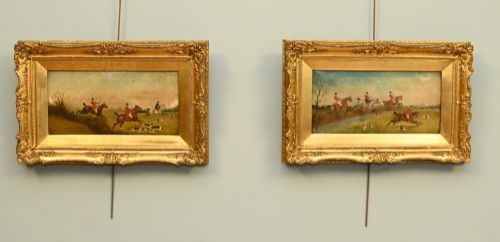
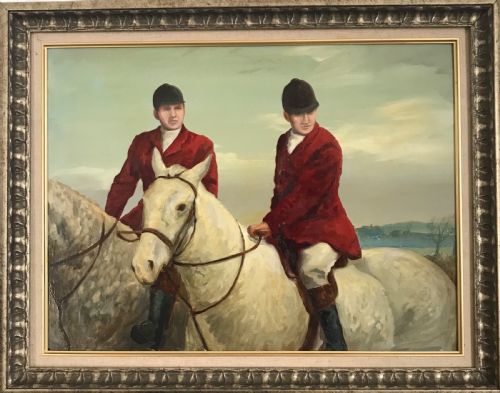
Artists painted oil on canvas, often housed within gilt wood frames, alongside watercolours and bodycolour on paper. Lithographs and hand-coloured engravings brought these rural subjects to a wider audience.
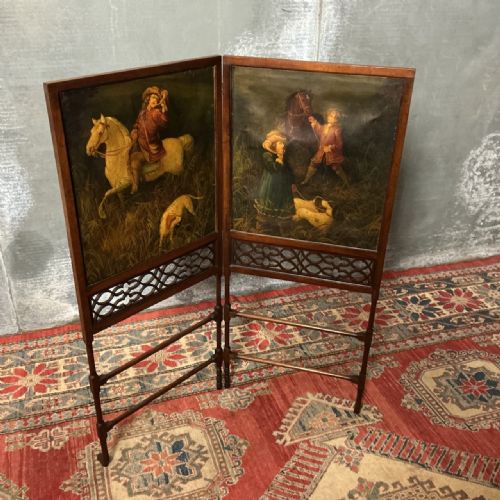
Wood provided the structure for painted screens and decoy figures, while gold leaf embellished the heavier frames typical of the Victorian period.
Traditional Hunting Art Retail Price Guide 2026
Typical asking prices for traditional hunting art among the pieces listed under this phrase on Sellingantiques today, from the lower quarter to the upper quarter. They describe what is for sale here now, not the wider market.
Several hounds and hunters are immortalised by name in the titles, preserving long-forgotten companions of the field.
Evaluating Quality
The strength of the composition and the anatomical accuracy of the horses and hounds dictate the standing of a piece. Skilled artists rendered movement and tension with precision, whereas weaker works lack proportion.
Condition of the canvas, original framing, and the clarity of the signature or historical attribution further elevate the standing of an artwork.
Henry Barraud·George Sydney Shepherd·Thomas Smythe·John Arthur Lomax·George Wright·Basil Nightingale·Philip Henry Rideout·Michael Lyne·John Frederick Herring Jnr·Fannie Moody
The Traditional Hunting Art Glossary
- Lithograph
- A print made from a planographic process in which the image is drawn on limestone or metal. This technique allowed for the faithful reproduction of detailed sporting scenes.
- Bodycolour
- Water-soluble paint mixed with white pigment to make it opaque. Artists used it alongside watercolour to create areas of dense, solid colour in game and animal studies.
- Equestrian
- Pertaining to horses and horseback riding. These subjects form a major category within sporting art.
- Aquatint
- A printmaking technique that produces tonal effects resembling watercolours. It gained popularity for reproducing rural and sporting watercolours.
Traditional Hunting Art: Frequently Asked Questions
What periods do these pieces date from?
The works originate largely from the nineteenth and early twentieth centuries, spanning the Victorian and Edwardian eras. Earlier seventeenth-century examples and later mid-century pieces also appear.
Most items reflect the height of British sporting art production during the Victorian period, capturing traditional rural pastimes.
How were these artworks displayed?
Paintings were typically framed in heavy gilt wood and hung in country houses, hunting lodges, and domestic drawing rooms. Smaller prints and engravings were often grouped on walls or bound into portfolios.
Framed artwork served both to decorate interiors and to celebrate specific horses, hounds, and packs.
How do I care for oil paintings on canvas?
Keep canvases away from direct sunlight and dramatic fluctuations in temperature to prevent the paint from cracking. Dust gently with a soft, dry brush without applying pressure.
Avoid using liquid cleaners on the paint surface and consult a professional conservator for deep cleaning.
How do I distinguish prints from original paintings?
Examine the surface texture closely under good lighting to check for brushstrokes and the raised texture of dried oil paint. Prints will show a flat surface or a dot pattern under magnification.
Plate marks in the paper often indicate an etching, engraving, or lithograph rather than a unique painting.