


Traditional Hearth Screen
A traditional hearth screen is a practical barrier placed before a fireplace to contain sparks and protect a room.
Traditional Hearth Screen
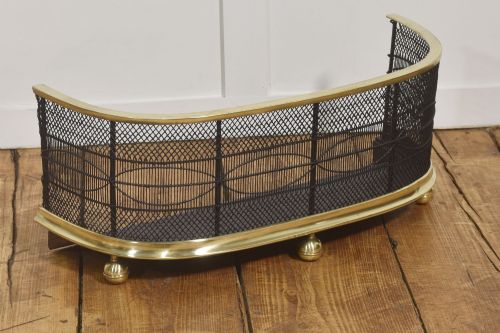
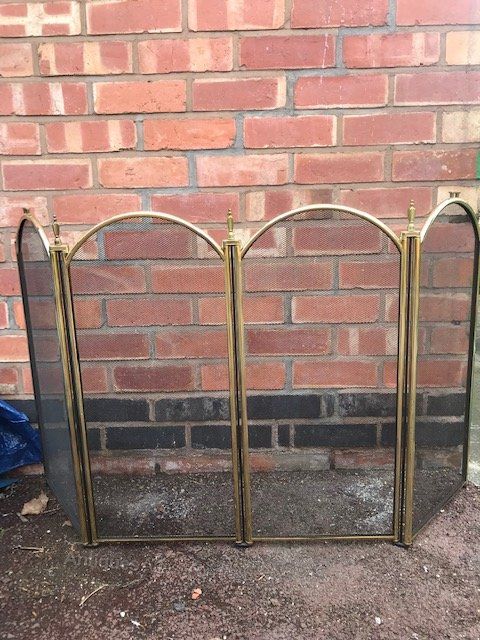
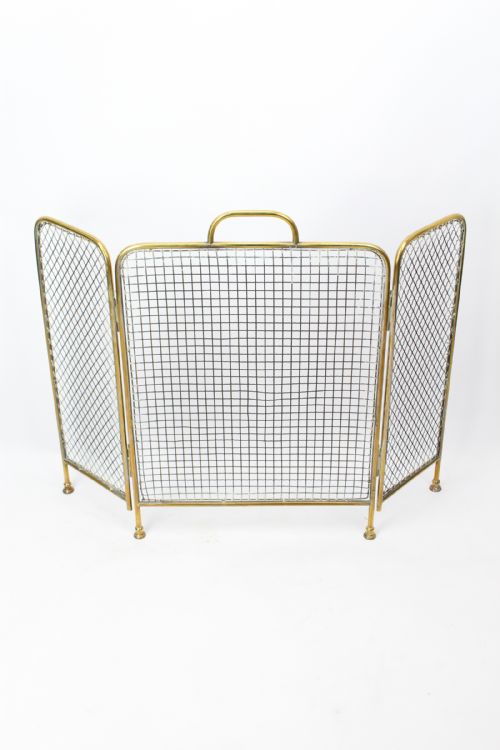
A traditional hearth screen takes various physical forms across the inventory, ranging from folding wire mesh spark guards to solid nursery fenders and decorative standing frames. Buyers exploring a traditional hearth screen encounter pieces primarily from the nineteenth century, the Victorian era, and the Edwardian period, along with examples from the 1920s and 1930s.
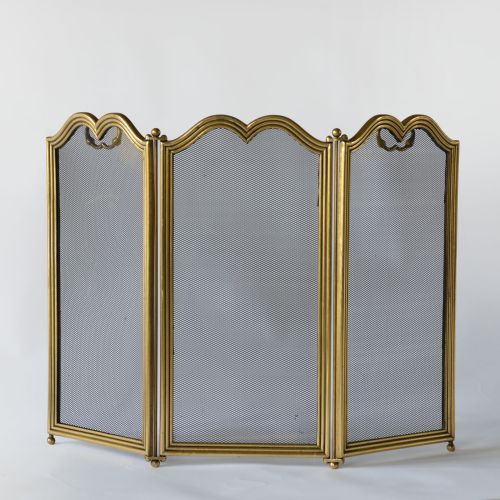
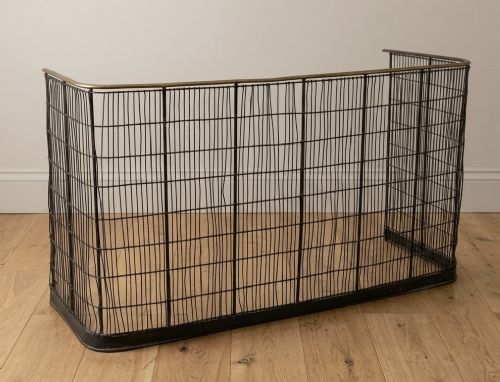
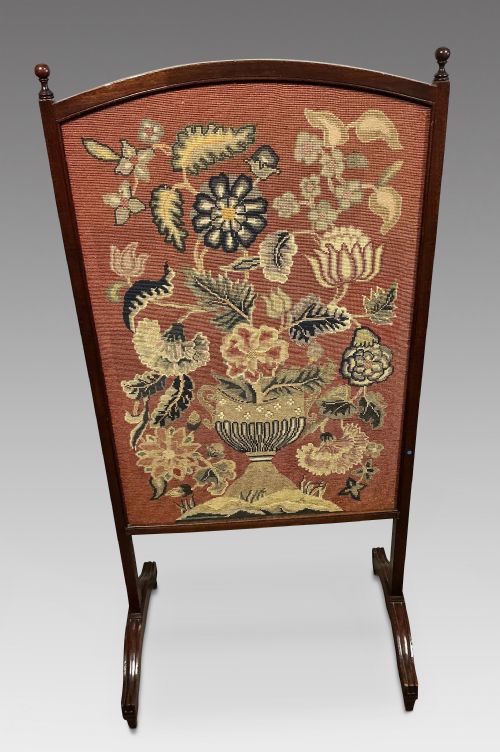
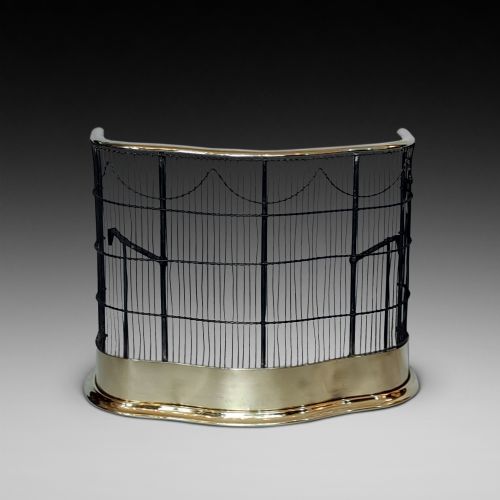
The assortment includes specialised variants such as nursery fenders designed to keep children at a safe distance from the fire, as well as tripartite folding screens, demi-lune guards, and even a silk embroidered panel or Chinese hardwood screen. Most items serve a protective function using brass and wire mesh, while others incorporate wrought iron or steel.
English country house aesthetics and Gothic Revival influences appear among the styles, demonstrating how these protective accessories were adapted for different interior schemes. Whether selecting a heavy wrought iron piece or a gate-fronted brass guard, the focus remains on functional containment paired with period craftsmanship.
Materials and construction methods
Construction relies heavily on metals such as brass, iron, wrought iron, and steel, often combined with woven iron wire or wire mesh to form the protective body of the screen. Makers utilised brass for top rails, frames, and rims, providing a polished contrast to blackened iron mesh and heavy wrought iron structures.
Wood and textiles make occasional appearances in the evidence, with mahogany utilised alongside silk embroidery and Chinese hardwood to create decorative panels. Folding sections, hinges, and nursery fenders with clothes rails required durable metalworking techniques to withstand daily proximity to open hearths.
Some nursery fenders included a built-in clothes rail, turning the family hearth into an impromptu drying rack for damp socks.
Distinctions in construction and finish
Quality in a traditional hearth screen reveals itself in the weight of the metal, the rigidity of the folding sections, and the precision of the wire mesh or woven iron wire. Heavier gauge iron and substantial brass framework indicate sturdiness and durability compared to lighter constructions.
The refinement of the finish, whether a black finish applied to iron or polished brass edging and top rails, separates standard utility items from more elaborate pieces. Detail in decorative elements, such as serpentine shapes, gate-fronted designs, or integrated clothes rails on nursery fenders, marks the distinction between basic protection and high-end hearth accessories.
The Traditional Hearth Screen Glossary
- Spark guard
- A protective barrier designed to prevent embers and sparks from escaping the fireplace into the room. These are typically constructed from wire mesh and metal frames.
- Nursery fender
- A low metal barrier that surrounds the hearth area to keep children and pets at a safe distance from the fire. Some historical examples include an integrated clothes rail.
- Tripartite folding screen
- A barrier divided into three hinged sections that can be angled to enclose the hearth opening partially or fully. This design allows for flexible placement and compact storage.
- Demi-lune
- A half-moon or semicircular shape often seen in the footprint of specialised fireplace spark guards. This curved form fits snugly against hearths projecting into the room.
- Wrought iron
- Iron that has been heated and shaped by blacksmithing tools rather than cast in a mould. It provides heavy, durable construction for robust fire screens.
Traditional Hearth Screen: Frequently Asked Questions
What is the difference between a fire screen and a nursery fender?
A fire screen generally stands upright to block radiant heat or act as a decorative panel when the fireplace is not in active use. A nursery fender sits lower to the ground and forms a protective enclosure around the entire hearth to prevent children from touching hot grates.
While some screens incorporate wire mesh for spark protection, nursery fenders are specifically engineered as perimeter barriers with sturdy frames.
How do I choose the right size for my hearth?
Measure the width and depth of your fireplace opening and hearth stone to ensure the guard covers the entire fire area adequately. Folding models and tripartite designs offer flexibility because their side panels adjust to fit different hearth configurations.
Consider whether you need a semi-circular demi-lune shape or a flat folding screen based on how far your fireplace projects into the room.
Were these screens used only for stopping sparks?
Many screens were built primarily as spark guards using fine wire mesh to contain flying embers from open coal or wood fires. Others served additional domestic purposes, such as drying garments on nursery fenders equipped with clothes rails or simply screening the empty fireplace during warmer months.
Decorative versions featuring silk embroidery or hardwood frames focused more on interior aesthetics and blocking draft or heat when the fire died down.
How can I tell a Victorian screen from an Edwardian one?
Victorian pieces often display heavier brasswork, elaborate serpentine curves, and robust wrought iron construction typical of nineteenth-century manufacturing. Edwardian examples tend to show lighter, more refined wire mesh designs and simpler geometric configurations suited to changing twentieth-century tastes.
Examining the metal finish, weight, and joining techniques helps place a piece within its respective nineteenth or early twentieth-century period.