



Traditional Harbour Art
Traditional harbour art captures coastal life and maritime scenes through historic paintings and watercolours.
Traditional Harbour Art
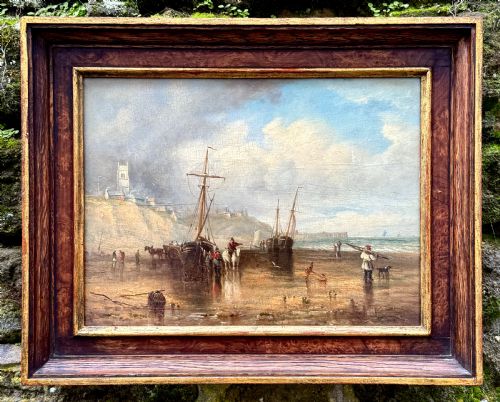
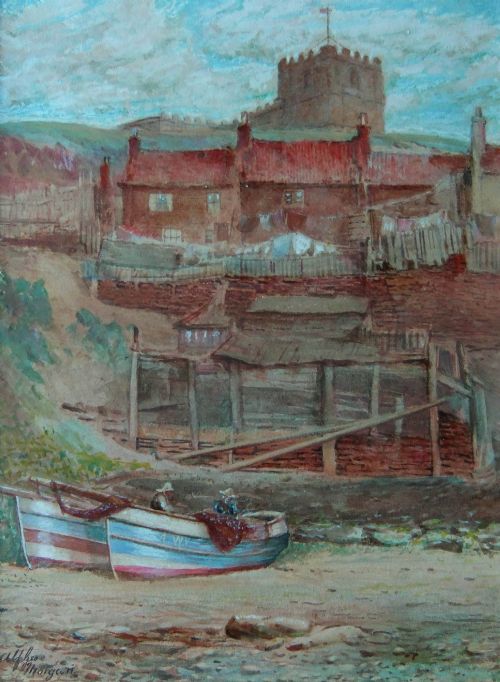
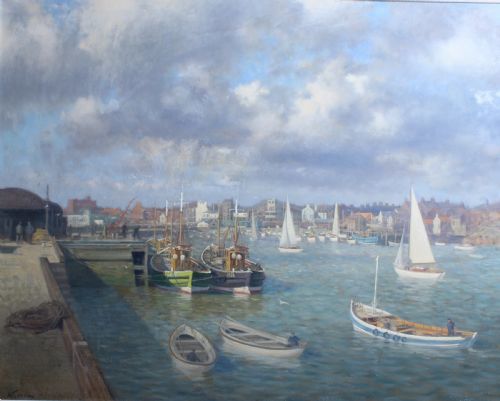
Traditional harbour art encompasses paintings and watercolours depicting coastal scenes, shipping, and fishing ports. These works record maritime life across British and European locations from the nineteenth century into the mid-twentieth century.
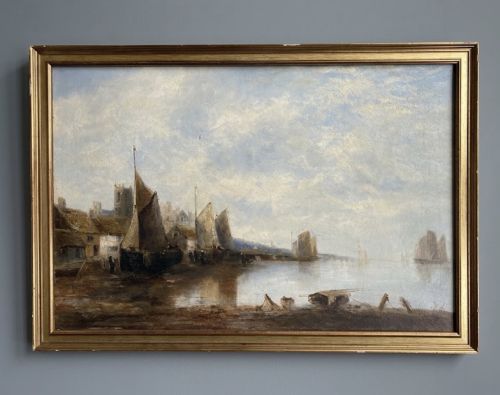
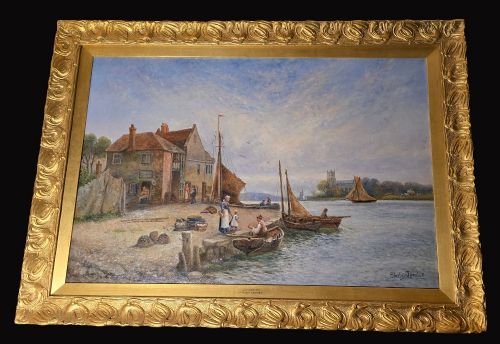
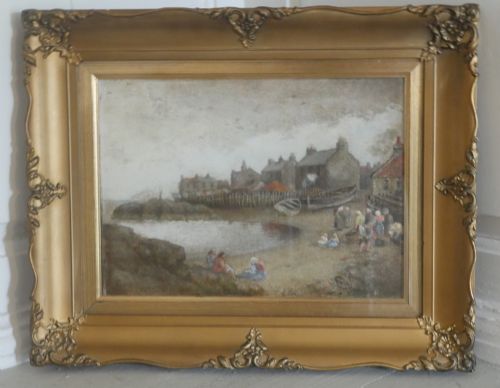
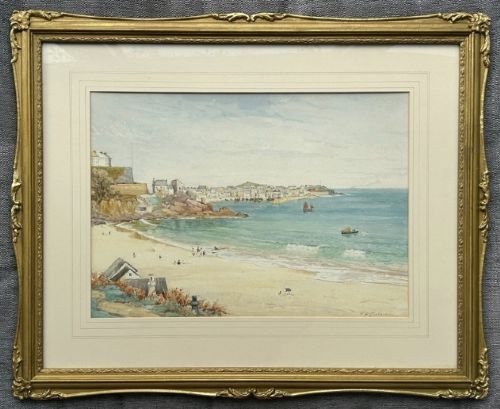
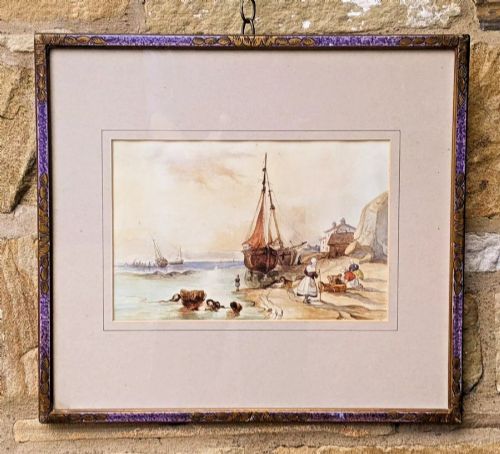
The pieces on this page range from Victorian watercolours of Cornish coastal villages to oil paintings of bustling harbours by named artists. Common subjects include moored vessels, local fishermen, and historic quaysides.
Works appear in various formats, including framed oils on canvas, panel paintings, and delicate paper watercolours. Many retain period framing in gilt wood that complements the maritime subject matter.
Materials and Methods
Artists working on these scenes utilised oil paint on canvas, board, and wood panels, or applied watercolour pigments to paper. These traditional media allowed creators to capture changing light on water and the textures of historic coastal architecture.
Supports often bear the marks of age, with oil paintings showing fine craquelure and watercolours preserved beneath glass within period frames. Gilt wood frames provide a traditional surround that has protected the integrity of the artwork over decades.
Traditional Harbour Art Retail Price Guide 2026
Typical asking prices for traditional harbour art among the pieces listed under this phrase on Sellingantiques today, from the lower quarter to the upper quarter. They describe what is for sale here now, not the wider market.
Several artists clearly braved very choppy seas to paint local fishing boats from remarkably precarious vantage points.
Markers of Quality
The distinction between standard works and superior examples lies in the artist's handling of light, atmosphere, and maritime detail. Skilled painters command precise perspective in rigging and architecture while conveying movement in choppy seas.
Condition and originality also influence the standing of a piece, particularly the preservation of the paint surface and the retention of period frames. Works bearing clear signatures and identifiable locations carry stronger documentation of their origin.
Stanley Leader·James Hardy·William Banks Fortescue·Thomas Creswick·Alfred G. Morgan·Walter Goodin·William Edward Webb·James Kyd·Arthur Tucker·John Bell·James Webb·Ernest F. Hill·John Callow·Albert Robert Quinton·Ralph Todd·Edward Henry Holder·Walter Sweet·Jane Vivian·Hubert Thornley·Charles France·John James Wilson·Owen Bowen·Micheal Matthews·Robert Leslie Howey·Edward Fletcher
The Traditional Harbour Art Glossary
- Watercolour
- A painting method where fine pigments are suspended in a water-soluble binder on paper. These works require protection behind glass.
- Oil on Canvas
- A painting technique utilising pigments bound in linseed oil applied to a woven fabric support. This combination permits rich colour blending and textured brushwork.
- Gilt Wood
- Timber framing finished with a thin layer of gold leaf or metallic gilding. Such frames often match the period of the artwork they enclose.
- Seascape
- A work of art depicting the sea, ships, or coastal views. These pieces form a core component of maritime painting traditions.
- Provenance
- The documented history of a work of art, including previous ownership and exhibition records. Clear provenance helps verify the origin of a painting.
Traditional Harbour Art: Frequently Asked Questions
What periods do these paintings date from?
The works span from the early nineteenth century through the Edwardian era and into the mid-twentieth century. Most examples cluster around the Victorian and Edwardian periods.
Specific dates are often recorded through artist signatures, exhibition records, or stylistic markers inherent to the painting technique.
How should I care for a watercolour painting?
Watercolours require placement away from direct sunlight to prevent fading of the delicate pigments on paper. Maintaining stable indoor humidity protects both the paper support and the surrounding mount.
Glazing with glass helps shield the surface from airborne dust and moisture fluctuations over time.
Are these paintings signed by the artists?
Many examples feature artist signatures, initials, or inscriptions noting the specific harbour location depicted. Unsigned works also appear, attributed through stylistic comparisons and period evidence.
Signatures are typically located in the lower corners of the canvas or paper surface.