
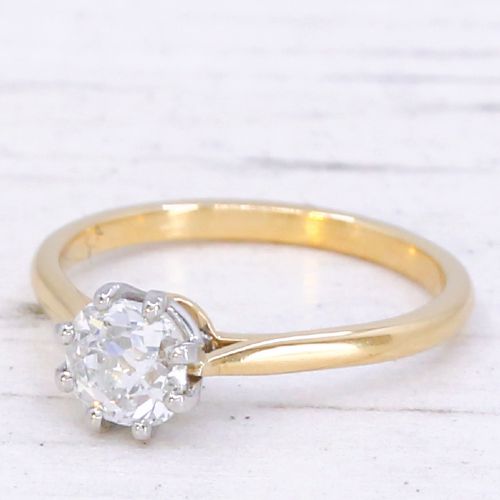


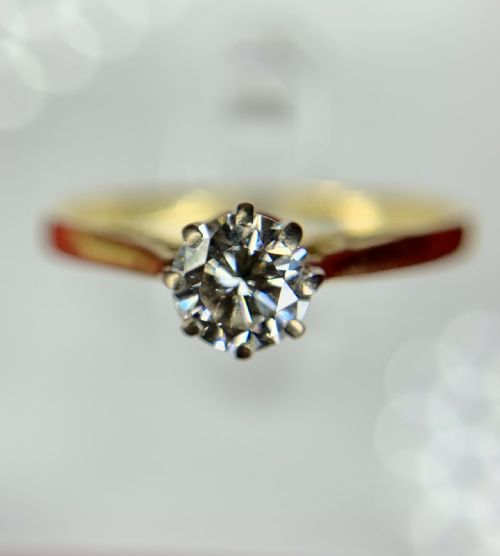


Traditional Gold Solitaire Ring
A traditional gold solitaire ring distils centuries of devotion into one striking stone, offering timeless elegance on the finger.
Traditional Gold Solitaire Ring
A traditional gold solitaire ring focuses entirely on a single central gem, most commonly a diamond, mounted on a band of yellow, white, or rose gold. These pieces span various eras, including Victorian, Edwardian, and mid-century modern periods.
The selections on this page feature engagement rings and dress rings fashioned from nine-carat, eighteen-carat, and twenty-two-carat gold, often paired with platinum settings. Buyers will encounter classic claw settings, illusion settings, and antique mine cuts alongside old cushion cuts.
Originating from periods such as eighteen-seventy up through nineteen-sixty, these rings showcase enduring designs like Art Deco geometric influences and traditional Victorian silhouettes.
Materials and construction methods
Goldsmiths utilise various purities of gold, ranging from nine-carat up to twenty-two-carat yellow and white gold, frequently combining them with platinum to securely hold the central gemstone. The introduction of platinum claws allowed artisans to create finer, more discreet settings that maximised light entry into the diamond.
Stones are shaped by hand using traditional techniques, resulting in distinct old mine cuts, old cushion cuts, and old European cuts that differ significantly from modern brilliant facets. These hand-cut gems capture candlelight and low light with a characteristic warmth and depth.
Listings feature yellow gold, white gold, and platinum metals alongside nineteenth and twentieth-century periods.
Distinguishing quality across the range
Quality rests upon the purity of the metal and the craftsmanship of the setting, where heavier gold carats like eighteen-carat and twenty-two-carat offer a richer warmth and greater durability. The precision of the claw or illusion setting dictates how securely the stone is held and how gracefully the metal frames the gem.
The cut and clarity of the central stone, whether a certified diamond or an opal, define the visual impact of the piece. Hand-cut stones with distinct facet proportions and independent gem reports represent the pinnacle of period lapidary work.
The Traditional Gold Solitaire Ring Glossary
- Solitaire
- A ring featuring a single set gemstone, typically a diamond. This minimalist design highlights the individual beauty and character of the main stone.
- Old mine cut
- An antique diamond cut characterised by a cushion outline, high crown, and large culet facet. These stones were shaped by hand before modern machinery existed.
- Illusion setting
- A metal mounting technique designed to make the central diamond appear larger by surrounding it with a reflective faceted plate. It creates an optical illusion of increased stone dimensions.
- Claw set
- A mounting method where narrow metal prongs hold the gemstone in place, allowing maximum light to enter the pavilion. This is the most traditional way to secure a solitaire diamond.
- Carat
- A unit of weight for gemstones and a measure of purity for gold alloys. Higher carat values indicate a greater proportion of pure gold in the metal.
Traditional Gold Solitaire Ring: Frequently Asked Questions
What is a solitaire ring?
A solitaire ring is a piece of jewellery featuring a single gemstone, most frequently a diamond, mounted on a metal band. The design places total visual emphasis on the central stone.
Historically favoured for engagements, this style strips away distraction to celebrate the inherent quality and fire of one exceptional gem.
How do I date an antique gold ring?
Dating an antique gold ring involves examining the cutting style of the gemstone, the construction of the metal setting, and any hallmarks stamped inside the band. Old mine cuts and hand-wrought claws often point to Victorian or Edwardian origins.
Stylistic shifts, such as the geometric lines of Art Deco or the heavier yellow gold of mid-century pieces, also help pinpoint the era of manufacture.
Are old cut diamonds different from modern ones?
Old cut diamonds, such as old mine and old European cuts, possess hand-faceted surfaces rather than the laser-guided symmetry of modern brilliant cuts. These vintage stones tend to exhibit smaller tables and larger culets.
This artisanal cutting style gives them a softer, warmer scintillation that performs uniquely under indoor and low-level lighting.
Can I wear a vintage engagement ring daily?
Wearing a vintage engagement ring every day is entirely possible, provided the piece is inspected periodically for metal wear and secure settings. Heavier gold bands and sturdy platinum mounts offer good durability for daily life.
Gentle cleaning and mindful care ensure that antique jewellery survives safely through generations of modern wear.