

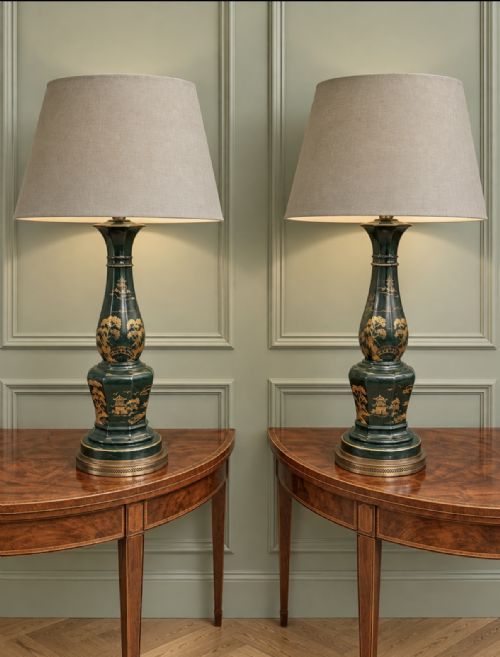



Traditional Gilt Accent Lamp
A traditional gilt accent lamp brings warmth and historic presence to a room, cast in gleaming metal and carved wood.
Traditional Gilt Accent Lamp
A traditional gilt accent lamp is typically a table lamp designed to draw the eye with gilded surfaces, ornate metalwork, or painted lacquer. When searching for a traditional gilt accent lamp, buyers encounter pieces configured from converted antique vessels, carved wooden bases, or cast metal standards.
The selections span several centuries and aesthetic movements, originating primarily from French, Spanish, and Chinese workshops. Pieces from the eighteenth and nineteenth centuries predominate, alongside examples from the early twentieth century.
Forms range from slender lacquer columns and carved wooden candlesticks to monumental ormolu and cloisonné vases adapted for illumination. These items function as sculptural table lighting that anchors a room with historic character.
How they were made
Maker's hands shaped these lamps using traditional casting, carving, and gilding techniques passed down through generations. Artisans applied gold leaf, orolu, or gilt bronze over brass, bronze, and carved wood to create reflective, luminous surfaces.
Many bodies incorporate decorative elements such as hand-painted lacquer, enamel work, and fabric shades. The combination of dense base materials like carved wood or heavy bronze provides the stability required for a tall table lamp.
Traditional Gilt Accent Lamp Retail Price Guide 2026
Typical asking prices for traditional gilt accent lamp among the pieces listed under this phrase on Sellingantiques today, from the lower quarter to the upper quarter. They describe what is for sale here now, not the wider market.
Some nineteenth-century vases started life guarding porcelain collections before a clever Victorian electrician gave them a bright new career.
What varies in quality
Quality rests in the crispness of the casting, the depth of the gilding, and the integrity of the underlying material. Fine examples display meticulous hand-carving and rich, multi-layered metal finishes that catch the light evenly.
Lesser pieces may show softer detail in cast mounts or simpler surface treatments that lack the depth found in works from prominent decorative periods like the Rococo Revival or French Neoclassical eras.
The Traditional Gilt Accent Lamp Glossary
- Gilt bronze
- Bronze coated with a thin layer of gold, providing a rich metallic surface. This technique was widely utilised in French decorative arts.
- Ormolu
- Finely ground high-carat gold applied to a bronze base, creating a distinctive warm lustre. The term derives from the French for milled gold.
- Chinoiserie
- European artistic style reflecting Chinese motifs and techniques, popular in lacquerwork and decorative objects. It appears frequently in nineteenth-century lamp bases.
- Cloisonne
- Enamel work created by placing metal wires on a base to form compartments filled with paste and fired. These vases often serve as the body for converted lamps.
Traditional Gilt Accent Lamp: Frequently Asked Questions
What is a traditional gilt accent lamp?
A traditional gilt accent lamp is a table lighting fixture finished with gold leaf, gilt bronze, or ormolu, often built from antique objects like vases or carved wooden bases.
These pieces bring period character and reflective warmth to dark corners or side tables.
How do I date a gilt lamp?
Dating relies on identifying stylistic markers such as Rococo curves, Art Nouveau organic lines, or Neoclassical symmetry alongside material construction methods.
Examining the base metal, wiring ports, and wear patterns helps place a lamp within its nineteenth or early twentieth-century context.
Where should I place a tall gilt lamp?
A tall gilt lamp suits large sideboards, entrance consoles, or substantial living room tables where its height and reflective surface can command attention.
Pairing it with neutral walls allows the metallic finish and intricate carved details to stand out clearly.
Are these lamps converted antiques?
Many of these lighting pieces originate as decorative objects like nineteenth-century vases, carved candlesticks, or lacquer vessels adapted for modern electrical use.
This adaptive history preserves historic craftsmanship while serving a contemporary domestic function.